
Clay and Concrete Tile Roofing in Miami: The Complete Guide
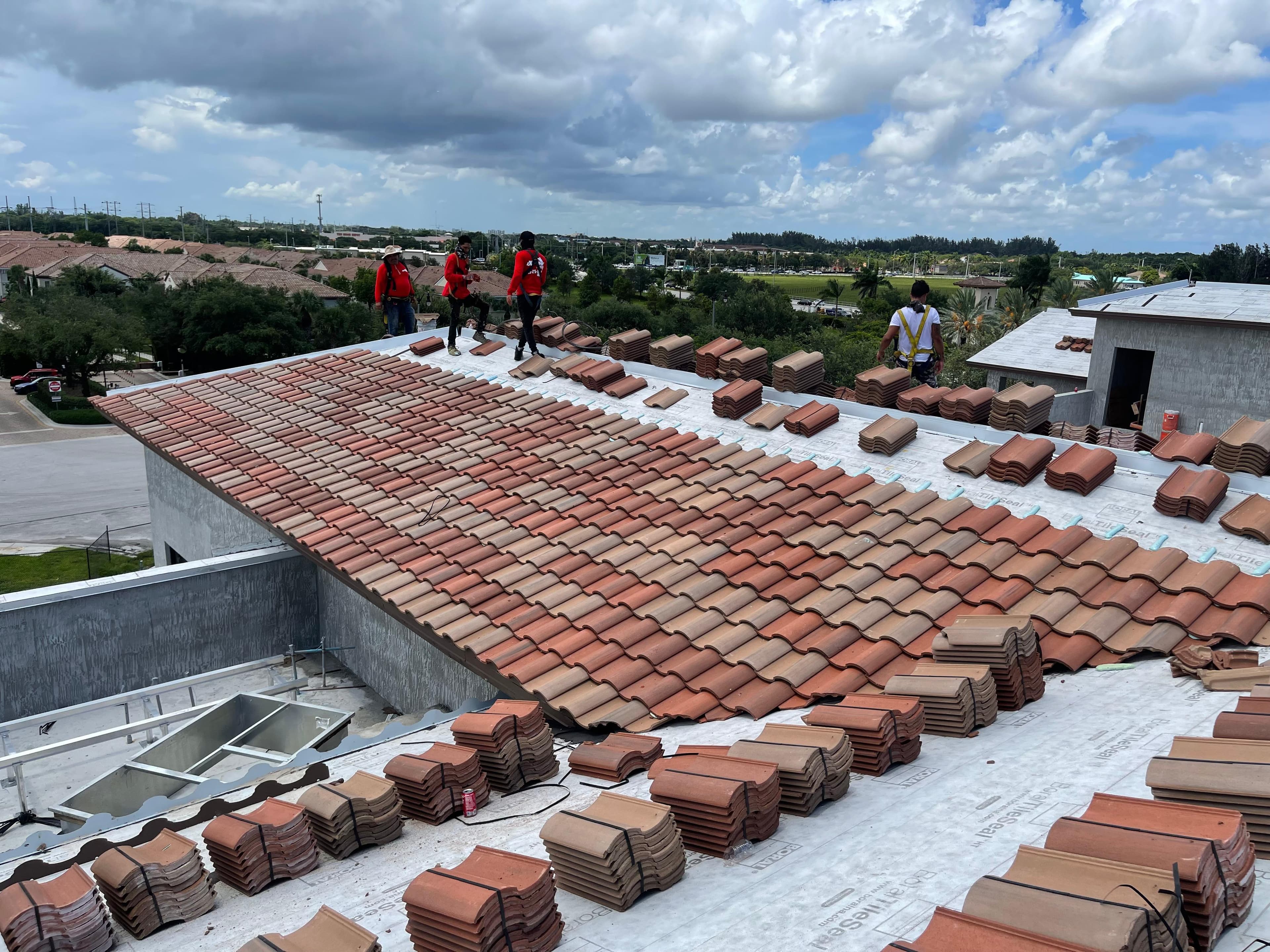
Clay vs Concrete Tile: The Decision Most Miami Homeowners Get Wrong
If you live in Miami-Dade and you're choosing between clay and concrete tile, you're not really choosing between two similar products. You're choosing between a 75 to 100 year roof and a 40 to 60 year roof. You're choosing between a tile that holds its color forever and a tile that fades to gray by year 20. And you're choosing between a $44,000 project and a $34,000 project on a typical 2,200 square foot home.
I've installed both on thousands of Miami homes since 2004, and I've seen what happens at year 25, 35, and 50 on each one. Most homeowners who call me for a concrete tile replacement are tearing off a roof that looked great until year 18 and started failing cosmetically by year 25. Clay tile replacements usually come from storm damage or the owner wanting a different color, not because the tile itself gave up.
Here's what you need to know before you commit to either one.
The Real Performance Gap Between Clay and Concrete
Concrete tiles are cheap to make. Portland cement, sand, iron oxide pigment, water. Pour into a mold, press, cure, ship. The result is a heavy, rigid tile that performs well for 40 to 60 years in Miami. The color sits on the surface as a slurry coat or mixes into the top layer, and it fades as UV breaks down the pigment.
Clay tiles are a completely different product. Natural clay shaped into tiles and fired at 2,000+ degrees Fahrenheit. The firing process chemically fuses the clay into ceramic. The color comes from mineral content in the clay itself, not from a coating. Clay absorbs almost no water, is immune to UV, and stays the exact same color for 100+ years.
Here's the comparison I use with every client:
| Feature | Clay Tile | Concrete Tile |
|---|---|---|
| Miami lifespan | 75 to 100+ years | 40 to 60 years |
| Weight per square | 600 to 900 lbs | 900 to 1,300 lbs |
| Installed cost (2026) | $16 to $22 per sq ft | $14 to $18 per sq ft |
| Color retention | Permanent (integral) | Fades at year 15 to 25 |
| Water absorption | Under 6% | 10 to 13% |
| Freeze-thaw cycles | Not a Miami factor | Not a Miami factor |
| Typical neighborhoods | Coral Gables, Pinecrest, Coconut Grove, Key Biscayne | Kendall, Doral, Palmetto Bay, Miami Lakes |
Concrete tile is fine for a $34,000 project in Kendall where you're planning to sell in 15 years. Clay tile is the right call for a $45,000 project in Coral Gables where you expect the roof to outlast you.
Tile Profiles and What They Actually Look Like in Miami
Every tile comes in a specific profile shape, and the profile determines the look, the weight, the wind performance, and sometimes the HOA approval. I see four profiles regularly across Miami-Dade.
Flat tiles (slate profile) create a smooth, clean look that works on modern and contemporary homes. They're the lightest tile profile at 600 to 900 pounds per square for clay. You'll see them on newer builds in Coconut Grove, Palmetto Bay, and Cutler Bay where owners want the durability of tile without the traditional Mediterranean look.
S-tiles have a gentle wave profile that creates alternating ridges and valleys. This is the most common tile profile in South Florida. You'll find S-tile on production homes in Kendall, Doral, Miami Lakes, and throughout the suburbs. It's a good middle ground: traditional enough to look Mediterranean, affordable enough for tract housing, and easier to walk for maintenance than barrel.
Barrel tiles are half-cylinder shaped and create the rolling terracotta profile that defines Coral Gables, Gables Estates, Cocoplum, and historic Miami Beach. Heaviest profile (up to 1,300 pounds per square for concrete), highest material cost, highest labor cost, and almost always required by HOA in the high-end neighborhoods.
Interlocking tiles use a tongue-and-groove edge that mechanically locks each tile to its neighbors. This improves wind performance and reduces reliance on foam adhesive or clips. Common on newer concrete tile installations in Homestead, Redland, and newer Doral subdivisions.
The profile you choose depends on your architectural style, your HOA requirements, and your structure's ability to handle the weight. If you don't know which profile you have now, walk outside, look up, and take a photo with your phone. A good roofer can tell you in 30 seconds.
The Honest Pricing Breakdown for 2026
Tile pricing moved up in 2024 and 2025 because of labor costs, fuel surcharges, and raw material inflation. Here's what I'm actually quoting on Miami-Dade tile projects right now:
| Tile Type and Profile | Installed Cost per Sq Ft | 2,200 Sq Ft Home Total |
|---|---|---|
| Concrete flat tile | $13 to $16 | $28,600 to $35,200 |
| Concrete S-tile | $14 to $17 | $30,800 to $37,400 |
| Concrete barrel (one-piece) | $14 to $18 | $30,800 to $39,600 |
| Clay flat tile | $15 to $19 | $33,000 to $41,800 |
| Clay S-tile | $16 to $20 | $35,200 to $44,000 |
| Clay barrel (one-piece) | $16 to $22 | $35,200 to $48,400 |
| Clay barrel (two-piece Mission) | $20 to $25 | $44,000 to $55,000 |
These numbers include tear-off to bare deck, deck re-nail to HVHZ code, self-adhered high-temperature underlayment, hurricane clip attachment, foam adhesive where required, ridge and hip cementing, all metal flashing, and permit fees. They do not include structural reinforcement (which 30 to 40 percent of homes need) or underlayment replacement (which comes later in the tile's life).
If you're getting quotes under $11 per square foot for installed concrete tile or under $14 for installed clay tile, there's something wrong. Either the contractor is skipping the deck re-nail, using bargain underlayment, or planning to install with inadequate fastening. Walk the walk-through again and ask specific questions.
The Underlayment Truth Nobody Explains
This is the thing I wish every tile client understood before signing a contract: the tile is not your waterproofing. The underlayment is.
Clay tiles last 75 to 100 years. Concrete tiles last 40 to 60. But the self-adhered synthetic underlayment beneath them? It lasts 25 to 30 years in Miami heat. After that, it starts to degrade, crack, and let water through. When that happens, your "100-year clay roof" starts leaking despite the tiles being perfectly intact.
The fix is an underlayment replacement. We carefully lift and salvage the existing tiles (losing about 10 to 15 percent to breakage), install new underlayment, and reinstall the tiles. Cost runs $8,000 to $15,000 for a typical home, which is about 25 to 35 percent of what a full tile replacement would cost. It extends your roof's life by another 25 to 30 years without replacing the tile itself.
On a 75-year clay tile roof, you should plan for two underlayment replacements (year 25 and year 55) during the tile's lifespan. That's part of the real cost of ownership that contractors never put on the initial quote.
Here's the critical point: the cheaper the underlayment your contractor uses on the initial install, the sooner you'll do this replacement. Self-adhered modified bitumen products like Polyglass Polystick TU-P Plus, GAF TigerPaw, and Grace Ice & Water Shield HT all have Miami-Dade NOAs and perform well. Budget synthetic underlayments without self-adhesive backing fail in 12 to 18 years in Miami heat. If your quote doesn't name the specific underlayment product, ask.
Structural Reality for Tile Conversion
Miami homes built before 1980 were often framed for shingles or light metal, not for tile. Tile is 3 to 6 times heavier than shingles. If you're converting from shingles to tile, here's what you're actually doing to your structure:
On a 2,200 square foot home, a concrete tile roof adds 22,000 to 28,000 pounds of dead load. A clay tile roof adds 15,000 to 20,000 pounds. That's 10 to 14 tons of additional weight sitting on trusses that were rated for 4 to 7 tons of shingles.
I require a structural engineer assessment on every tile conversion job. No exceptions. The assessment runs $400 to $800 and tells us whether the existing trusses can handle the load, or whether we need to reinforce. Common reinforcement costs:
- Truss sistering (adding a twin truss alongside each existing one): $150 to $300 per truss
- Collar ties and ridge bracing: $1,500 to $4,000 total
- Load-bearing wall support below long spans: $2,000 to $6,000
- Complete truss replacement: $8,000 to $18,000 (rare but happens)
Homes originally built for tile (almost every home in Coral Gables, Gables Estates, Pinecrest, Cocoplum, and the historic sections of Coconut Grove) were engineered with tile loads in mind. Conversions in these neighborhoods rarely need reinforcement. Homes in Kendall, Homestead, Doral, Hialeah, Miami Lakes, and Cutler Bay that are converting from shingles to tile almost always need some level of work.
I've walked into too many Miami Lakes homes where a previous contractor put tile on an undersized truss system. The roof holds for a few years, then the trusses start sagging, then the ceiling drywall cracks, then the owner calls me to diagnose the mystery problem. The fix is way more expensive than doing the structural work correctly on day one.
Wind Performance and HVHZ Fastening
Every tile installation in Miami-Dade or Broward has to meet the HVHZ code for wind uplift. The code requires a combination of mechanical attachment (clips or nails), bed adhesive (foam or mortar), and secondary water barrier (the underlayment).
The old method was mortar bedding: trowel mortar on the roof, set tiles in the mortar, wait for it to dry. This worked for decades until Hurricane Andrew in 1992 ripped mortar-set tiles off thousands of homes. After Andrew, the code changed. Today, we use three approved methods:
- Mechanical fasteners with foam adhesive. Each tile is nailed or screwed directly to the deck through the underlayment, and polyurethane foam is applied between the tile and the underlayment to create an additional bond. This is the most common modern installation and achieves 150+ mph wind ratings when installed correctly.
- Foam adhesive only. Closed-cell polyurethane foam bonds each tile to the underlayment without mechanical fasteners. Faster installation, higher material cost. Modern foams like Polyset AH-160 and PolyFoam IRC carry Miami-Dade NOAs and achieve the same wind ratings as mechanical-plus-foam.
- Mortar set with secondary mechanical attachment. Traditional mortar bedding with mechanical clips at perimeter, ridges, and hips. This is still used on historic restoration work in Coral Gables where the original aesthetic matters.
Avoid any contractor who proposes a pure mortar installation with no secondary attachment. That method doesn't meet current code and won't pass Miami-Dade inspection.
When Tile Is the Right Answer
Tile is the right choice if any of these apply:
- You're in Coral Gables, Pinecrest, Gables Estates, Cocoplum, Journey's End, Coconut Grove, Key Biscayne, or another HOA-governed neighborhood that requires tile
- Your home is Mediterranean Revival, Spanish Colonial, Mission, or another traditional style where tile is the natural architectural choice
- You plan to own the home for 20+ years and want the longest-lasting residential roof available
- You're within 2 miles of the coast and want a roofing material that's immune to salt air corrosion
- Resale value matters and you're in a neighborhood where the absence of tile reduces the home's value
When to Skip Tile and Go With Something Else
Be honest with yourself. Tile isn't the right call if:
- Your budget tops out under $30,000 on a 2,000+ square foot home (go with Class 4 impact shingles)
- Your home is a modern or contemporary design where tile looks architecturally wrong (go with standing seam metal)
- You're planning to sell within 10 years (the long-life premium won't pay back)
- Your structure can't be cost-effectively reinforced to handle the weight
- You want the absolute highest wind rating available (metal outperforms tile at 180+ mph)
Ready for a Real Quote?
Call us at 305-225-1535 or request a free estimate. We'll walk the roof, run a structural assessment if you're converting from shingles, specify the exact tile product with NOA number, give you an itemized quote with line-item pricing for tear-off, underlayment, fastening, and tile, and explain the underlayment replacement schedule so you know the real 50-year cost of ownership. No ambiguity, no upsell, no mortar beds masquerading as modern installation.
Frequently Asked Questions
How much does a tile roof cost in Miami?
Tile roofs in Miami cost $12 to $25 per square foot installed, depending on whether you choose concrete or clay tiles and which profile you select. For a typical 2,000-square-foot home, expect $26,000 to $50,000 total. Clay barrel tiles are the most expensive, while concrete flat tiles are the most affordable.
Do tile roofs hold up in hurricanes?
Yes, when properly installed with hurricane clips, foam adhesive, and code-compliant underlayment, tile roofs resist winds of 125 to 150 mph. The weight of the tiles provides additional uplift resistance. However, individual tiles can crack from flying debris, which is why the underlayment serves as the primary waterproof barrier.
What is the difference between clay and concrete roof tiles?
Clay tiles are kiln-fired ceramic that lasts 75 to 100 years with permanent color. Concrete tiles are made from Portland cement and last 50 to 75 years but experience color fading over 15 to 25 years. Clay is lighter and more expensive, while concrete is heavier and more widely available.
How often does a tile roof need maintenance?
Tile roofs should be inspected annually and soft-washed every 3 to 5 years to remove moss and algae. Broken tiles should be replaced promptly to protect the underlayment. The underlayment itself needs replacement every 20 to 30 years, which requires removing and reinstalling the tiles.
Can my home support the weight of a tile roof?
It depends on your home's truss and framing design. Tile roofs weigh 600 to 1,200 pounds per square, which is three to six times heavier than asphalt shingles. A structural engineer assessment is required before installation. Homes originally built for tile typically need no modifications, while homes with shingle framing often require reinforcement costing $3,000 to $10,000.
Need Roofing Help?
Whether you need an inspection, repair, or full replacement, our team of licensed roofing professionals is ready to help. Serving South Florida since 2004.
Related Articles
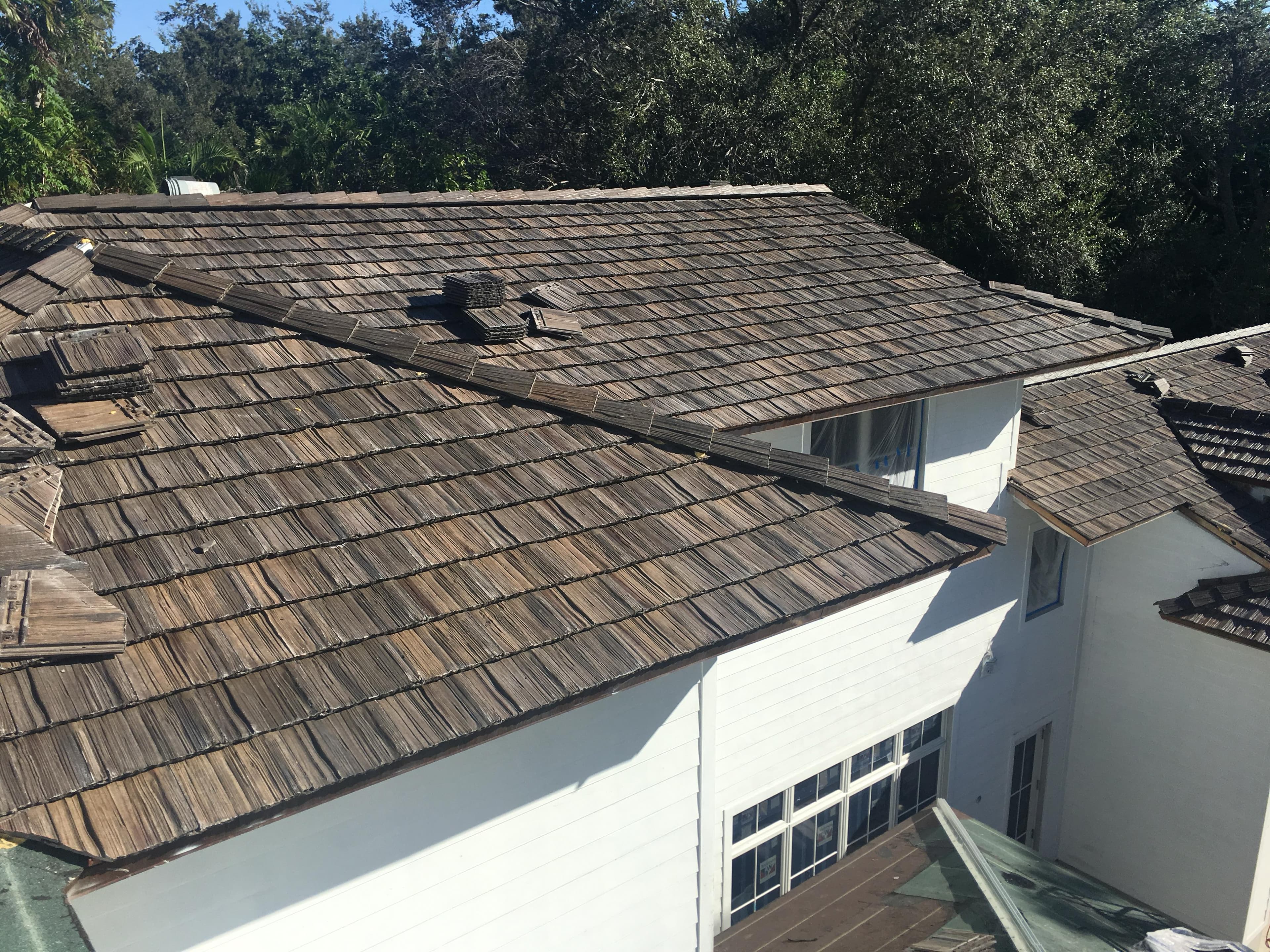
Compare metal, shingle, and tile roofs side by side for Miami homes. Costs, wind ratings, lifespans, and insurance savings explained.
Read More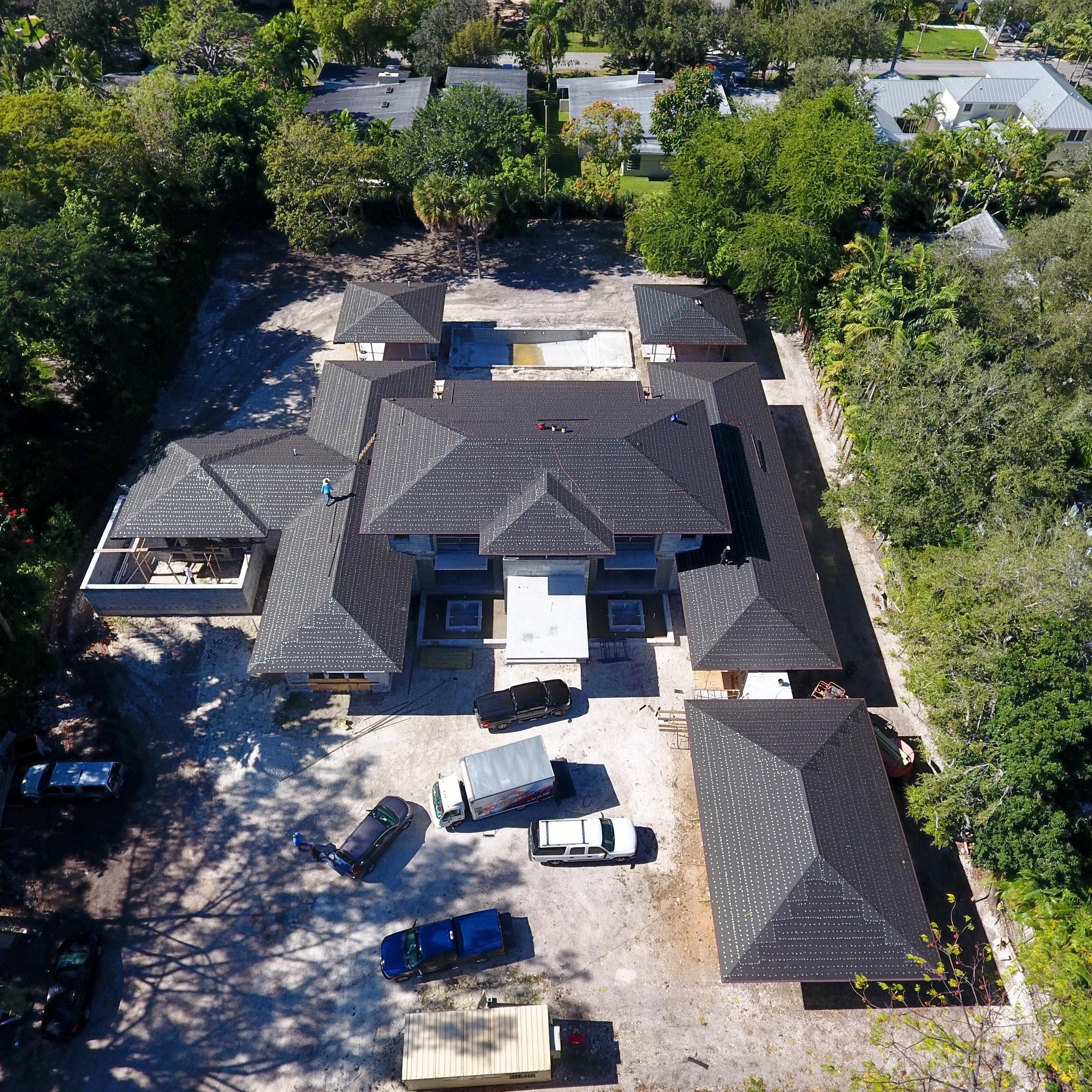
Barrel tile roofs define Miami's Mediterranean architecture. Learn about styles, costs, wind ratings, and finding experienced installers in South Florida.
Read More