Metal vs. Shingle vs. Tile: Which Roof Is Best for Miami?
The Honest Answer: It Depends on Your Block
I get this question on almost every estimate I walk. "Which roof is actually best for Miami?" And the honest answer is that there's no single right answer. The right roof for a 1950s ranch in Homestead is not the right roof for a Mediterranean Revival in Coral Gables, and neither is the right roof for a waterfront new build in Bal Harbour. I've been installing all three systems since 2004, and I've watched the wrong choice turn into expensive regret too many times.
Let me walk you through how I actually think about this decision when I'm standing on a driveway in Kendall, Pinecrest, or Doral with a homeowner asking me the same question you're asking right now.
The 30-Second Comparison
Here's the quick version before we get into the nuance:
| Feature | Standing Seam Metal | Barrel/Flat Tile | Impact-Resistant Shingles |
|---|---|---|---|
| Cost per sq ft installed | $14 - $22 | $14 - $22 | $6 - $9 |
| 2,200 sq ft home total | $31,000 - $48,000 | $31,000 - $48,000 | $13,000 - $20,000 |
| Lifespan in Miami | 40 - 60 years | 50 - 75 years | 20 - 30 years |
| Wind rating (Miami-Dade NOA) | 160 - 180 mph | 150 mph | 130 - 150 mph |
| Weight per square | 50 - 150 lbs | 600 - 1,200 lbs | 225 - 350 lbs |
| Insurance wind credit | 20% - 35% | 15% - 25% | 22% - 28% (Class 4) |
| Salt air performance | Excellent (aluminum) | Excellent | Fair |
| Best neighborhoods | Coastal, waterfront, modern | Coral Gables, Pinecrest, Coconut Grove | Kendall, Homestead, Doral, Hialeah |
Those ranges aren't marketing. They're what I've actually billed on recent jobs across Miami-Dade this year.
Why I Recommend Metal for Some Homes and Not Others
Standing seam metal is the most wind-resistant residential roof you can install in Miami-Dade. That's not an opinion. It's a TAS 125 test result. Systems from Drexel Metals, ATAS, and Englert are rated to 180+ mph with Miami-Dade NOAs on file. I've inspected homes in Key Biscayne and Sunny Isles where metal roofs came through Irma with zero damage while neighbors with shingles lost half their deck.
So why don't I recommend metal to everyone? A few reasons.
First, the HOA. If you're in Coral Gables, Cocoplum, Old Cutler Bay, or most of Pinecrest, the Board of Architects or HOA architectural committee won't let you put metal on a Mediterranean Revival house. They'll require tile, and they'll be specific about which tile. I've had clients call me angry about this, but I can't fight the HOA for you.
Second, the house style. A standing seam metal roof on a 1920s Spanish Colonial in Miami Shores looks wrong. You can do it, but you'll take a hit on resale value and you'll make your neighbors annoyed.
Third, salt air. If you're within a mile of the coast and you want metal, you need aluminum, not Galvalume steel. Galvalume is fine in Doral, Miami Lakes, Hialeah, and most of Kendall. In Bal Harbour, Fisher Island, Sunny Isles, Key Biscayne, and waterfront Coconut Grove, aluminum is the only metal I'll install. It costs 25 to 30 percent more but it's the difference between a 50-year roof and a 15-year rust problem.
Where metal is absolutely the right answer: modern and contemporary homes, waterfront properties in coastal zones, any house you plan to keep for 20+ years where the HOA allows it, and any home where the owner has been through a bad hurricane and wants maximum wind protection.
Why Tile Is the Default for Premium Miami Neighborhoods
I mentioned Coral Gables and Pinecrest above. Here's what most people don't realize: in neighborhoods like Gables Estates, Cocoplum, Journey's End, and the Coral Gables historic district, a tile roof isn't a premium upgrade. It's the baseline. Houses without tile sell for less because buyers assume there's something wrong, or that the HOA is going to force them to replace it.
I've done resale appraisals with real estate agents in Pinecrest where the lack of tile knocked $40,000 to $80,000 off the listing price. That's real money, and it turns the "tile costs more than shingles" math upside down.
Tile also has two performance advantages that nobody talks about enough. One, the air gap between the tile and the deck creates natural ventilation that drops attic temperatures by 10 to 15 degrees compared to shingles. In Miami summers, that's a measurable AC savings. Two, clay and concrete are immune to UV degradation and salt air corrosion. Unlike asphalt shingles, which start losing granules within 5 years of installation, a properly installed tile roof looks the same at year 25 as it did at year 1.
The tradeoffs are real. Tile is heavy (600 to 1,200 pounds per square), so converting from shingles requires a structural engineer and possibly truss reinforcement. Individual tiles crack if you walk on them wrong, and after a hurricane you'll likely need to replace 5 to 15 percent of tiles. The underlayment beneath the tile lasts 25 to 30 years, which means you'll do an underlayment replacement at least once during the tile's lifespan. That runs $8,000 to $15,000.
Where tile is the right answer: Coral Gables (required in most cases), Pinecrest, Coconut Grove, Key Biscayne, Gables Estates, Cocoplum, Star Island, Fisher Island, Old Cutler Bay, and any Mediterranean Revival or Spanish Colonial home across Miami-Dade.
Why Impact-Resistant Shingles Make Sense for a Lot of Miami Homes
Let me be direct about something. When a client tells me their budget is $18,000, I don't try to sell them a $45,000 tile roof. I sell them a Class 4 impact-resistant shingle roof and I tell them the truth: it's a 25 to 30 year roof that performs better than people give it credit for, and the insurance wind credit alone will pay back a big chunk of the cost difference.
GAF Timberline HDZ, Owens Corning Duration Storm, and Atlas StormMaster Slate are the three products I install most often. All three carry UL 2218 Class 4 impact ratings (the highest) and 130 mph wind ratings. All three qualify for the maximum wind mitigation credit in Florida (22 to 28 percent off the wind portion of your premium). All three have Miami-Dade NOAs on file.
The catch is that shingles have a harder time in Miami than in Orlando or Jacksonville. The UV is more intense, the humidity promotes algae streaking, and the salt spray from coastal winds accelerates granule loss. A shingle roof that lasts 35 years in Georgia lasts 22 to 28 years here.
Where shingles are the right answer: newer subdivisions in Kendall, Doral, Hialeah, Miami Lakes, Homestead, and Cutler Bay where shingles are already the norm, investment properties, houses you plan to sell within 10 years, budget-sensitive replacements, and any situation where the HOA allows shingles and you don't need the 50+ year lifespan of tile or metal.
Where shingles are the wrong answer: Coral Gables historic district (HOA will reject), homes within 2 miles of the coast on barrier islands (UV and salt accelerate aging), luxury homes where resale value matters more than upfront cost, and any client who has lived through a hurricane and wants maximum wind protection.
The 50-Year Cost Nobody Shows You
Contractors love to quote you the installed price. Nobody wants to show you the 50-year total cost, because that's where the math gets interesting.
Here's what a 50-year cost picture actually looks like for a 2,200 square foot Miami home, based on my project records and realistic maintenance and replacement cycles:
| Cost Category | Metal (Aluminum Standing Seam) | Clay Barrel Tile | Class 4 Impact Shingles |
|---|---|---|---|
| Initial installation | $42,000 | $46,000 | $16,000 |
| Replacement cycles | 0 (50+ year roof) | 0 (75+ year roof) | 1 at year 25 ($20,000) |
| Underlayment replacement | 0 | 1 at year 28 ($11,000) | 0 (replaced with roof) |
| Insurance savings (35% vs baseline) | -$21,000 | -$12,500 | -$17,500 |
| Energy savings vs shingles | -$8,500 | -$5,000 | $0 |
| Hurricane repair costs (avg) | $500 | $3,500 | $6,000 |
| 50-year total | $13,000 | $43,000 | $24,500 |
Those insurance and energy savings are real. Florida insurance carriers document them on every wind mitigation form. The hurricane repair estimates assume you go through 2 to 3 major storms over 50 years (which is realistic for Miami based on historical frequency).
The headline: metal is the cheapest roof over 50 years despite costing 160 percent more than shingles upfront. Tile is the most expensive, but most of that is the underlayment replacement cycle and the repair costs after hurricanes. Shingles look cheap upfront but the mandatory replacement at year 25 erases most of the savings.
If you plan to stay in your home for 20+ years and the HOA allows metal, it's almost always the right financial choice. If you're in a tile neighborhood, tile is the right choice because the resale math wipes out any cost disadvantage. Shingles are the right choice for shorter time horizons and budget constraints.
The HVHZ Factor That Changes Everything
Every roof installed in Miami-Dade or Broward has to comply with the High Velocity Hurricane Zone code. That means every product needs a current Florida Product Approval or Miami-Dade Notice of Acceptance (NOA) on file. It means tear-off to bare deck is mandatory. It means the deck has to be re-nailed to code. It means permits, inspections, and documentation at every step.
This is why roofing in Miami costs 30 to 50 percent more than roofing in Orlando or Tampa for the same materials. The HVHZ code adds real costs, but it also means your roof is tested and engineered for the worst storms the Atlantic can throw at it.
When you're comparing quotes, ask every contractor these questions:
- What's the NOA or Florida Product Approval number for the product you're quoting?
- Is tear-off to bare deck included or are you overlaying?
- What fastener schedule are you using for the deck re-nail?
- What underlayment are you installing and what's its NOA number?
- Are you pulling a Miami-Dade or Broward permit?
If any contractor can't answer all five questions in 30 seconds, they shouldn't be bidding on HVHZ work.
How to Actually Decide
Here's the simple decision tree I use when I'm walking a client through the choice:
- Does your HOA or historic district require a specific material? If yes, that's your answer. Stop here.
- Is your home within 2 miles of the coast or on a barrier island? If yes, go aluminum standing seam or clay tile. Skip concrete tile and Galvalume steel.
- How long will you own this home? If 20+ years, go metal or tile (whichever fits the architecture and budget). If under 10 years, go Class 4 impact-resistant shingles and bank the savings.
- What's your upfront budget? Under $20,000: Class 4 shingles are the only option. $30,000 to $50,000: metal or tile are both in range. Over $50,000: you can install any system at the highest quality level.
- Have you been through a hurricane? If yes, upgrade your priority on wind performance by one level. I see clients who lived through Andrew or Irma make very different choices than clients who've never experienced a Cat 4 hit.
That's it. Five questions and you'll usually have your answer.
Ready for a Real Quote?
Call us at 305-225-1535 or request a free estimate. We'll walk the roof, talk through the five questions above, pull comps from your specific neighborhood, and give you an itemized quote with the NOA numbers, product codes, and 50-year cost projection. No upsell pressure, no bait-and-switch on brand when the tiles arrive, no corners cut on the tear-off or underlayment.
Frequently Asked Questions
What is the cheapest roofing material in Miami?
Asphalt shingles are the most affordable roofing material in Miami, costing $4 to $9 per square foot installed. For a typical 2,000-square-foot home, that means a total cost of $8,000 to $18,000. Impact-resistant shingles cost slightly more but qualify for insurance discounts that offset the difference.
Which roof lasts longest in Florida?
Clay tile roofs last the longest in Florida, with a typical lifespan of 75 to 100 years. Concrete tile lasts 50 to 75 years, and standing seam metal roofs last 40 to 70 years. Standard asphalt shingles have the shortest lifespan at 15 to 30 years due to UV degradation in our climate.
Do metal roofs rust in salt air?
It depends on the metal. Galvalume steel panels resist corrosion within a few miles of the coast when properly coated. Aluminum metal roofs are virtually immune to salt air corrosion and are the best choice for waterfront properties. Copper develops a protective patina naturally. Uncoated steel will rust quickly in coastal environments.
Which roofing material has the best wind rating?
Standing seam metal roofs have the highest wind ratings, with many systems tested to 160 to 180 mph. Tile roofs with hurricane clips are rated for 125 to 150 mph, and premium impact-resistant shingles reach 110 to 130 mph. For homes in Miami-Dade's High Velocity Hurricane Zone, metal offers the widest margin of safety.
Can I get an insurance discount for a new roof in Florida?
Yes. Florida insurers offer significant premium reductions for new roofs: up to 35% for metal roofs, up to 25% for tile, and up to 28% for Class 4 impact-resistant shingles. A wind mitigation inspection after installation documents the qualifying features. Many homeowners save $1,000 to $3,000 per year on premiums.
Need Roofing Help?
Whether you need an inspection, repair, or full replacement, our team of licensed roofing professionals is ready to help. Serving South Florida since 2004.
Related Articles
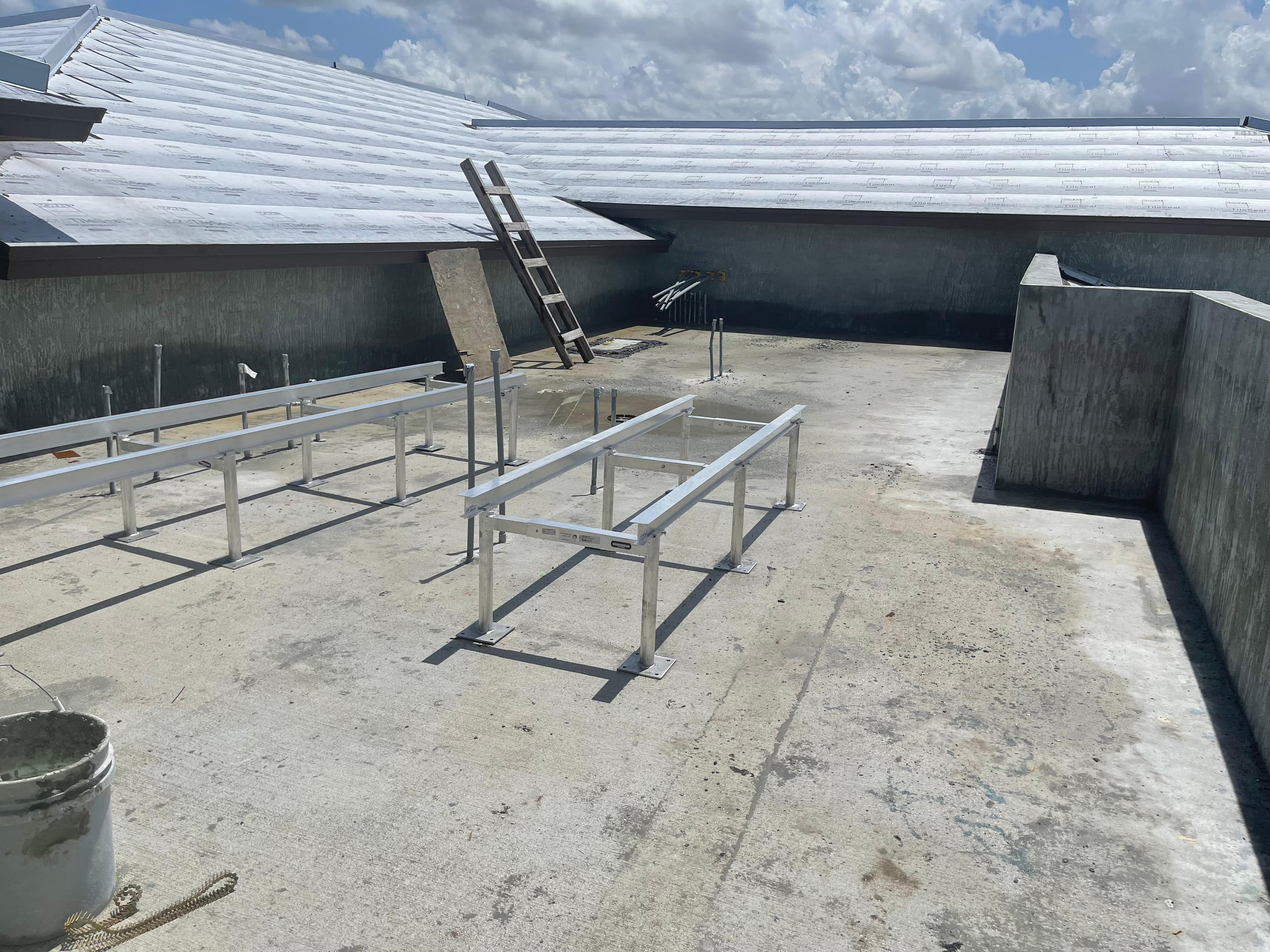
Standing seam metal roofs deliver 160+ mph wind ratings and 50-year lifespans in Miami. Learn about costs, materials, and energy savings.
Read More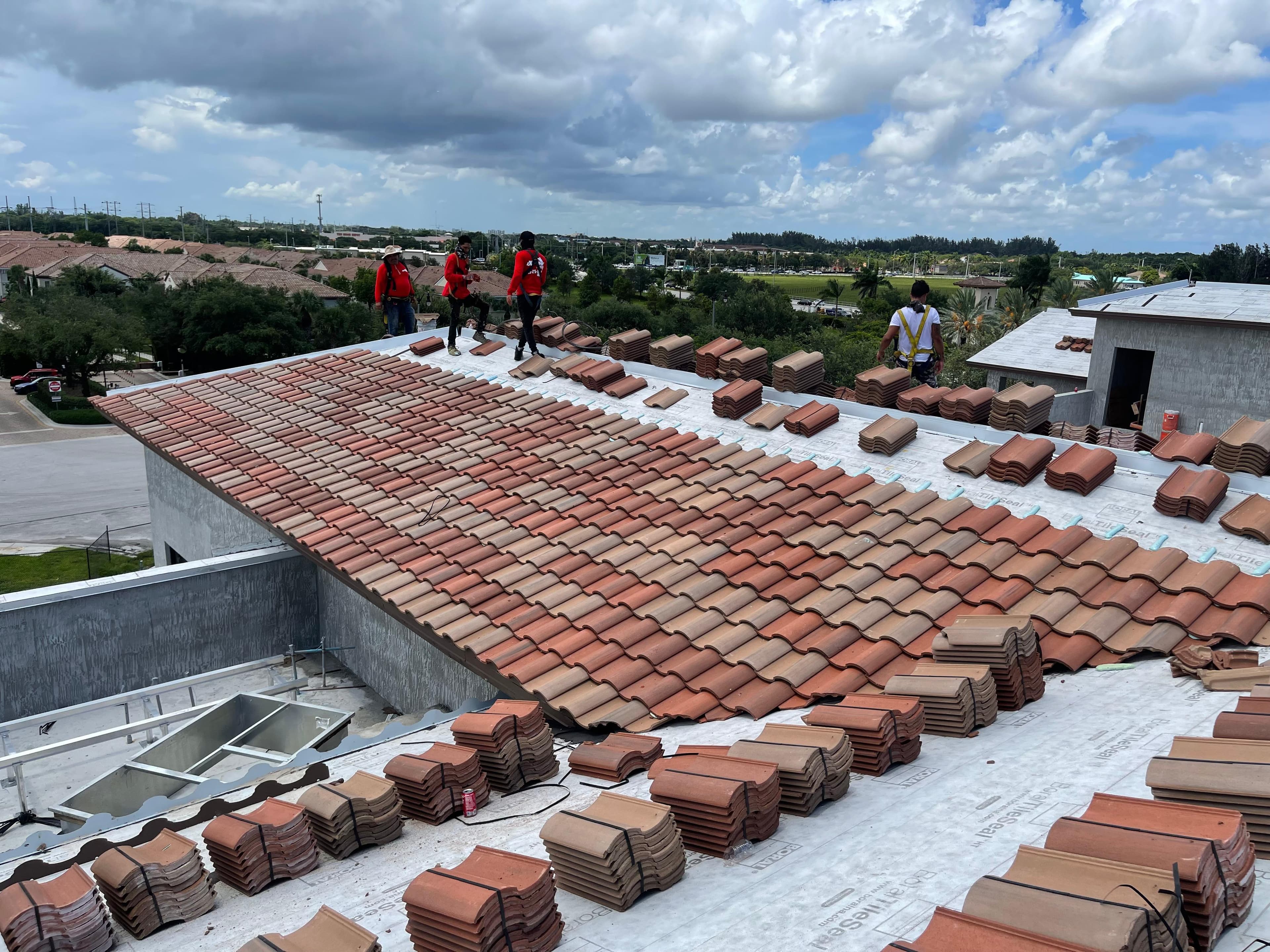
Clay and concrete tile roofs last 50-100 years in Miami. This complete guide covers costs, styles, wind ratings, maintenance, and building code requirements.
Read More