Luxury Roofing for Coral Gables, Coconut Grove, and Pinecrest Estates
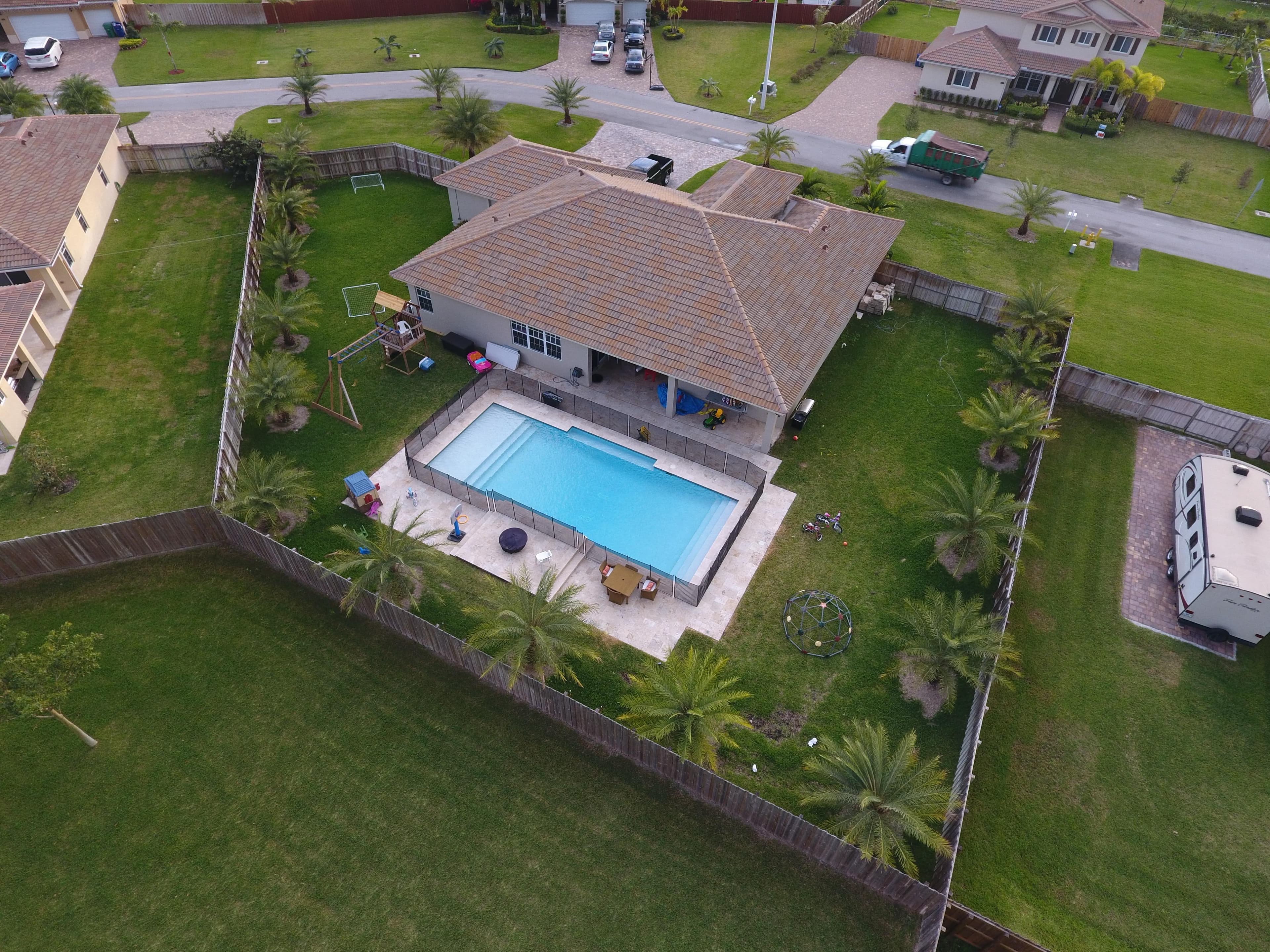
What Luxury Roofing Actually Costs in Coral Gables, Pinecrest, and Coconut Grove
I work in Miami's most expensive neighborhoods almost every week. Coral Gables historic district, Gables Estates, Cocoplum, Journey's End, Pinecrest, Deering Bay, waterfront Coconut Grove, Old Cutler Bay. The roofing work in these zip codes isn't like the rest of Miami. The homes are bigger, the HOAs are stricter, the materials are specialty, and the price per square foot runs 50 to 150 percent higher than a suburban Kendall replacement.
This post covers what premium roofing actually costs in these neighborhoods in 2026, the HOA requirements that dictate material selection, and the specialty tile matching and historic restoration work that makes luxury Miami roofing a different game entirely. If you're spending $80,000 to $250,000 on a new roof for a Mediterranean Revival mansion in Coral Gables or a modern estate in Pinecrest, you need to know how these projects actually work.
Neighborhood Architectural Styles and Roofing Traditions
Each of these premier Miami-Dade communities has a distinct architectural identity that directly influences roofing material selection, color palette, and design requirements. Understanding these traditions is essential before specifying any roofing system.
Coral Gables: Mediterranean Revival
Coral Gables was founded in the 1920s with a vision of a "City Beautiful" inspired by Mediterranean architecture. The city's zoning code and Board of Architects review process remain among the strictest in South Florida. Nearly every visible exterior modification, including roofing, must be approved by the board before work begins.
Roofing expectations in Coral Gables:
- Barrel clay tile is the dominant roofing material, with terracotta and earth tones required on most residential properties
- Flat concrete tile is accepted on some newer construction but barrel profiles are strongly preferred in historic districts
- Metal roofing is generally not approved for residential use in the core Coral Gables area
- Custom color matching is often required to meet the Board of Architects' palette standards
- Historic homes in the Coral Gables Historic District may require exact replication of original tile profiles and colors
The Board of Architects review process typically adds 4 to 8 weeks to the project timeline, so homeowners should plan accordingly. We handle all application submissions and attend review meetings on behalf of our clients.
Coconut Grove: Tropical Modern and Eclectic
Coconut Grove is Miami's oldest continuously inhabited neighborhood, and its canopy of mature banyan and oak trees gives it a lush, tropical character unlike anywhere else in the city. The architecture ranges from restored 1920s Mediterranean estates to cutting-edge contemporary homes with flat roofs, floor-to-ceiling glass, and clean geometric lines.
Roofing expectations in Coconut Grove:
- Contemporary homes frequently use standing seam metal roofing in dark bronze, zinc, or matte black finishes
- Historic properties typically feature clay barrel tile or flat tile in natural clay colors
- Green roofing (vegetative) and cool-roof systems are increasingly popular on modern builds
- Tree canopy coverage means roofs must handle significant organic debris, moisture retention, and potential branch impacts
- Many properties have complex multi-level roof lines that require expert flashing and waterproofing
Pinecrest: Estate Traditional and Transitional
Pinecrest is defined by large lots (typically half an acre or more), mature landscaping, and estate-scale homes from 4,000 to 15,000+ square feet. Architectural style leans traditional to transitional, with many homes combining Mediterranean elements with contemporary updates. Roofing expectations in Pinecrest:
- Concrete and clay tile dominate, with a mix of barrel, flat, and S-tile profiles
- Natural slate shows up on higher-end estate homes with colonial or European-inspired design
- Large roof areas make material consistency critical (color variation across a 6,000 sq ft roof is highly visible from the ground)
- Most homes include detached guest houses, pool cabanas, or covered outdoor kitchens that must have matching roofing
- Pinecrest doesn't have a Board of Architects, but HOAs in gated communities like Deering Bay and Journey's End impose their own material and color requirements
Premium Roofing Materials for Luxury Homes
Handmade clay barrel tile. The gold standard for Mediterranean and Spanish Colonial architecture. Unlike machine-made tile, each piece has subtle color variations and irregular edges that create the authentic Old World appearance that defines Coral Gables and similar communities. Cost: $16 to $25 per sq ft material, $30 to $55 per sq ft installed. Lifespan: 75 to 100+ years. Sources I use include artisan tile makers in Spain, Italy, Mexico, and Colombia, plus domestic manufacturers like Ludowici, MCA Clay, and Entegra. Considerations: Handmade tile is heavier than machine-made (up to 1,100 lbs per square), so structural capacity must be verified. Lead times for imported tile can reach 12 to 16 weeks.
Natural slate. Unmatched elegance and one of the longest lifespans of any roofing material. Quarried from natural stone, each slate tile is unique in texture and color depth. Cost: $22 to $45 per sq ft installed. Lifespan: 100 to 150+ years (Vermont and Welsh slate). Best origins for South Florida: Vermont (gray, green, purple), Virginia (dark gray), and Brazilian (multicolor). Avoid soft slate varieties that degrade in humid salt-air environments. Considerations: Slate is the heaviest common roofing material (800 to 1,500 lbs per square depending on thickness), requires experienced installers who understand hook or nail fastening techniques. Broken slates can be individually replaced without disturbing surrounding tiles.
Copper roofing and accents. Distinctive warmth for luxury homes. Can be used as a full roofing system or for accent areas (turrets, dormers, bay windows), gutters, and downspouts. Copper develops a natural green patina over 10 to 20 years. Cost: $28 to $65 per sq ft installed, depending on gauge and complexity. Lifespan: 80 to 100+ years. Applications: standing seam copper roofing, flat-seam copper for low-slope sections, copper flashing, copper gutters, decorative copper ridge caps. Considerations: copper runoff can stain light-colored surfaces below, so drainage planning is essential. Copper should never contact dissimilar metals (galvanic corrosion), and all fasteners must be copper or stainless steel.
Zinc roofing. Similar to copper in many ways but develops a gray patina instead of green. Self-healing properties mean minor scratches disappear over time. Cost: $26 to $45 per sq ft installed. Lifespan: 80 to 100+ years. Popular on modern and contemporary luxury homes where copper's warm tones would feel too traditional.
Custom color-matched concrete tile. For homeowners who want the look of clay tile with greater color consistency and a more moderate price point. Modern concrete tile manufacturing can replicate virtually any clay tile profile and color. Cost: $14 to $20 per sq ft installed. Lifespan: 40 to 60 years. Advantages: more uniform appearance, lighter weight than handmade clay, faster lead times, lower cost. Considerations: concrete tile may require re-sealing every 10 to 15 years to maintain color depth. Not accepted in some historic districts that require authentic clay.
The Coral Gables Board of Architects Process
Every exterior modification in Coral Gables requires Board of Architects approval. For roofing, this means navigating a specific multi-step process:
- Submittal package. Architectural drawings showing roof plan, material specifications, manufacturer cut sheets, and color samples. Physical tile samples (at least 3 tiles) must be included for color review.
- Review timeline. The Board meets twice monthly. Initial review typically requires one or two review cycles (2 to 4 weeks). Revisions add additional cycles. Plan for 4 to 8 weeks from submittal to approval on a routine project, longer for complex or historic district work.
- Common rejection reasons. Wrong tile profile for the home's architectural style, color too modern or inconsistent with neighborhood, metal materials on traditional residential properties, concrete tile where clay is required in historic zones.
- Historic district rules. The Coral Gables historic district has stricter standards than the rest of the city. Preservation-grade clay tile is often required, with color matching to the original home's 1920s-era tile palette.
We prepare all Board of Architects submissions in-house and have a strong track record of first-pass approvals based on our understanding of Coral Gables standards. This matters because resubmission cycles can add 6 to 10 weeks to a project timeline.
Gated Community HOA Requirements
Gables Estates, Cocoplum, Journey's End, Hammock Oaks, Old Cutler Bay, Deering Bay, and other gated communities in Pinecrest and Coconut Grove have their own architectural review committees. Common requirements include:
- Pre-approved material and color lists (you can't just pick a tile you like)
- Minimum roof pitch requirements
- Restrictions on visible roof-mounted equipment (vents, satellite dishes, solar panels)
- Requirement that all roof structures on the property (main home, guest house, cabana) use matching materials
- 2 to 4 week review timelines, sometimes longer during peak season
We request HOA architectural guidelines at the start of every luxury project and incorporate requirements into our initial proposal before the homeowner commits to a material selection.
What Makes a Luxury Roof Project Different
High-end roofing projects require a different level of care than standard residential work. Here's what separates luxury project management from typical residential roofing:
Property protection. Before any materials stage on the property, we install protective barriers around specimen trees, hedges, and planting beds. Walkways and driveways get covered with plywood or protective mats. Pool decks get tarped. Pools get covered and the pool filter runs continuously throughout the project to remove any debris. Outdoor kitchens, furniture, and water features get tarped and sealed.
Custom metal work. Luxury homes often feature architectural details that require custom roofing solutions:
- Custom-fabricated copper or painted aluminum flashing to match trim colors
- Decorative ridge and hip tiles that must be individually set and aligned
- Integrated gutter systems designed as part of the roof profile rather than as add-on components
- Concealed ventilation systems that maintain roofline aesthetics while providing adequate attic airflow
Dedicated project management. We assign a dedicated project manager to every luxury roofing project. This person is the single point of contact for the homeowner and coordinates daily progress updates with photos, advance notice of noisy or disruptive work phases, coordination with other contractors (painters, landscapers, pool service, interior designers) working on the property simultaneously, and flexible scheduling around homeowner travel, events, and social obligations.
Insurance Considerations for High-Value Homes
Homes in Coral Gables, Gables Estates, Pinecrest, and Cocoplum often carry replacement cost values of $2 million to $20+ million. Roofing decisions directly impact insurance coverage and premiums:
- Premium reduction: A new code-compliant roof with proper wind mitigation features can reduce windstorm insurance premiums by 20 to 40 percent. On a high-value home with a $15,000 to $40,000 annual premium, that's $3,000 to $16,000 per year in savings.
- Material documentation: Insurers require manufacturer certifications, Miami-Dade NOA numbers, and Florida Building Code compliance documentation on every product installed.
- Wind mitigation inspection: After installation, a certified inspector completes the OIR-B1-1802 wind mitigation report. This documentation is required for insurance discount eligibility.
- Agreed value policies: For homes with custom or imported roofing materials, I recommend agreed-value insurance policies that guarantee replacement with equivalent materials rather than standard depreciated-value coverage. Standard coverage can leave you with a $200,000 gap if your imported Spanish clay tile gets destroyed in a storm.
How to Vet a Luxury Roofing Contractor
The difference between a good roof and a great roof on a luxury home comes down to the contractor's experience with premium materials and high-end project requirements. Qualifications to verify:
- Manufacturer certifications for the specific materials being installed (clay tile, slate, copper, zinc)
- Portfolio of completed luxury projects in your neighborhood or similar gated communities
- Experience with Board of Architects and HOA review processes
- In-house custom metal fabrication for flashing, trim, and gutter work
- Licensed, insured, and bonded with coverage limits appropriate for high-value properties (minimum $2 million general liability)
- References from luxury homeowners who can speak to attention to detail, communication, and property care
- Dedicated project management with single-point contact
Ready for a Luxury Roofing Consultation?
Call us at 305-225-1535 or request a free estimate. We've been serving luxury roofing needs in Coral Gables, Coconut Grove, Pinecrest, Gables Estates, Cocoplum, and waterfront Miami since 2004. Every luxury project gets a dedicated project manager, custom fabrication as needed, full HOA and Board of Architects coordination, and property protection that matches the investment in your home.
Frequently Asked Questions
How much does a luxury roof cost in Coral Gables or Pinecrest?
Luxury roofing in Coral Gables and Pinecrest typically ranges from $25 to $60 per square foot installed, depending on the material. Handmade clay barrel tile runs $30-$50 per square foot, natural slate $20-$40, and copper $25-$60+. A 3,000-square-foot roof on an estate home may cost $75,000 to $180,000 or more.
Do I need Board of Architects approval for a new roof in Coral Gables?
Yes. All exterior modifications in Coral Gables, including roofing, require Board of Architects approval before work begins. The process involves submitting material specifications, physical tile samples, and architectural drawings. Approval typically takes 2-4 weeks. We handle all submissions for our clients.
What is the best roofing material for a Coconut Grove home?
The best material depends on your home's architecture. Mediterranean and historic homes in Coconut Grove look best with clay barrel tile. Contemporary and modern homes pair well with standing seam metal in dark or zinc finishes. For transitional styles, flat concrete tile or synthetic slate provides a clean, versatile look.
How long do handmade clay roof tiles last?
Handmade clay barrel tiles are among the longest-lasting roofing materials available, with lifespans of 75 to 100+ years. Many historic homes in Coral Gables still have their original 1920s clay tile roofs. The underlayment beneath the tile will need replacement every 25-40 years, but the tile itself can be carefully removed and reinstalled.
Will a new luxury roof reduce my insurance premiums in Miami-Dade?
Yes. A new code-compliant roof with proper attachment methods and secondary water barrier can reduce your windstorm insurance premiums by 15-40%. After installation, a wind mitigation inspection documents the roof's features for your insurer. For high-value homes, the annual savings can reach $5,000 to $15,000 or more.
Need Roofing Help?
Whether you need an inspection, repair, or full replacement, our team of licensed roofing professionals is ready to help. Serving South Florida since 2004.
Related Articles
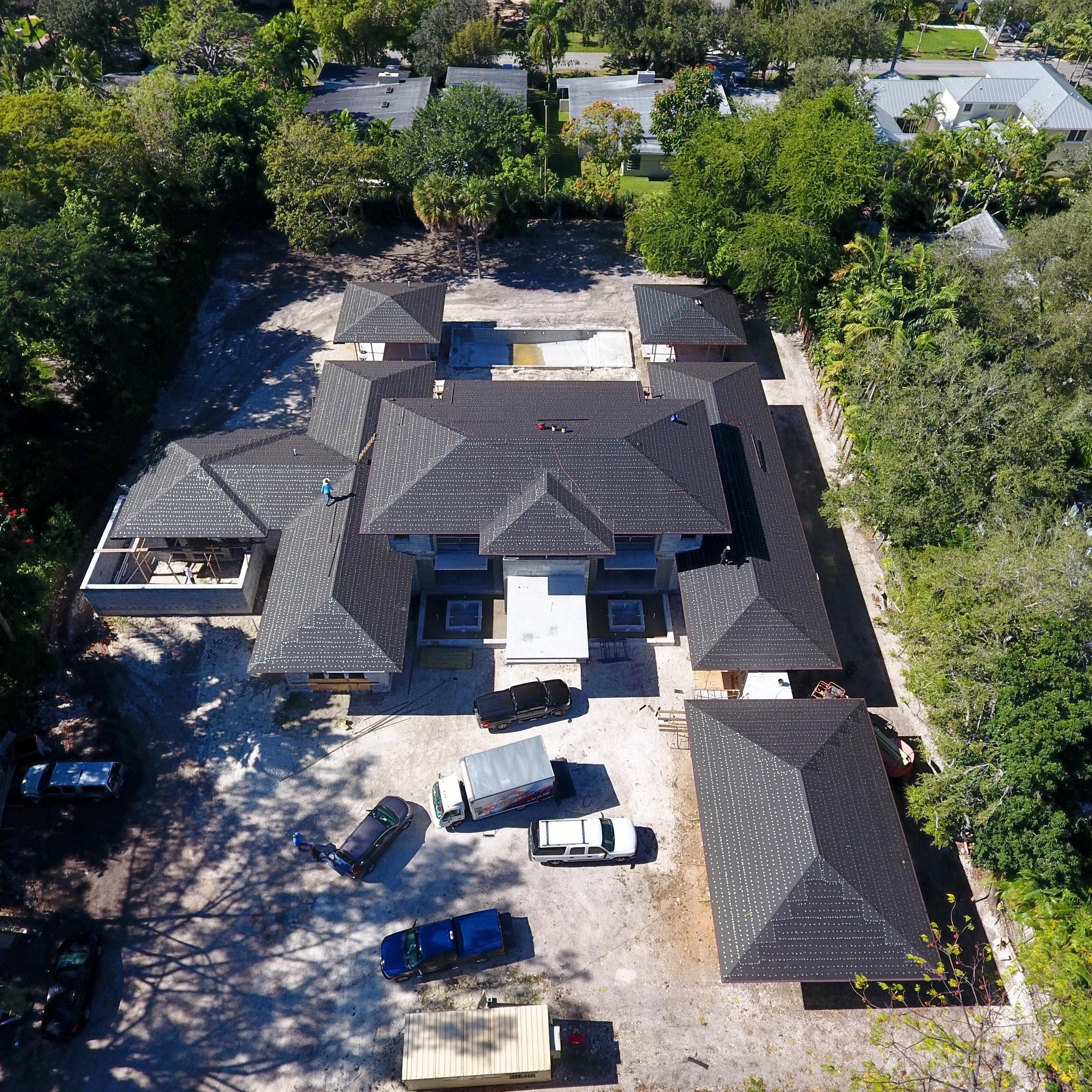
Barrel tile roofs define Miami's Mediterranean architecture. Learn about styles, costs, wind ratings, and finding experienced installers in South Florida.
Read More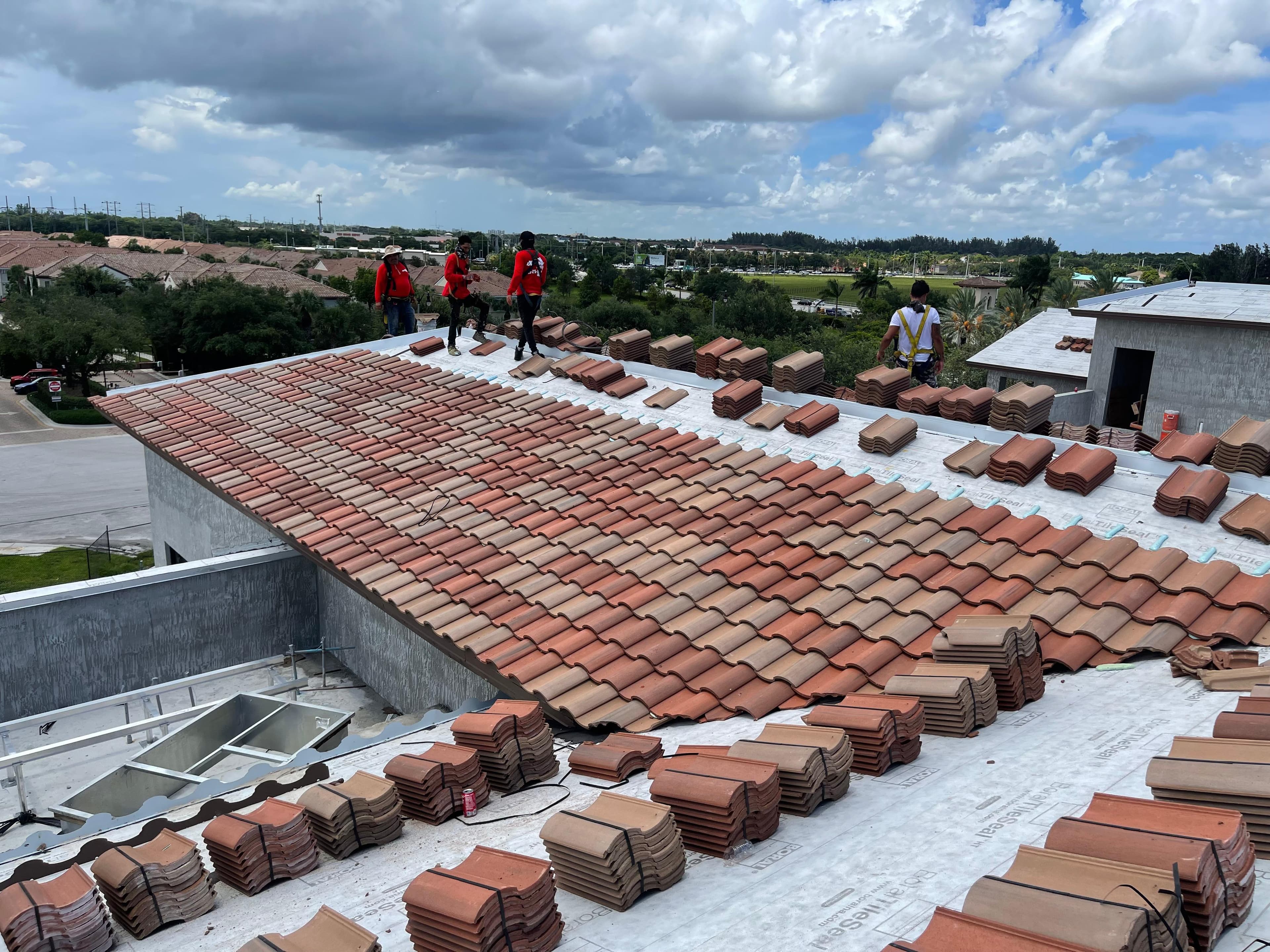
Clay and concrete tile roofs last 50-100 years in Miami. This complete guide covers costs, styles, wind ratings, maintenance, and building code requirements.
Read More