
Tile Roof Repair in Miami: Everything You Need to Know
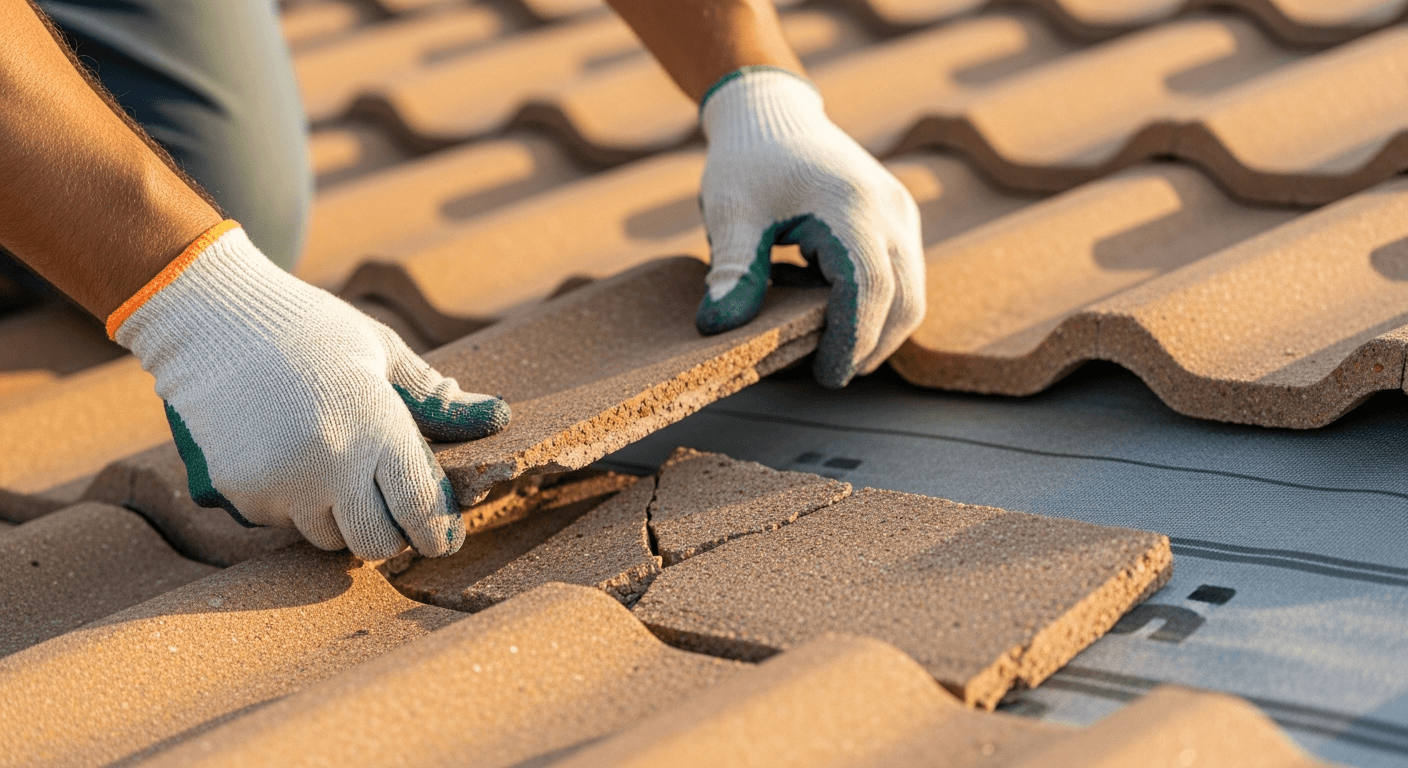
The Tile Repair That Saves You $12,000 If You Catch It in Year 2
Here's the pattern I see over and over on tile roof repair calls in Miami: a homeowner notices a water stain on a ceiling, waits 6 months hoping it goes away, calls me when it starts dripping during a summer storm. By then, the underlayment is rotted across 20 square feet, the deck has soft spots, and what could have been a $400 tile repair at year 2 has become a $12,000 partial re-roof at year 3.
Tile roofs don't leak like shingle roofs. Shingles leak because the shingle itself failed. Tile roofs leak because something small got ignored: a single cracked tile, a slipped ridge cap, a flashing that failed at a pipe boot. The tile is just the armor. The real waterproofing is the underlayment beneath it. When you let a small problem sit, you're letting water attack the underlayment 24/7 until it gives up.
I've been repairing tile roofs across Coral Gables, Pinecrest, Coconut Grove, Kendall, Doral, Miami Lakes, Homestead, and every other Miami-Dade neighborhood since 2004. Here's what I want you to know before you call anyone for a repair.
The Six Problems I Actually Fix On Miami Tile Roofs
1. Broken or cracked individual tiles. Single cracked tile, impact from falling branches, debris from a storm, or foot traffic from an AC tech. Fix: replace the individual tile. Cost: $200 to $450 for 1 to 3 tiles, $400 to $800 for up to 10 tiles, most of that is the minimum service call and tile matching labor, not the tile itself.
2. Slipped or displaced tiles. Wind gets under a tile that lost its mortar or foam bond and shifts it out of position. Usually at perimeter edges, rakes, and hips where wind pressure is highest. Fix: re-seat the tile, re-bond with approved adhesive (Polyset AH-160 or PolyFoam IRC), replace any clips. Cost: $300 to $700.
3. Ridge and hip tile failures. Ridge and hip tiles sit on top of the main field tiles along peaks and corners. They're the most wind-exposed tiles on the roof. Mortar cracks, tiles shift, entire runs come loose. Fix: strip the affected section, clean the substrate, apply new mortar or foam, re-set the tiles, add mechanical clips if missing. Cost: $800 to $2,800 depending on length.
4. Flashing failures at penetrations. Every plumbing vent, chimney, skylight, solar tube, and roof-to-wall transition has metal or membrane flashing. Miami's UV and salt air wreck flashings within 10 to 15 years. Water intrudes around the penetration and runs down under the tiles until it finds the deck. Fix: remove surrounding tiles, strip old flashing, install new flashing with proper overlap and sealant, re-set the tiles. Cost: $500 to $1,600 per penetration.
5. Underlayment failure under intact tiles. The tile looks fine from outside but water is getting into the house. Usually the self-adhered underlayment has aged out (25 to 30 year lifespan in Miami heat), lost adhesion, and started letting water through. Fix: remove the tiles in the affected area, strip the old underlayment, install new self-adhered underlayment, reinstall the tiles (expect 10 to 15 percent tile breakage). Cost: $2,500 to $9,000 for a single slope, $10,000 to $18,000 for the full roof.
6. Valley leaks. Valleys are where two roof slopes meet at an inside angle. They carry the most water on any roof. Miami's heavy summer rains can overwhelm undersized valleys, and the metal valley liner can corrode or pull away. Fix: strip tiles along both sides of the valley, replace or repair the valley liner, install new underlayment in the valley throat, reinstall tiles with proper clearance. Cost: $1,200 to $3,500 per valley.
Real 2026 Miami Tile Repair Pricing
These are current prices I'm quoting across Miami-Dade this year. They include tile matching, labor, materials, and disposal. They don't include structural repairs to the deck if we find rot during the work.
| Repair Type | Typical Cost |
|---|---|
| Replace 1 to 10 tiles | $200 to $600 |
| Replace 10 to 30 tiles | $500 to $1,400 |
| Replace 30 to 100 tiles | $1,400 to $3,500 |
| Ridge or hip repair (up to 20 linear ft) | $800 to $2,200 |
| Ridge or hip full replacement | $3,500 to $8,000 |
| Flashing replacement (single penetration) | $500 to $1,400 |
| Chimney flashing full replacement | $1,200 to $3,500 |
| Valley repair | $1,200 to $3,500 |
| Partial underlayment replacement (one slope) | $3,500 to $9,500 |
| Full underlayment replacement (tiles salvaged) | $10,000 to $18,000 |
| Emergency tarp (storm response) | $400 to $1,200 |
Add 20 to 35 percent for Coral Gables, Pinecrest, or Gables Estates homes because of historic tile matching complexity and HOA requirements. Add 25 to 40 percent for three-story homes, steep pitches, or complex cut-up roofs.
If a contractor quotes you a simple tile replacement under $200, something's wrong. Either they're not pulling a permit, they're skipping the matching step, or they're planning to charge you more on the invoice than the quote. Walk away.
Matching Tiles Is Half the Battle
Most homeowners don't realize how hard tile matching can be until they need a replacement. Manufacturers discontinue profiles, change color formulations, and sometimes leave the market entirely. If your home was built in 1985 with a Monier Lifetile profile, those exact tiles haven't been made in 15 years. If your home has original 1920s Cuban clay tiles from Coral Gables, good luck finding more from anywhere other than salvage yards.
Here's my process for matching tiles on Miami repairs:
- Identify the manufacturer and profile. Look at the back of a broken tile for a stamp or manufacturer mark. Check the original project records if the homeowner has them. Compare the profile shape against manufacturer catalogs.
- Check current production. If the tile is still made, I call my local distributors (Eagle Roofing Products in Homestead, Boral Roofing in Miami, MCA Clay Roof Tile, Entegra Roof Tile). Lead time 1 to 4 weeks.
- Check salvage yards. For discontinued profiles, I have relationships with 4 Florida salvage yards that specialize in salvaged tile. Sometimes I find exact matches. Sometimes I find close enough.
- Custom order for historic homes. For Coral Gables and Coconut Grove historic restoration work, I can order custom-fired clay tiles from Ludowici or MCA Clay. Lead time 6 to 12 weeks. Cost 2 to 3 times normal tile pricing.
- Salvage from the back of the roof. As a last resort, when nothing matches and visible tiles need replacement, I salvage matching tiles from a less-visible slope (back of house) and install the non-matching replacements on that slope. The visible front of the house keeps its original look.
If your roofer doesn't talk about tile matching during the quote, ask them directly how they plan to match your existing tiles. If they can't answer specifically, they're going to either slap on non-matching tiles or find out mid-job that they can't source what they need.
How to Diagnose Tile Roof Damage Yourself
Before you call any contractor, walk around the outside of your house (stay on the ground) and look for these signs:
- Missing tiles visible from the ground. Gaps in the roof field where you can see a different color underneath (the underlayment).
- Broken tile fragments in the yard. Especially after storms. Orange or terracotta fragments on the driveway or near gutters.
- Tiles visibly shifted out of position. Compare to neighboring tiles. Slipped tiles show uneven rows or gaps.
- Lifted ridge tiles. Gaps along the peak of the roof where daylight should not be visible.
- Dark streaks or staining. Biological growth or water running down across tiles.
- Sagging or uneven sections. Possible structural issue or water damage to the deck below.
Inside the house, check for:
- Water stains on ceilings. Especially after heavy rain.
- Water stains on exterior walls. Indicates flashing failure or wall roof-to-wall intersection issue.
- Musty smells in the attic. Usually means the attic is staying too wet and water is coming in somewhere.
- Visible daylight through the roof deck (safely, from the attic, during a dry day).
If you see any of these, call for a professional inspection before the next heavy rain. A free inspection costs you nothing. Letting a small leak destroy your underlayment for 6 months costs $5,000 to $12,000.
When Repair Becomes Replacement
Tile repairs make sense when the tile system is still fundamentally sound and you're fixing localized damage. Repair becomes the wrong call when:
- The underlayment has failed across more than 30 percent of the roof. At that point, the cost of multiple partial underlayment repairs approaches the cost of a full re-roof. Just do the full job.
- You've had multiple leak events in different locations over the past 2 years. That's a systemic failure signal, not isolated damage.
- The roof is past 40 to 45 years old. Even if tiles look intact, the underlayment, fasteners, and flashings are all aging out simultaneously. You'll chase leaks indefinitely if you keep patching.
- Your insurance covers full replacement after storm damage. Let them pay for the upgrade. Repairs on hurricane-damaged tile roofs rarely catch all the hidden damage, and you'll be calling back in 18 months.
- Florida's 25 percent rule kicks in. If you're repairing more than 25 percent of the roof within a 12-month period, code requires bringing the entire roof up to current standards. At that point, a full tear-off is usually cheaper than a compliant partial repair.
Finding a Real Tile Roofer in Miami
Not every Florida roofer is qualified for tile work. Tile is a specialty with a steep learning curve. When you're interviewing contractors for a tile repair, ask:
- How many tile repair jobs do you complete per month in Miami-Dade? Look for 10+ per month as a sign of actual specialization.
- What's your tile matching process, and what suppliers do you use? They should name specific distributors.
- Do you pull permits for repairs over 25 percent of the roof area? The correct answer is yes, always, without exception.
- Can you show me 3 tile repairs you've completed in my neighborhood in the last 6 months? Local references matter.
- What's your workmanship warranty on tile repairs? Minimum 2 years is reasonable. 5 years is better.
- Do you carry general liability and workers comp insurance, and can I see the certificates? Verify before work starts.
Also check the Florida license number at myfloridalicense.com (should start with CCC for Certified Roofing Contractor), look up the contractor at the Better Business Bureau, and run a Florida DBPR complaint check. Tile repairs cost enough that you can't afford to hire the wrong person.
Ready for a Real Quote?
Call us at 305-225-1535 or request a free estimate. We'll walk the roof, diagnose every active and developing problem, pull matching tiles from our stock or source replacements through our distributor network, and give you an honest repair quote with line-item pricing. If we find that a repair won't solve the underlying problem, we'll tell you that too. No upsell pressure, no surprise charges mid-job.
Frequently Asked Questions
How much does it cost to replace a few broken tiles on my Miami roof?
Replacing 1 to 10 tiles typically costs $150 to $500, which includes a minimum service call charge. Costs increase if tiles are difficult to match, the roof is steep or high, or if underlayment repair is needed. Most contractors offer free estimates, so get multiple quotes for accurate pricing.
Can you match the color of my existing tile roof?
In most cases, yes. Experienced tile roofing contractors maintain relationships with manufacturers and suppliers to source matching tiles. If your tiles are discontinued, salvage yards often have inventory from older roofs. In rare cases, custom tiles may be manufactured, which takes 4 to 6 weeks and costs more.
How long does a tile roof underlayment last in Miami?
Tile roof underlayment typically lasts 20 to 30 years in South Florida's climate. Heat, humidity, and UV exposure accelerate deterioration. Signs that your underlayment needs replacement include ceiling leaks despite intact tiles, attic moisture, and visible tears when inspecting from below.
Is it worth repairing an old tile roof or should I replace it?
If your roof is under 30 years old and only 10% to 20% of tiles are damaged, repair is usually cost-effective. If the underlayment has failed, more than 20% of tiles are damaged, or the roof is over 40 years old, replacement may be the better investment. A professional inspection can help you decide.
Do tile roof repairs require a permit in Miami-Dade County?
Most minor tile repairs (replacing a few tiles, repairing flashing) do not require permits. However, if you are replacing more than 25% of the roof or making structural changes, a permit is required. Your contractor will determine permit requirements and handle the application process.
Need Roofing Help?
Whether you need an inspection, repair, or full replacement, our team of licensed roofing professionals is ready to help. Serving South Florida since 2004.
Related Articles
Everything you need to know about barrel tile roof installation in Miami, including styles, costs, installation process, hurricane ratings, maintenance, and how barrel tiles compare to other roofing materials.
Read More
Comprehensive guide to asphalt shingle roofing in Miami covering architectural vs. 3-tab shingles, costs, hurricane ratings, lifespan, energy efficiency, and why shingles may or may not be right for South Florida homes.
Read More