
Emergency Roof Repair After a Hurricane: Your First 48 Hours
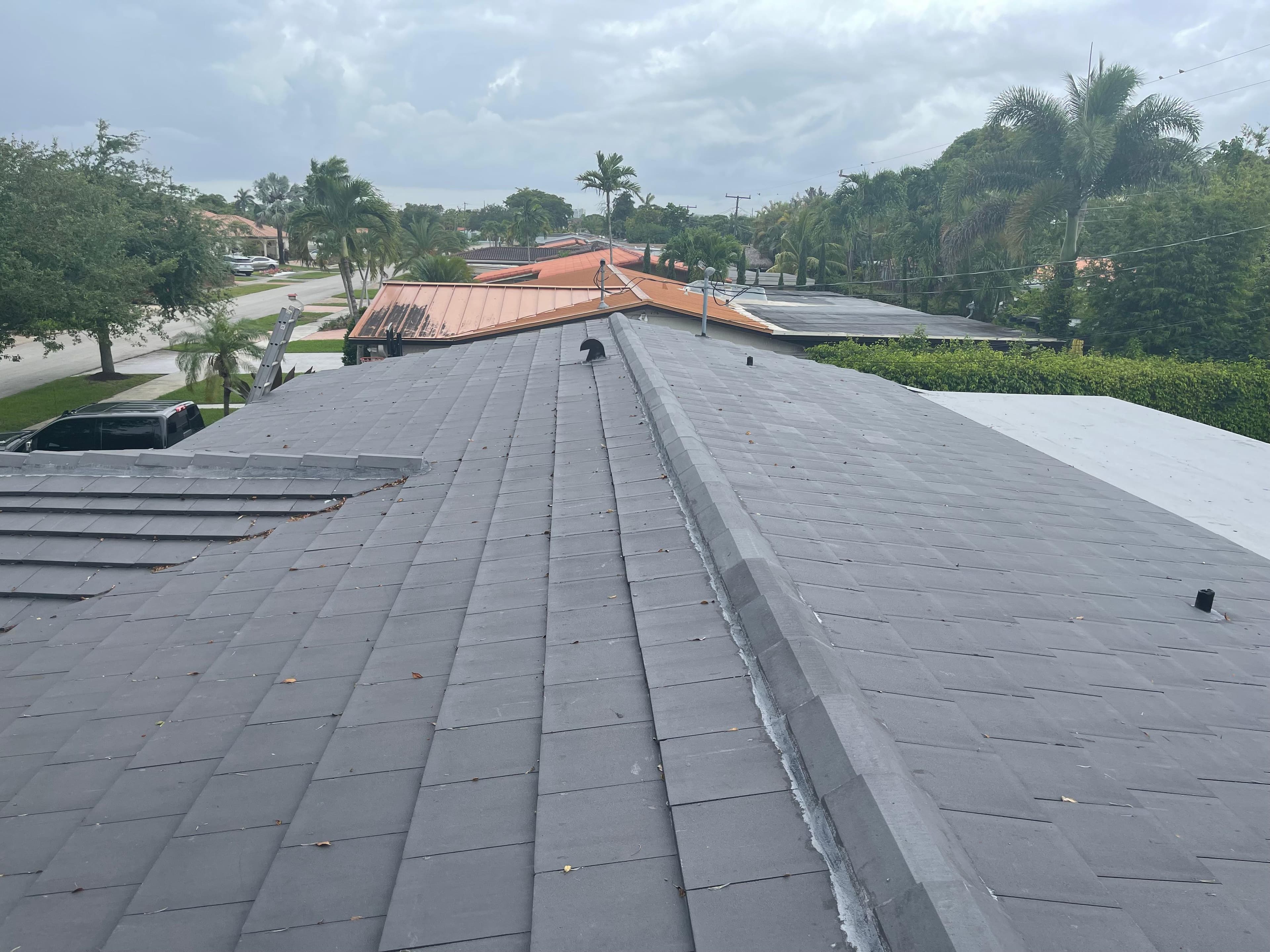
The First Rule of Post-Hurricane Roof Damage: Stay Off The Roof
I get hundreds of calls in the 72 hours after a hurricane hits Miami. Owners panicked, water pouring into the living room, debris everywhere, and they want to climb up there and start fixing things. Don't. Staying off that roof is the single most important thing you can do in the first 48 hours after a storm.
Wet tiles are ice-rink slippery. Structural damage you can't see from the ground can collapse under your weight. Downed power lines might be draped near or across the roof even if they look dead. Every year after hurricane season, Miami emergency rooms see dozens of homeowners with broken bones and worse from trying to assess their own storm damage.
Your job in the first 48 hours is four things, in this order: secure your family's safety, document damage from ground level, mitigate water intrusion with temporary tarps, and contact your insurance company. Everything else waits until a licensed contractor can safely access the roof. Here's exactly how to handle each phase.
Hours 0 Through 6: Stay Safe
The first 6 hours after a Miami hurricane are the most dangerous time for homeowners. Adrenaline pushes people to assess damage and start repairs before conditions are safe. I've had clients call me from the ER after falling through damaged roof sections, getting shocked by energized power lines, and stepping on nails hidden in debris. None of that damage was worth the risk.
Here's the non-negotiable list for the first 6 hours:
Stay off the roof completely. Wet tiles and shingles are slippery. Hidden structural damage can collapse under your weight. Downed power lines might be draped across the roof even if they look dead (they're often re-energized without warning when power crews start restoration work). Debris includes nails, broken glass, splintered wood, and sharp metal. If you need to see the roof, use binoculars from the ground or fly a drone. Your roofing contractor will do the real inspection later.
Check the house from outside before going in. Look for leaning walls, cracked foundations, or visibly sagging rooflines. Don't light candles or lighters (gas leaks are common after hurricanes). Don't step in standing water near electrical outlets or panels. If anything looks structurally wrong, find temporary shelter and call a structural engineer before re-entering.
Turn off the main breaker if you see any water near electrical panels, wiring, or outlets. Water and electricity are what kill most post-hurricane homeowners.
Wear hard-soled shoes, work gloves, and eye protection before touching anything. The debris field around a damaged home is brutal.
Evacuate if the damage is major. Large roof openings, exposed trusses, sagging ceilings, or visible structural movement mean the home may not be safe to occupy. Find temporary shelter and handle the rest of the recovery process from there.
Hours 6 Through 24: Document Every Square Foot
Documentation is what determines whether your insurance claim gets paid in full, partially paid, or denied. Insurance adjusters see thousands of claims after a major Miami hurricane, and the homeowners with the most thorough documentation consistently get the fastest and largest settlements. The ones who skimp on this step get underpaid or denied.
Here's the documentation protocol I walk every client through:
Photos from the ground, all four sides of the house. Wide-angle shots showing the entire roofline. Then close-ups of every damaged area. Missing tiles, exposed decking, lifted flashing, damaged vents, debris impact points. Hold a coin or ruler next to damage for scale reference. Make sure your phone has GPS tagging and timestamps enabled in camera settings.
Interior damage photos. Water stains on ceilings, wet insulation in the attic, water pooling on floors, damaged furniture, saturated carpets. Photograph everything that's wet or broken.
Video walkaround. Start a continuous video recording and narrate the entire exterior walkaround. Say the date and time out loud at the start. Describe what you see as you walk. Then walk through the interior showing every water intrusion point. The narrated video is powerful evidence for the adjuster.
Written damage list. Organize by location: roof (missing tiles, exposed decking, damaged flashing), interior (which rooms, estimated square footage affected, damaged belongings), exterior (soffits, fascia, gutters, screen enclosures, fences).
Save everything in multiple locations. Your phone, cloud storage (iCloud, Google Drive, Dropbox), email yourself copies, and ideally a USB drive. Phone loss and damage is common during storms. Don't lose your only copy of the documentation.
Hours 12 Through 24: Stop More Water From Getting In
After documenting damage, your next priority is emergency water mitigation. Miami's afternoon thunderstorms mean even a passing hurricane leaves you facing continued rainfall. Every additional hour of water intrusion compounds the interior damage and mold risk.
Professional emergency tarping is the standard temporary protection. A real tarping job costs $500 to $2,500 in Miami depending on the damaged area size, and it holds up for 30 to 90 days through normal weather. Professional tarps are secured with 2x4 lumber screwed through the tarp into solid roof decking, not weighted with sandbags or rocks. They extend at least 4 feet beyond the damaged area on all sides. They're installed by roofers who can safely walk the damaged roof.
FEMA Operation Blue Roof provides free temporary tarping after federally declared disasters. Register at blueroof.us if the storm was declared a disaster. The free tarps aren't as durable as professional tarps but they work for basic protection.
DIY tarping only if you can do it safely from a ladder and the damage is accessible without walking the roof. Use a heavy-duty 6 mil blue tarp, drape it over the ridge so water sheds both sides, secure with 1x3 or 2x4 furring strips screwed through the tarp into solid decking, extend well beyond the damaged area. Never use nails alone (they tear through in wind). If the damage requires roof access to cover it, hire a professional. This is not the moment to gamble with your safety.
Interior water management:
- Place buckets under active leaks
- Remove wet ceiling insulation before it collapses drywall (fiberglass holds massive water weight)
- Run fans and dehumidifiers continuously if you have power or a generator
- Remove soaked carpet and padding within 48 hours to stop mold
- Move furniture and valuables away from wet areas
Hours 24 Through 48: File Insurance and Start Recovery
Within 48 hours of the storm, you need to have contacted your insurance carrier, filed the initial claim, and started the process of getting a licensed roofer to your property. Earlier filings typically get faster attention because adjuster capacity is first-come, first-served after major storms.
When you call your insurer:
Have your policy number, date and time of damage, brief damage description, current contact info (if you've been displaced), and your documentation ready. Request a claim number and the name of your assigned adjuster. Log every communication with dates, times, and what was discussed. Never sign a "final settlement" document until you're confident all damage has been identified.
File even if you haven't seen the full damage. You can supplement a claim later as additional damage is discovered during repairs. Waiting to file is worse than filing incomplete.
Consider a public adjuster for complex claims. Public adjusters work for you (not the insurance company) and typically charge 10 to 15 percent of the claim payout. For claims above $30,000 or claims where the carrier is pushing back, they often recover enough additional money to pay for themselves multiple times over.
Never accept offers of "free deductible payment" from contractors. That's insurance fraud in Florida. Any contractor offering to pay or waive your deductible is either running a scam or committing a felony.
How to Spot a Storm Chaser (And Why They're Dangerous)
After every major Miami hurricane, storm chasers descend on the area. Out-of-state contractors in unmarked trucks offering "free inspections," demanding cash upfront, and disappearing after cashing your insurance check. I've seen this playbook after Irma, Michael, and every smaller storm in between.
Red flags that mean "walk away":
- Knocks on your door unsolicited within days of the storm
- Offers to pay your insurance deductible (illegal in Florida)
- Demands large cash deposits before starting work
- Can't provide a Florida CCC or CRC contractor license number
- Has no local address or verifiable local business history
- Pressures you to sign an Assignment of Benefits (AOB) immediately
- Out-of-state license plates on their work truck
- Quotes suspiciously low prices compared to local contractors
How to vet a legitimate Miami roofer in the 48-hour window:
- Verify Florida license at myfloridalicense.com (CCC or CRC prefix)
- Confirm active workers comp and general liability insurance (ask for certificates)
- Check local history with BBB, Google reviews, and Miami-Dade Contractor License Division
- Get a written estimate before any work begins
- Standard payment terms are 1/3 deposit, 1/3 at midpoint, 1/3 on completion. Never pay 100 percent upfront.
- Insist on a written contract specifying scope, materials, timeline, and workmanship warranty
Realistic Timeline to Permanent Repairs
Here's what the full timeline typically looks like in Miami after a major hurricane:
| Phase | Typical Duration |
|---|---|
| Emergency tarping | 1 to 7 days after storm |
| Insurance adjuster visit | 1 to 4 weeks |
| Claim approval | 2 to 8 weeks |
| Material procurement | 2 to 6 weeks (supply chain delays common) |
| Permanent repair or replacement | 1 to 4 weeks of actual work |
| Total from storm to finished roof | 2 to 5 months |
After major hurricanes like Andrew, Irma, and Ian, timelines can stretch to 6+ months due to contractor demand, material shortages, and permit backlogs. Plan for longer timelines and budget for interim housing if you're displaced.
Florida's 25 Percent Rule and Your Repairs
If your permanent repair involves more than 25 percent of your total roof area within a 12-month period, Florida Building Code requires the entire roof to be brought up to current code standards. In Miami-Dade HVHZ, that means new NOA-approved materials, enhanced deck attachment, self-adhered secondary water barrier, and hurricane-rated flashing across the entire roof.
The 25 percent rule frequently turns a partial repair into a full replacement. On older homes where the existing roof is already 15+ years old, that's often the right outcome anyway. On newer roofs with localized damage, it can feel frustrating. Either way, your contractor has to comply or you'll fail inspection and end up paying twice.
Mold Prevention (48-Hour Window)
Mold starts growing within 24 to 48 hours of water intrusion in Miami's humidity. After hurricane roof damage, mold mitigation has to happen alongside structural repairs, not after them.
- Maximize airflow by opening windows and doors once the storm has fully passed and it's safe to do so
- Run dehumidifiers continuously to target indoor humidity below 60 percent
- Remove wet drywall and insulation within 48 hours (saturated drywall can't be saved and will harbor mold behind the surface)
- Treat exposed wood framing with EPA-registered antimicrobial solution
- Don't paint or seal water-damaged surfaces until they're completely dry and treated
If water intrusion affects more than 10 square feet, if you see visible mold, or if you smell musty odors, hire a licensed Florida mold remediation contractor. Florida requires mold assessors and remediators to be separately licensed, and the same company can't perform both assessment and remediation on the same project. Typical mold remediation costs after hurricane damage run $1,500 to $10,000 depending on affected area.
Ready for Emergency Response?
Call us at 305-225-1535 or request a free estimate. After any storm event, we prioritize existing clients first, then take new calls in the order they come in. If you're dealing with active water intrusion right now, call us immediately and describe the damage. We can usually dispatch a crew for emergency tarping within 24 hours during a storm event, and we'll document everything for your insurance claim at the same time. No deposits required on emergency work, no pressure to sign AOBs, no storm chaser tactics.
Frequently Asked Questions
How much does emergency roof tarping cost in Miami after a hurricane?
Emergency roof tarping in Miami typically costs between $500 and $2,500 depending on the size of the damaged area and accessibility. After a federally declared disaster, FEMA's Operation Blue Roof program may provide free temporary roof covering. Most homeowners insurance policies cover emergency tarping costs as part of your claim's temporary repair coverage.
Should I make temporary roof repairs before the insurance adjuster arrives?
Yes, you should make reasonable temporary repairs to prevent further damage, and your insurance policy requires you to do so. However, document all damage thoroughly with photos and video before making any temporary repairs. Keep all receipts for materials and labor. These temporary repair costs are typically covered separately from your permanent repair claim.
How long does it take to get a roof repaired after a hurricane in Miami?
The full timeline from hurricane damage to completed permanent repair typically ranges from two to five months. This includes emergency tarping within the first week, an insurance adjuster visit within one to four weeks, claim approval in two to eight weeks, material procurement in two to six weeks, and the actual repair in one to four weeks. After major hurricanes, timelines can extend to six months or longer.
How do I identify a storm chaser roofing scam after a hurricane?
Warning signs include unsolicited door-knocking immediately after a storm, offers to pay your insurance deductible, demands for large cash deposits upfront, inability to provide a Florida contractor license number, no local business address, and pressure to sign a contract or Assignment of Benefits immediately. Always verify a contractor's license at myfloridalicense.com before hiring.
Does my Florida homeowners insurance cover emergency roof repairs?
Most Florida homeowners insurance policies cover both emergency temporary repairs and permanent roof repairs caused by hurricane wind damage. Your policy requires you to take reasonable steps to prevent further damage, which includes emergency tarping. Temporary repair costs are typically separate from your hurricane deductible. Review your specific policy for coverage limits and exclusions.
Need Roofing Help?
Whether you need an inspection, repair, or full replacement, our team of licensed roofing professionals is ready to help. Serving South Florida since 2004.
Related Articles
Florida insurance rates are dropping for the first time since 2015. Learn how combining market rate decreases with strategic roof upgrades can save Miami homeowners $1,400-$2,600 per year on premiums.
Read More
My Safe Florida Home Grant 2026: Get Up to $10,000 for Roof Hardening (Before Funding Runs Out)
The My Safe Florida Home program has $270 million available for roof hardening grants up to $10,000, but the legislature has not approved new funding for 2027. Learn how to apply and maximize your grant.
Read More