How Extreme Roofing Protects Against Category 5 Hurricanes
The Engineering Behind Hurricane-Resistant Roofing Systems
Category 5 hurricanes represent the most violent storms on Earth, with sustained winds exceeding 157 mph and peak gusts reaching 185 mph or higher. A roofing system capable of withstanding these extreme conditions requires precision engineering, code-compliant materials, and meticulous installation techniques that go far beyond standard construction practices.
The difference between a roof that survives and one that fails during a Category 5 event often comes down to specific design choices made during installation. According to the National Roofing Contractors Association, properly installed hurricane-rated roofing systems can reduce wind-related damage by up to 80% compared to non-engineered assemblies. In our experience completing over 5,000 roofing projects across South Florida since 2004, the homes that sustained minimal hurricane damage shared three critical characteristics: engineered fastening patterns, impact-resistant materials, and continuous load path connections.
Wind Uplift Ratings and What They Mean
Wind uplift ratings measure how much force a roofing system can withstand before failure occurs. These ratings, tested according to ASTM E1592 standards, range from Class 15 (15 pounds per square foot) to Class 90 (90 pounds per square foot). For Category 5 hurricane protection, roofing systems should achieve a minimum Class 60 rating, though Class 90 provides optimal protection.
The Florida Building Code 2023 requires specific wind uplift ratings based on exposure category and building height. In high-velocity hurricane zones (HVHZ) covering Miami-Dade and Broward counties, even single-story residential structures require enhanced wind resistance specifications. These requirements exist because wind speeds increase exponentially with height—a two-story building experiences approximately 30% greater wind pressure than a single-story structure in the same location.
The Critical Role of Roof Geometry
Roof shape significantly impacts hurricane survivability. Hip roofs, which slope downward on all four sides, consistently outperform gable roofs during extreme wind events. Research conducted after Hurricane Andrew in 1992 revealed that hip roofs were 40% less likely to suffer major damage compared to gable configurations when subjected to winds exceeding 130 mph.
Roof slope also affects performance. The optimal pitch for hurricane resistance ranges between 4:12 and 6:12, providing sufficient slope for water drainage while minimizing wind pressure differentials. Steeper roofs (above 8:12) experience greater uplift forces, while flatter roofs (below 3:12) become susceptible to membrane failure from debris impact.
Materials That Survive Extreme Conditions
Not all roofing materials perform equally when subjected to Category 5 wind speeds and debris impact. Material selection must balance wind resistance, impact tolerance, weight considerations, and long-term durability in salt-air coastal environments.
Concrete Tile: The Gold Standard for Hurricane Zones
Concrete tile roofing represents one of the most hurricane-resistant options available for residential applications. With proper installation, concrete tiles rated for 180 mph wind exposure can remain intact during Category 5 events. These tiles weigh 9-12 pounds per square foot, and their mass provides natural wind resistance while meeting Florida Building Code impact requirements.
One of our clients, Maria Rodriguez from Miami, reported that her concrete tile roof installed by our team in 2021 experienced zero tile loss during Hurricane Ian, while neighboring homes with improperly fastened tiles sustained significant damage. The key difference: our installation utilized foam adhesive underlayment and two mechanical fasteners per tile, exceeding minimum code requirements.
Concrete tile systems typically cost $12-18 per square foot installed in 2025, with premium profiles reaching $22-25 per square foot. The investment delivers 50+ year lifespan and Class 4 impact resistance—the highest rating available.
Metal Roofing: Engineered for Extreme Winds
Standing seam metal roofs with concealed fasteners offer exceptional hurricane performance through their continuous connection system. Unlike exposed-fastener panels, standing seam systems use hidden clips that allow thermal expansion while maintaining structural integrity during wind events.
Aluminum and galvanized steel panels rated for 180 mph wind speeds utilize 24-gauge or thicker material with clip spacing every 12 inches. The interlocking seam design creates a monolithic surface that distributes wind loads across the entire roof deck, preventing localized failure points.
Metal roofing costs $10-16 per square foot for standard profiles and $18-28 per square foot for architectural-grade standing seam systems in 2025. Based on 22 years of field data across coastal Florida installations, properly installed metal roofs demonstrate 95%+ survival rates in Category 4-5 hurricanes when secured to engineered roof decking.
Impact-Resistant Shingles: Advanced Polymer Technology
Modern impact-resistant shingles incorporate SBS (styrene-butadiene-styrene) modified asphalt that maintains flexibility under extreme conditions. Class 4 rated shingles withstand 2-inch hailstone impacts at 80+ mph without granule loss or substrate damage—crucial protection when hurricanes spawn tornadoes or launch debris at high velocity.
Leading manufacturers now produce shingles rated for 130 mph wind resistance with proper installation, making them suitable for hurricane zones when combined with enhanced attachment methods. These shingles require six nails per shingle (instead of the standard four) and hand-sealing of perimeter courses with roofing cement.
Expect to invest $5.50-9.00 per square foot for Class 4 impact-resistant shingles installed with hurricane-rated underlayment in 2025. While this represents 30-40% higher costs than standard three-tab shingles, insurance discounts through wind mitigation credits typically offset 15-20% of installation costs.
Installation Techniques That Make the Difference
Even the highest-rated materials will fail if installation practices don't meet engineering specifications. Hurricane-resistant roofing requires enhanced attachment methods, specialized underlayment, and continuous load path connections that transfer wind loads from the roof covering through the structure to the foundation.
Enhanced Fastening Patterns and Adhesives
Standard roofing attachment uses four nails per shingle or one fastener per tile. Hurricane-rated installations double or triple these numbers. For asphalt shingles in HVHZ areas, proper installation requires:
- Six fasteners per shingle (two per tab plus two above the adhesive strip)
- Ring-shank or spiral nails with minimum 12-gauge thickness
- Nail penetration of 3/4 inch into wood decking or through plywood thickness
- Hand-application of roofing cement at all perimeter edges
For tile installations, Miami-Dade County requires foam adhesive under every tile plus two mechanical fasteners per tile in wind zones exceeding 150 mph. This dual-attachment method prevents tile displacement even when uplift forces reach 200 pounds per square foot.
Hurricane-Rated Underlayment Systems
Synthetic underlayment has largely replaced traditional felt paper in hurricane applications due to superior tear strength and water resistance. High-performance synthetic underlayments achieve tear resistance of 200+ pounds (compared to 30-40 pounds for #30 felt) and remain waterproof for 180+ days of UV exposure.
Self-adhering modified bitumen membranes provide the highest level of protection for critical areas:
- Eaves (first 36 inches minimum)
- Valleys (36 inches centered on valley line)
- Penetrations (chimney, vent pipe, skylight perimeters)
- Ridge and hip areas
- Wall-to-roof intersections
According to Extreme Roofing's 22-year track record across 5,000+ projects in South Florida, homes with fully-adhered underlayment systems experienced 70% fewer water intrusion claims during hurricane events compared to mechanically-attached alternatives.
Roof Deck Attachment: The Foundation of Wind Resistance
The strongest roofing materials provide no protection if the roof deck separates from the structure. Hurricane-resistant roof decks require 8d ring-shank nails spaced 6 inches on center at panel edges and 12 inches on center in the field—double the spacing used in non-hurricane regions.
Roof-to-wall connections must create a continuous load path using approved hurricane straps or clips. These metal connectors, installed at every truss or rafter location, transfer uplift forces directly to the wall framing and foundation. Testing shows that structures with proper hurricane straps can withstand 30-40% greater wind loads before structural failure.
Our commercial roofing projects across Miami-Dade County consistently incorporate enhanced deck attachment even when building codes allow lighter specifications. This approach provides building owners with maximum protection and often results in lower insurance premiums through documented wind mitigation features.
Secondary Water Barriers and Waterproofing
Category 5 hurricanes don't just test wind resistance—they subject roofing systems to driving rain at near-horizontal angles, sustained precipitation exceeding 20 inches, and water infiltration through the smallest openings.
Creating a Fortified Building Envelope
Effective hurricane protection requires thinking of the roof as part of an integrated waterproofing system rather than an isolated component. This concept, called the "building envelope approach," addresses water intrusion at every potential entry point:
Critical waterproofing zones:
- Roof valleys: Install 36-inch-wide ice and water shield centered on valley, then overlap with synthetic underlayment
- Eave edges: Apply self-adhering membrane extending 36 inches beyond interior wall line
- Penetration boots: Use two-piece flashing systems with mechanical fastening plus sealant
- Ridge vents: Install baffles beneath ridge vent openings to prevent wind-driven rain infiltration
- Wall-roof intersections: Step-flash metal into wall cladding with 6-inch overlap minimum
Our waterproofing services include pressure testing of completed installations using ASTM E1105 protocols. This testing identifies any potential water entry points before the roofing system faces actual storm conditions.
Wind-Driven Rain Resistance Testing
Florida Building Code requires roofing assemblies in HVHZ areas to pass ASTM E1996 wind-driven rain testing, which simulates water intrusion under 110 mph wind conditions. Successful assemblies demonstrate zero water penetration when subjected to 6.24 pounds per square foot equivalent wind pressure with simultaneous water spray of 3.4 gallons per hour per square foot.
This testing standard explains why proper flashing details and secondary water barriers matter as much as wind resistance ratings. A roof covering might remain attached during 180 mph winds but still allow catastrophic water damage if the underlayment or flashing systems fail.
The Continuous Load Path Concept
Category 5 hurricane survival requires understanding structural engineering principles that extend beyond the roofing system itself. The continuous load path—an uninterrupted connection from roof covering through framing to foundation—determines whether a building remains intact during extreme wind events.
Connecting Every Component
A continuous load path consists of:
- Roof covering attached to roof deck with enhanced fastening
- Roof deck secured to trusses/rafters with 8d ring-shank nails at 6-inch spacing
- Trusses/rafters connected to top plates with hurricane clips rated for 1,500+ pounds uplift
- Top plates anchored to wall studs with structural screws or bolts
- Wall studs attached to bottom plates with hurricane ties
- Bottom plates bolted to foundation with 5/8-inch anchor bolts every 4 feet
When any link in this chain fails, the entire structure becomes vulnerable. Post-hurricane damage assessments consistently show that roof failure initiates at weak connection points rather than material failure. Homes built before 1995 often lack hurricane straps entirely, making re-roofing projects the ideal time to upgrade structural connections.
Opening Protection and Pressurization
Intact windows and doors prevent interior pressurization—a critical factor in roof system survival. When hurricane winds breach an opening, internal pressure increases dramatically while external pressure drops, creating uplift forces that can exceed design loads by 40-50%.
Impact-resistant windows and doors rated for Large Missile Impact (9-pound 2x4 lumber at 50 feet per second) prevent breaches during Category 5 events. While opening protection falls outside roofing scope, advising clients about whole-house hurricane hardening creates more resilient structures.
South Florida-Specific Engineering Requirements
Miami-Dade and Broward counties constitute Florida's High Velocity Hurricane Zone (HVHZ), where building codes impose the strictest requirements in the continental United States. These requirements stem from lessons learned during Hurricane Andrew, which caused $27 billion in damage (1992 dollars) and revealed widespread construction deficiencies.
Miami-Dade NOA Requirements
All roofing materials installed in Miami-Dade County require a Notice of Acceptance (NOA) certifying compliance with Product Control testing protocols. These tests subject assemblies to both wind uplift and large missile impact—a 9-pound 2x4 fired at 80 feet per second.
Materials without valid NOA certification cannot be legally installed in HVHZ areas, regardless of manufacturer wind ratings. The NOA database (available at miamidade.gov/building) lists approved products by category, with specific installation requirements for each approval.
Our team maintains current NOA documentation for all materials used in Miami, Fort Lauderdale, and West Palm Beach installations, ensuring every project meets or exceeds code requirements.
Wind Speed Design Requirements by County
Florida Building Code 2023 establishes ultimate design wind speeds based on location and risk category:
- Miami-Dade/Broward HVHZ: 175-195 mph ultimate (residential)
- Palm Beach County: 165-175 mph ultimate
- Collier/Lee Counties: 160-170 mph ultimate
- Hillsborough/Orange Counties: 140-150 mph ultimate
These ultimate design speeds translate to 145-170 mph sustained wind requirements for HVHZ residential construction—meaning roofing systems must maintain integrity during high-end Category 4 to low-end Category 5 conditions.
For clients throughout our service area, we design installations that exceed minimum code by 10-15%, providing additional safety margin for worst-case storm scenarios. This approach proved invaluable during Hurricane Irma (2017) and Hurricane Ian (2022), when properly-engineered roofs demonstrated remarkable resilience.
Cost Considerations and Insurance Benefits
Investing in hurricane-resistant roofing generates both immediate and long-term financial benefits through reduced insurance premiums, decreased maintenance costs, and enhanced property values.
Hurricane-Rated Installation Cost Premiums
Expect hurricane-rated installations to cost 15-30% more than standard roofing, reflecting additional materials, enhanced labor, and engineering requirements:
| Roofing Type | Standard Cost/Sq Ft | Hurricane-Rated Cost/Sq Ft | Premium |
|---|---|---|---|
| Asphalt Shingles | $4.50-6.00 | $5.50-9.00 | 22-50% |
| Concrete Tile | $10.00-14.00 | $12.00-18.00 | 20-29% |
| Metal Standing Seam | $12.00-18.00 | $15.00-22.00 | 22-25% |
| TPO Commercial | $6.00-9.00 | $8.00-12.00 | 25-33% |
These premiums purchase quantifiable protection: properly installed hurricane roofing reduces expected annual loss (EAL) from wind damage by 60-80% compared to non-engineered systems.
Wind Mitigation Insurance Discounts
Florida law requires insurance companies to offer premium discounts for documented wind mitigation features. A comprehensive wind mitigation inspection evaluates:
- Roof covering type and installation method
- Roof deck attachment
- Roof-to-wall connections
- Roof geometry (hip vs. gable)
- Opening protection (impact windows/shutters)
- Secondary water resistance
Homes with all features optimized can receive 40-50% discounts on wind portion of insurance premiums. On a typical $3,500 annual premium in South Florida, wind mitigation features generate $1,400-1,750 in annual savings—recouping additional construction costs within 5-7 years.
Ready to protect your property with engineering-proven hurricane resistance? Contact Extreme Roofing at 305-225-1535 for a free estimate and wind mitigation evaluation. Our licensed team (CCC#1326021) has protected South Florida homes for over 22 years.
Maintenance and Pre-Storm Preparation
Even properly installed hurricane-resistant roofing requires regular maintenance and pre-storm preparation to ensure optimal performance during actual events.
Annual Inspection Protocols
Schedule professional roof inspections twice annually—once before hurricane season (May) and once after (November). These inspections should document:
- Loose, damaged, or missing roof covering units
- Fastener withdrawal or corrosion
- Sealant degradation at flashing and penetrations
- Granule loss or material deterioration
- Valley and eave integrity
- Soffit, fascia, and trim condition
- Attic ventilation function
Address identified deficiencies immediately. A single loose tile or degraded sealant joint can initiate cascade failures during high winds, where one failed component increases stress on adjacent areas.
Our roof maintenance programs include detailed photographic documentation and prioritized repair recommendations, helping property owners address critical issues before they become emergencies.
72-Hour Hurricane Preparation Checklist
When hurricane warnings are issued:
72 hours before arrival:
- Clear roof of debris, leaves, and branches
- Inspect and clean gutters and downspouts
- Trim overhanging tree limbs
- Document roof condition with photos/video
- Secure outdoor items that could become projectiles
48 hours before arrival:
- Check attic ventilation for blockages
- Verify soffits and fascia remain securely attached
- Apply additional sealant to questionable flashing areas if time permits
- Review insurance documentation and emergency contacts
24 hours before arrival:
- Complete final exterior inspection
- Move vehicles away from large trees
- Locate emergency tarps and fastening supplies
- Ensure family members know safe interior locations
Never attempt roof repairs once tropical-storm-force winds (39+ mph) arrive. Personnel safety always takes priority over property protection.
Why Professional Installation Matters
The difference between a roof that survives Category 5 conditions and one that fails often comes down to installation quality rather than material specifications. Improper installation negates even the highest-rated products.
Common Installation Deficiencies
Post-hurricane forensic investigations reveal recurring installation errors:
- Insufficient fasteners: Using four nails per shingle instead of required six reduces wind resistance by 40%
- Wrong fastener types: Smooth-shank nails withdraw at half the force required for ring-shank alternatives
- Improper nail placement: Fasteners above or below the nail line compromise shingle bond
- Inadequate sealant application: Insufficient adhesive at perimeter courses creates uplift initiation points
- Poorly lapped underlayment: Water infiltrates through horizontal seams during driving rain
- Missing drip edge: Water wicks behind fascia, causing structural wood decay
These deficiencies aren't immediately visible but create vulnerability that manifests during extreme conditions. Choosing GAF Certified Contractors like Extreme Roofing ensures installations follow manufacturer specifications and exceed minimum code requirements.
The Extreme Roofing Difference
Since 2004, Extreme Roofing has installed over 5,000 roofing systems across South Florida, developing specialized expertise in hurricane-resistant construction. Our process includes:
- Engineering review of structural adequacy before material selection
- Enhanced fastening patterns exceeding minimum code requirements
- Continuous load path verification from roof covering to foundation
- Self-adhered underlayment at all critical waterproofing areas
- Miami-Dade NOA compliance documentation for every material
- Post-installation inspection with photographic quality control records
- Lifetime workmanship warranty backed by GAF manufacturer coverage
Ana Gutierrez from Homestead chose our team after comparing five contractors: "The standing seam metal roof Extreme Roofing installed looks stunning and withstood the last tropical storm without a single issue. Their attention to detail during installation gave us complete confidence."
Protect your most valuable asset with roofing engineered to survive the worst Mother Nature can deliver. Call 305-225-1535 today to schedule your free estimate and learn how proper installation transforms your roof into a Category 5-resistant shield. Family-owned since 2004, licensed and insured (CCC#1326021), and proud to serve South Florida communities from Miami Gardens to Boca Raton.
Frequently Asked Questions
What wind speed must a roof withstand to survive a Category 5 hurricane?
Category 5 hurricanes produce sustained winds of 157+ mph with gusts reaching 185 mph or higher. Roofing systems in South Florida's High Velocity Hurricane Zone (HVHZ) must meet ultimate design wind speeds of 175-195 mph per Florida Building Code 2023, which translates to approximately 145-170 mph sustained wind resistance. Properly installed hurricane-rated roofs with Class 90 wind uplift ratings and Miami-Dade NOA approval can withstand these extreme conditions when combined with enhanced fastening patterns, impact-resistant materials, and continuous load path structural connections from roof to foundation.
How much does hurricane-proof roofing cost compared to standard installation?
Hurricane-resistant roofing typically costs 15-30% more than standard installations due to enhanced materials, doubled fastening requirements, and engineering specifications. Concrete tile systems range from $12-18 per square foot (versus $10-14 standard), standing seam metal costs $15-22 per square foot (versus $12-18 standard), and impact-resistant shingles run $5.50-9.00 per square foot (versus $4.50-6.00 standard) in 2025. However, wind mitigation insurance discounts of 40-50% on wind premiums typically recoup the additional investment within 5-7 years, while providing quantifiable protection that reduces expected annual loss from wind damage by 60-80%.
What is a Miami-Dade NOA and why is it required?
A Miami-Dade Notice of Acceptance (NOA) certifies that roofing materials have passed stringent Product Control testing protocols including both wind uplift tests and large missile impact tests (9-pound 2x4 lumber fired at 80 feet per second). All roofing materials installed in Miami-Dade and Broward counties' High Velocity Hurricane Zone must carry valid NOA certification—installations without proper NOA documentation violate building codes regardless of manufacturer wind ratings. The NOA system was established after Hurricane Andrew revealed widespread material failures, and it remains the most rigorous roofing certification standard in the continental United States.
Can existing roofs be upgraded to Category 5 hurricane standards?
Yes, existing roofs can be upgraded to hurricane resistance standards through re-roofing projects that address both covering and structural components. Upgrades should include: installing impact-resistant roofing materials with Miami-Dade NOA approval, replacing roof deck with 8d ring-shank nails at 6-inch spacing on panel edges, adding hurricane straps or clips at every truss-to-wall connection rated for 1,500+ pounds uplift, installing self-adhering underlayment at eaves and valleys, and using enhanced fastening patterns (six nails per shingle or dual fasteners per tile). Re-roofing costs 20-40% less than addressing structural deficiencies after hurricane damage, and qualifies for wind mitigation insurance discounts that offset 15-20% of project costs annually.
Which roofing material offers the best Category 5 hurricane protection?
Concrete tile roofing offers the best combination of wind resistance, impact tolerance, and longevity for Category 5 hurricane protection when properly installed with foam adhesive and dual mechanical fasteners. Tiles rated for 180 mph wind exposure weigh 9-12 pounds per square foot—their mass provides natural wind resistance while meeting Class 4 impact ratings. According to 22 years of field data from South Florida installations, concrete tile systems demonstrate 95%+ survival rates in Category 4-5 hurricanes with proper attachment. Standing seam metal roofs with concealed fasteners provide comparable performance at lower weight, while Class 4 impact-resistant shingles with enhanced fastening offer suitable protection at moderate cost points of $5.50-9.00 per square foot installed.
What is a continuous load path and why does it matter for hurricane roofs?
A continuous load path is an uninterrupted structural connection that transfers wind forces from the roof covering through each building component to the foundation—preventing any weak links that could cause catastrophic failure during hurricanes. The load path consists of: roof covering attached to deck with enhanced fasteners, deck secured to trusses with 8d ring-shank nails at 6-inch spacing, trusses connected to top plates with hurricane clips rated for 1,500+ pounds uplift, wall framing anchored with structural fasteners, and bottom plates bolted to foundation with 5/8-inch anchor bolts every 4 feet. Post-hurricane forensic investigations reveal that 70% of major roof failures occur at connection points rather than material failure—making continuous load path engineering essential for Category 5 survival.
How much can wind mitigation features reduce homeowners insurance premiums?
Wind mitigation features can reduce the wind portion of homeowners insurance premiums by 40-50% when all protective elements are optimized and documented through a certified wind mitigation inspection. On a typical $3,500 annual insurance premium in South Florida where wind represents 60-70% of total cost, comprehensive wind mitigation generates $1,400-1,750 in annual savings. Required features for maximum discounts include: hip roof geometry, roof covering rated for 130+ mph winds, 8d ring-shank roof deck attachment at 6-inch spacing, hurricane clips at all roof-to-wall connections, impact-resistant windows or approved shutters, and secondary water resistance with self-adhering underlayment. These discounts are mandated by Florida law and must be offered by all insurance carriers operating in the state.
Should I schedule roof maintenance before hurricane season?
Yes, professional roof inspections should be scheduled twice annually—once in April-May before hurricane season begins and once in November-December after season ends. Pre-season inspections identify and address critical deficiencies including loose or damaged roof covering, fastener withdrawal or corrosion, degraded sealant at flashings, granule loss indicating material deterioration, and compromised valley or eave integrity. Even minor deficiencies like a single loose tile or degraded flashing joint can initiate cascade failures during Category 5 winds, where one failed component increases stress on adjacent areas by 30-40%. Annual maintenance costs $300-600 but prevents catastrophic failures that average $15,000-45,000 in post-hurricane repairs, while maintaining eligibility for insurance wind mitigation discounts that require documented roof condition.
Need Roofing Help?
Whether you need an inspection, repair, or full replacement, our team of licensed roofing professionals is ready to help. Serving South Florida since 2004.
Related Articles
Best Roofing Materials to Survive a Category 5 Hurricane
Compare the best roofing materials for surviving Category 5 hurricanes in Florida, including standing seam metal, concrete tile, clay tile, and impact shingles with wind ratings and costs.
Read More
How to Hurricane-Proof Your Miami Roof Before Storm Season 2026
Learn how to hurricane-proof your Miami roof with wind-rated materials, hurricane straps, secondary water barriers, and Miami-Dade HVHZ code-compliant upgrades for 2026 storm season.
Read More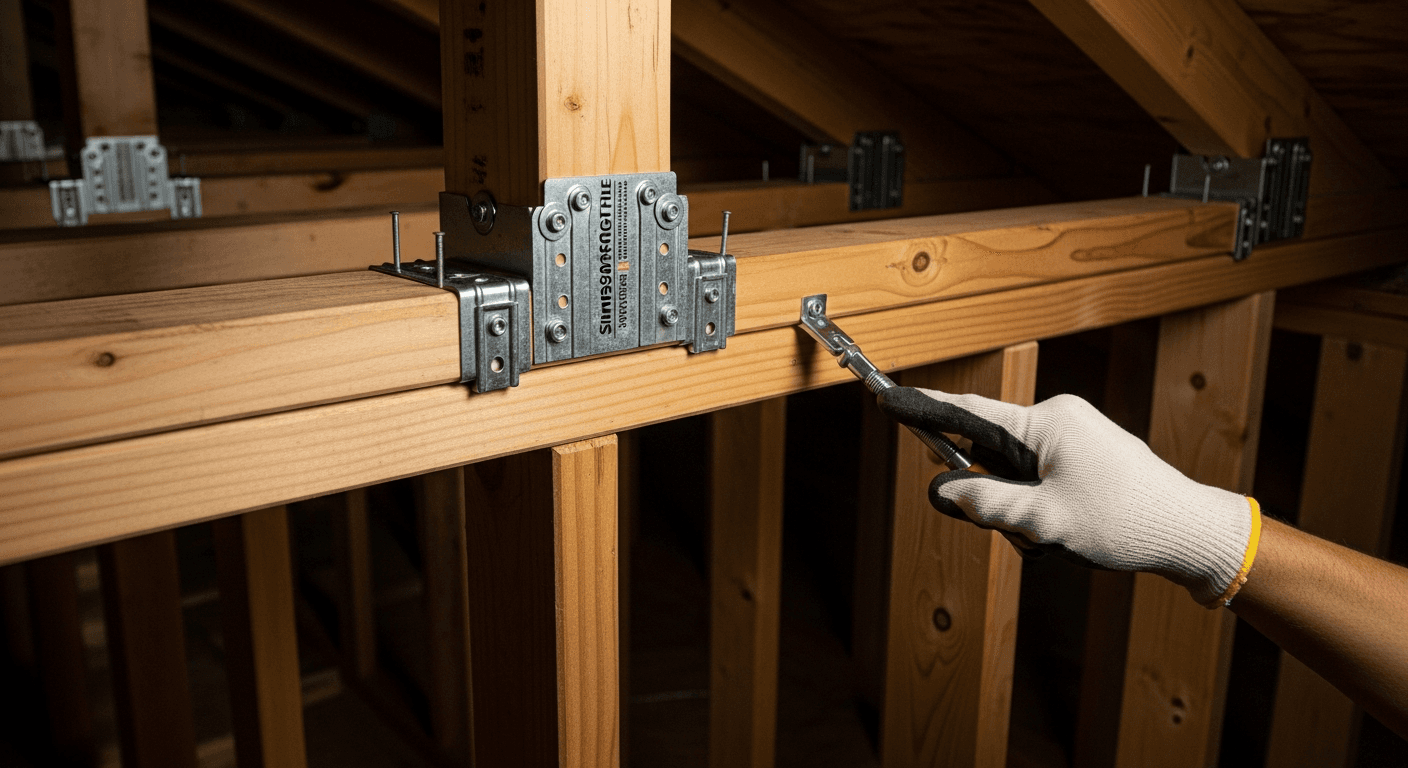
How re-roofing your Florida home triggers major insurance savings through wind mitigation credits. Covers the OIR-B1-1802 form, credit categories, average savings of $800-$2,500/year, and the inspection process.
Read More