
How to Hurricane-Proof Your Miami Roof Before Storm Season 2026
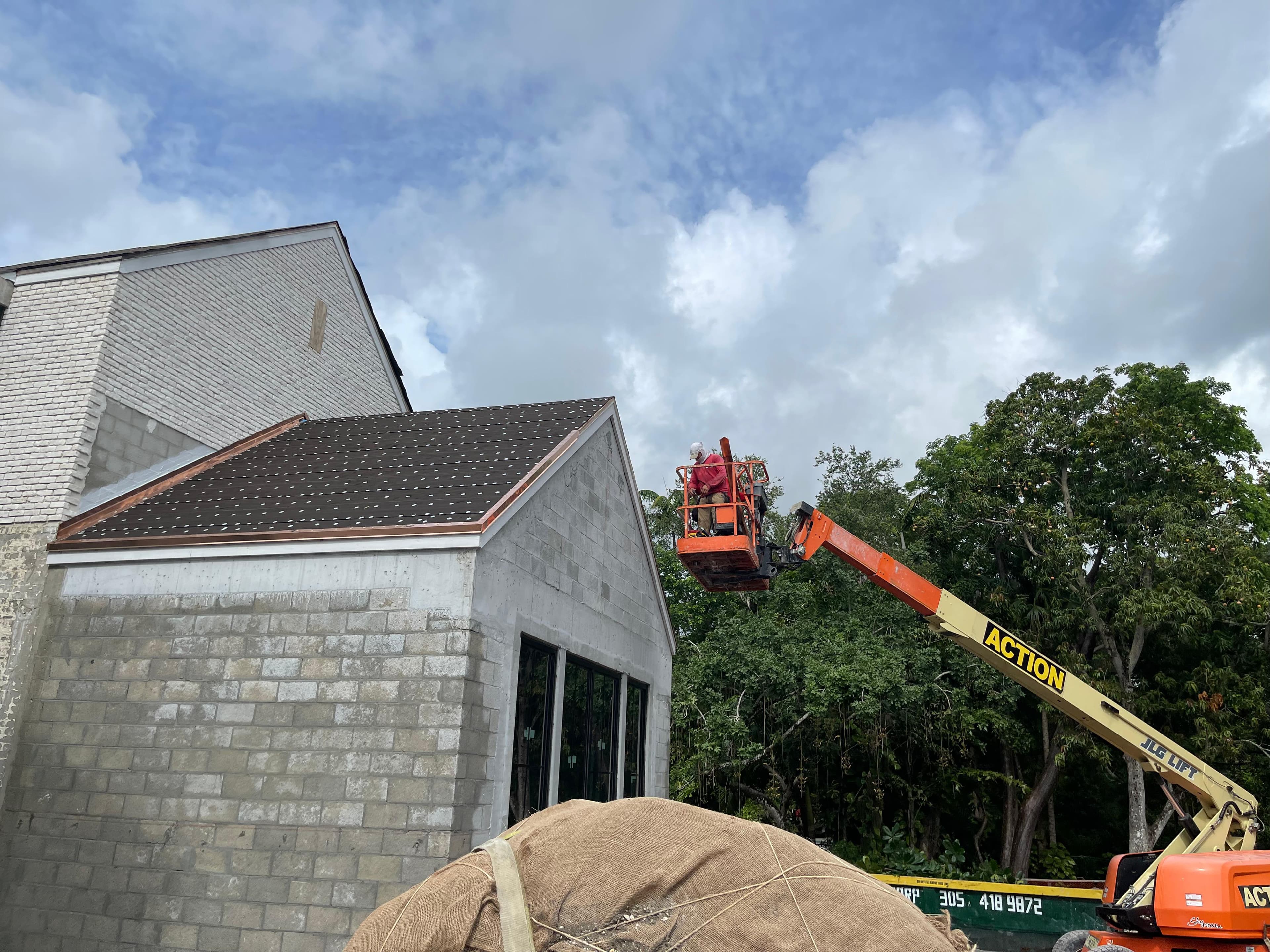
What Hurricane-Proofing a Miami Roof Actually Means in 2026
"Hurricane proof" doesn't mean the roof will never be touched by a storm. It means the roof is engineered to ride through 180+ mph winds without failing in ways that destroy the home underneath. In Miami-Dade's High Velocity Hurricane Zone (HVHZ), we've been building to 180 mph standards since the post-Andrew code rewrite in 2002. Every roof I install has to meet those standards, and most pre-2002 Miami homes do NOT meet them without significant upgrades.
Here's what actually matters: the roof covering (tile, metal, or shingles) is only one piece of the hurricane-proof puzzle. The deck attachment, roof-to-wall connections, soffit integrity, underlayment, garage door bracing, and secondary water barrier all matter. I've seen brand-new tile roofs fail because the contractor skipped the roof-to-wall strap retrofit on an older home. I've seen 15-year-old tile roofs survive Cat 4 winds with zero damage because the original builder did everything right.
This guide covers every system that matters for a hurricane-proof Miami roof, with real 2026 pricing and honest recommendations on what's worth the investment.
Why Miami-Dade HVHZ Is the Strictest Building Code in America
Miami-Dade and parts of Broward County fall within the High Velocity Hurricane Zone. It's the strictest wind-resistance code in the United States, and it exists because we're in the highest-risk hurricane zone in the continental US.
Under the Florida Building Code 2023 8th Edition, every roofing product installed in HVHZ must:
- Carry a valid Miami-Dade Notice of Acceptance (NOA) from the county's Product Control Division
- Be rated for 180 mph basic design wind speed or higher
- Pass the large missile impact test (9-pound 2x4 fired at the roof at 50 feet per second)
- Meet uplift resistance standards specific to your roof zone (field, perimeter, or corner)
Products that don't carry an NOA can't be installed on a Miami-Dade house, period. If your contractor is proposing something without an NOA number, they're either working outside code or lying to you. Ask for the NOA on every quote.
The Six Systems That Make a Roof Hurricane-Proof
Most Miami homeowners think hurricane-proofing is about the roofing material. Tile, metal, shingles. Pick the strongest one and you're done. It's not that simple. I've inspected hundreds of post-hurricane roofs in Miami-Dade, and I can tell you the material is maybe 40 percent of the story. The other 60 percent is everything underneath and around the material: deck attachment, hurricane straps, soffit integrity, secondary water barrier, garage door bracing, and the connection points between all of them.
A brand new $45,000 tile roof installed on a 1978 Kendall home with original truss connections and vinyl soffits is not hurricane-proof. The tile will stay on, but the soffits will blow out, internal pressure will build, and the roof will lift off the walls anyway. Meanwhile, a 20-year-old metal roof on a properly-retrofitted Pinecrest home with hurricane straps, aluminum soffits, and impact-rated garage doors will ride through a Cat 4 with zero damage.
Here are the six systems I look at on every hurricane-prep inspection and what each one costs to get right.
System 1: The Roof Covering Itself
This is the part everyone focuses on. What's on top of your deck matters, but only when it's installed correctly to a Miami-Dade NOA. Here's what I actually install in Miami-Dade and what each material delivers in hurricane conditions.
| Material | Real HVHZ Wind Rating | 2026 Installed Cost | Best Use in Miami |
|---|---|---|---|
| Aluminum standing seam metal | 160 to 180+ mph | $18 to $25 per sq ft | Coastal homes, maximum protection |
| Galvalume standing seam metal | 160 to 180 mph | $14 to $19 per sq ft | Inland homes, Kendall/Doral/Homestead |
| Clay two-piece Mission tile | 150 mph | $20 to $28 per sq ft | Coral Gables historic, Gables Estates |
| Clay barrel one-piece tile | 150 mph | $16 to $22 per sq ft | Pinecrest, Cocoplum, Mediterranean homes |
| Concrete barrel tile | 150 mph | $14 to $18 per sq ft | Kendall, Palmetto Bay, Miami Lakes |
| Class 4 impact-resistant shingles | 130 to 150 mph | $7.50 to $9 per sq ft | Suburban neighborhoods, budget-focused |
| Fully-adhered TPO (flat) | 120 to 140 mph | $8 to $12 per sq ft | Flat and low-slope sections |
The wind ratings are only valid when the product is installed to Miami-Dade NOA specifications. Cut corners on clips, fasteners, or underlayment and the rating drops significantly. I've inspected "180 mph rated" metal roofs that failed at 90 mph because the installer skipped half the clips to save time.
Don't even bother with mortar-set tile, exposed-fastener metal panels, or 3-tab shingles in Miami-Dade. None of them meet modern HVHZ code and none of them belong on a hurricane-proof home.
System 2: Roof Deck Attachment
Your deck is what's underneath the underlayment and roofing material. Usually 5/8-inch plywood or OSB nailed to the trusses. In a hurricane, the deck is what's trying to stay attached to the house while the wind tries to peel it off.
Miami-Dade HVHZ code requires ring-shank nails driven at 6 inches on edges and 6 inches in the field on every re-roof. Homes built before 1994 have a much weaker nailing schedule, and that's why so many Andrew-era homes lost their roofs in Irma in 2017. The deck literally peeled off the trusses.
Re-nailing the deck during a roof replacement costs $1.50 to $2.50 per square foot extra, or $3,000 to $5,500 on a typical 2,200 square foot home. It's the single highest-impact upgrade you can do on a pre-1994 Miami home. Without it, no wind rating on your roof covering means anything.
System 3: Roof-to-Wall Hurricane Straps
The roof structure sits on top of the walls. In Andrew-era homes and earlier, the connection between the trusses and the top plate of the wall is a few toenails and some construction adhesive. That's it. In a 150+ mph wind event, toenails rip out and the entire roof lifts off the walls as a single unit.
Hurricane straps are galvanized steel connectors that wrap over the top of each truss and attach to both sides of the wall top plate. They're required by current Florida Building Code and they transform the roof-to-wall connection from something that fails at 100 mph to something that holds through 180+ mph.
Retrofit costs for hurricane straps on an existing Miami home run $1,500 to $5,000 depending on access and how many trusses need straps. The work is done from the attic and usually takes 1 to 3 days. Every Miami insurance carrier gives you a significant wind mitigation credit for documented hurricane straps, typically 15 to 25 percent off the wind portion of your premium.
If your home was built before 1994 and you haven't retrofitted straps, you're one major hurricane away from a total roof loss. Do this before anything else.
System 4: Secondary Water Barrier
Even with a perfect roof covering and a reinforced deck, hurricane-force wind can drive water sideways through tile joints, around flashings, and past fastener heads. The secondary water barrier is your backup. It's a self-adhered modified bitumen membrane applied directly to the deck before any other roofing material goes on.
If tiles blow off, if shingles peel back, if a tree branch punctures a metal panel, the secondary water barrier is what keeps your house from flooding. It's the difference between a roof that needs repair and a roof that needs replacement plus $50,000 of interior restoration.
Miami-Dade HVHZ code requires a secondary water barrier on every new residential roof in Miami-Dade County. Products I specify:
- Polyglass Polystick TU-P Plus (Miami-Dade NOA 22-0823.01)
- Grace Ice and Water Shield HT (Miami-Dade NOA 21-0309.01)
- GAF StormGuard (Miami-Dade NOA 19-0612.18)
All three carry current NOAs, perform well in Miami heat, and add about $1.50 to $3 per square foot to the project (roughly $3,300 to $6,600 on a 2,200 sq ft home). Budget synthetic underlayments without self-adhesive backing don't meet the requirement and fail early in Miami heat anyway.
System 5: Soffit Protection
Soffits are the underside of your roof overhang. In a hurricane, vinyl soffits (common on 1970s-1990s Miami homes) blow out in 80 to 100 mph winds. Once the soffits go, wind enters the attic space and pressurizes the house from inside. The internal pressure pushes outward on the roof structure at the same time the external wind is pulling upward. The combined forces lift the entire roof off the walls.
This failure mode is why so many Miami homes lose their roofs in Cat 3 and Cat 4 storms despite having intact roof coverings. The roof didn't fail from the outside. It was pushed off from the inside.
Soffit protection upgrades for Miami homes:
- Replace vinyl soffits with aluminum or fiber cement rated for 160+ mph
- Install soffits with interlocking connections, not just face-nailed
- Use stainless steel fasteners
- Add blocking between rafter tails to close off the wind path
- Install hurricane-rated vents that stay closed under wind pressure
Full soffit replacement on a 2,200 square foot home runs $2,000 to $4,500. It's one of the best value upgrades in the whole hurricane-proofing package.
System 6: Garage Door Bracing
Your garage door is the biggest opening in your house, and if it fails during a hurricane, the result is the same as losing your soffits: massive internal pressurization that blows the roof off from the inside. Most 1970s-1990s Miami garage doors were not rated for hurricane wind loads.
Options for fixing this:
- Replace with a Miami-Dade impact-rated garage door: $2,500 to $5,000
- Retrofit existing door with a horizontal bracing kit: $400 to $900
- Upgrade door tracks and mounting to wind-rated hardware: $300 to $700
The replacement is the best option because the new door also improves security, insulation, and property value. The retrofit is acceptable if budget is tight, but it requires deploying the bracing every time a storm is coming.
A garage door failure during a hurricane typically causes $80,000 to $150,000 in combined roof and interior damage. The $2,500 to $5,000 upgrade is obviously worth it.
Real 2026 Hurricane-Proofing Costs for a Miami Home
Here's what it actually costs to fully hurricane-proof a typical 2,200 square foot Miami home built before 1994. These are real numbers I'm quoting right now.
| Upgrade | Cost Range |
|---|---|
| Roof deck re-nail to HVHZ schedule | $3,300 - $5,500 |
| Hurricane strap retrofit | $1,500 - $5,000 |
| Secondary water barrier installation | $3,300 - $6,600 |
| Aluminum soffit replacement | $2,000 - $4,500 |
| Impact-rated garage door | $2,500 - $5,000 |
| Full re-roof with HVHZ materials | $17,000 - $48,000 |
| Total full hurricane-proofing package | $29,600 - $74,600 |
That's the full package. It's a lot of money, but it represents 5 to 10 percent of the value of a typical Miami home and protects you from losing 100 percent of it in a hurricane. The math works out as long as you plan to own the home for 10+ years and expect at least one major storm event during that period. In Miami, both assumptions are safe.
The Insurance Credit Stack
Here's the part that makes the hurricane-proofing package pay for itself. Every upgrade in the package qualifies for a wind mitigation credit on your Florida insurance policy:
- New HVHZ-rated roof covering: 15 to 25 percent off wind premium
- Hurricane straps documented on wind mitigation form: 10 to 15 percent off wind premium
- Secondary water resistance (full deck SWB): 3 to 5 percent off wind premium
- Roof geometry (hip roof): 5 to 10 percent off wind premium
- Impact-rated garage door: 5 to 10 percent off wind premium
Stacked together, these credits typically save $1,500 to $3,000 per year on a typical Miami home with a $5,500 to $7,500 base premium. Over 20 years, that's $30,000 to $60,000 in cumulative savings. Combined with the avoided hurricane damage, the hurricane-proofing package pays back within 10 to 15 years and keeps saving money for as long as you own the home.
Start With Deck Re-nail and Straps, Then Move Up
If you can't afford the full package right now, here's my recommended order of operations. Do these in sequence and each step builds on the previous one.
- Deck re-nail and hurricane straps first. Highest impact, lowest cost. Without these, nothing else matters because the structural envelope fails first.
- Soffit replacement second. Prevents the internal pressurization that destroys intact roofs.
- Garage door upgrade third. Second biggest opening, second biggest internal pressurization risk.
- Full re-roof with HVHZ materials fourth. The most expensive line item, but with the previous three done correctly, you're already significantly safer.
You can spread these over 2 to 4 years if budget requires. Just don't skip the structural and soffit work to save money on the roof covering. That's the mistake that causes roof failures during hurricanes.
Ready to Hurricane-Proof Your Miami Home?
Call us at 305-225-1535 or request a free estimate. We'll walk the home, identify which hurricane-proofing upgrades you need and which you already have, and give you an itemized quote for each system. We'll also pull wind mitigation credits for any existing features that might already qualify you for insurance savings you haven't claimed. Hurricane season is coming every year, and the work takes time. Start in February, not June.
Frequently Asked Questions
What does it cost to hurricane-proof a roof in Miami?
The cost to hurricane-proof a Miami roof ranges from $22,000 to $62,000 for a complete upgrade on a typical 2,000 square foot home, including a new HVHZ-rated roof covering, hurricane straps, secondary water barrier, and soffit upgrades. Individual upgrades like hurricane strap retrofits start at $1,500 to $5,000. Many of these upgrades qualify for significant insurance premium reductions.
What is the most hurricane-resistant roofing material for Miami?
Standing seam metal roofing is the most hurricane-resistant material available for Miami homes, with wind ratings of 160 to 200+ mph. Its interlocking panel design and concealed clip attachment system distribute wind forces across the entire roof deck. Concrete tile is the second-best performer at 150 to 180 mph with mechanical fastening.
Are hurricane straps required on homes in Miami-Dade County?
Hurricane straps or equivalent engineered roof-to-wall connections are required on all new construction and major renovations in Miami-Dade County under the Florida Building Code. Existing homes built before the current code are not required to retrofit but will benefit from significantly lower insurance premiums and substantially better storm performance by adding them.
What is a secondary water barrier and do I need one?
A secondary water barrier is a self-adhering membrane applied directly to your roof deck that prevents water intrusion if the primary roofing material is torn away during a hurricane. It is required by the Florida Building Code for all new roofing and re-roofing projects in the HVHZ. Adding one costs $1.50 to $3.00 per square foot and can prevent tens of thousands of dollars in interior water damage.
How much can I save on insurance by hurricane-proofing my roof?
Florida homeowners who complete hurricane-proofing upgrades including a new HVHZ-rated roof, hurricane straps, secondary water barrier, and impact-rated openings can reduce their wind insurance premiums by 20% to 45%. On a typical Miami-Dade County policy, that can translate to $2,000 to $6,000 per year in savings, which adds up significantly over the life of the roof.
Need Roofing Help?
Whether you need an inspection, repair, or full replacement, our team of licensed roofing professionals is ready to help. Serving South Florida since 2004.
Related Articles
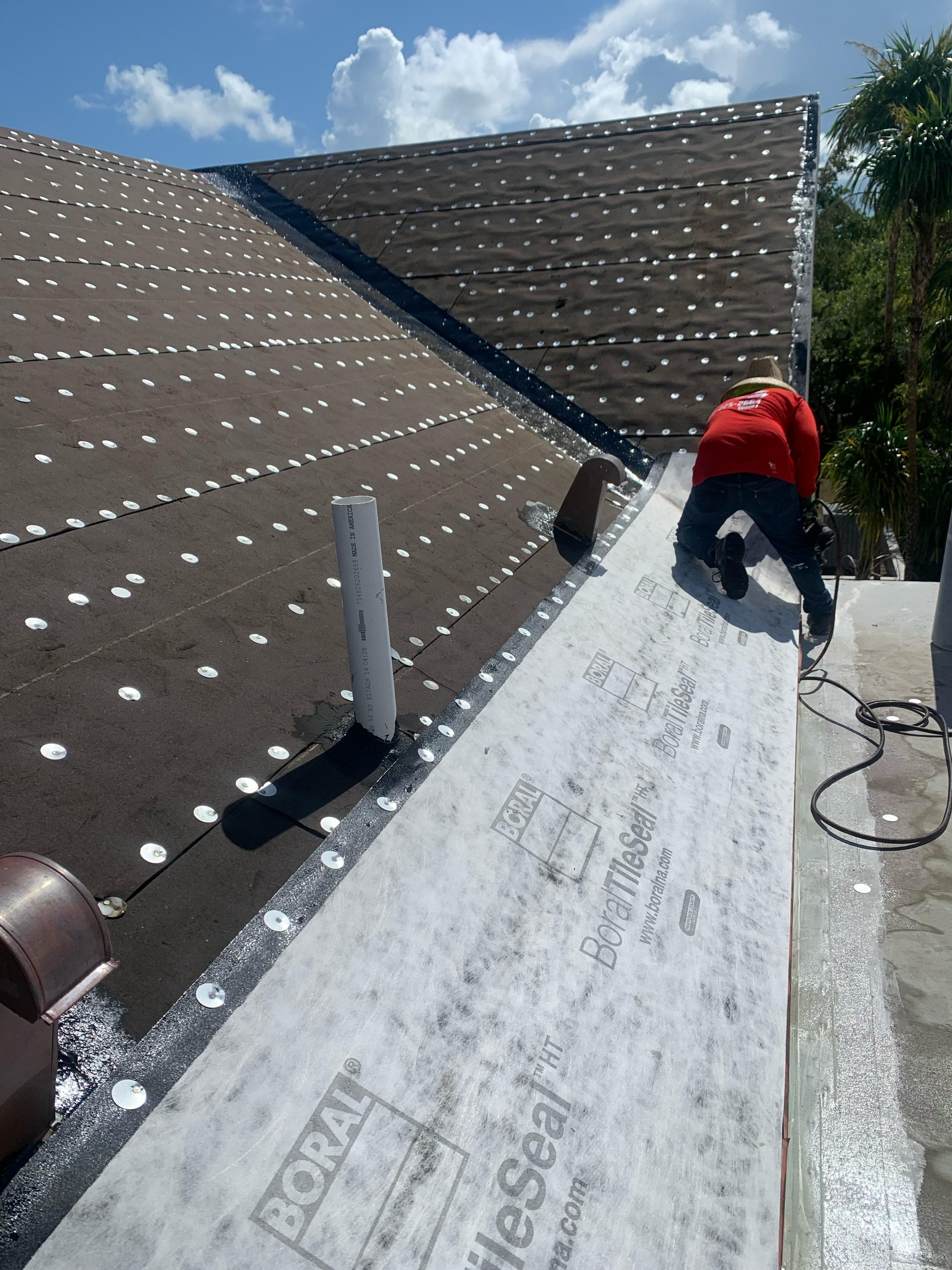
Understand Miami-Dade roofing codes, HVHZ requirements, NOA product approvals, and Florida Building Code 2023 standards that affect your roof in 2026.
Read More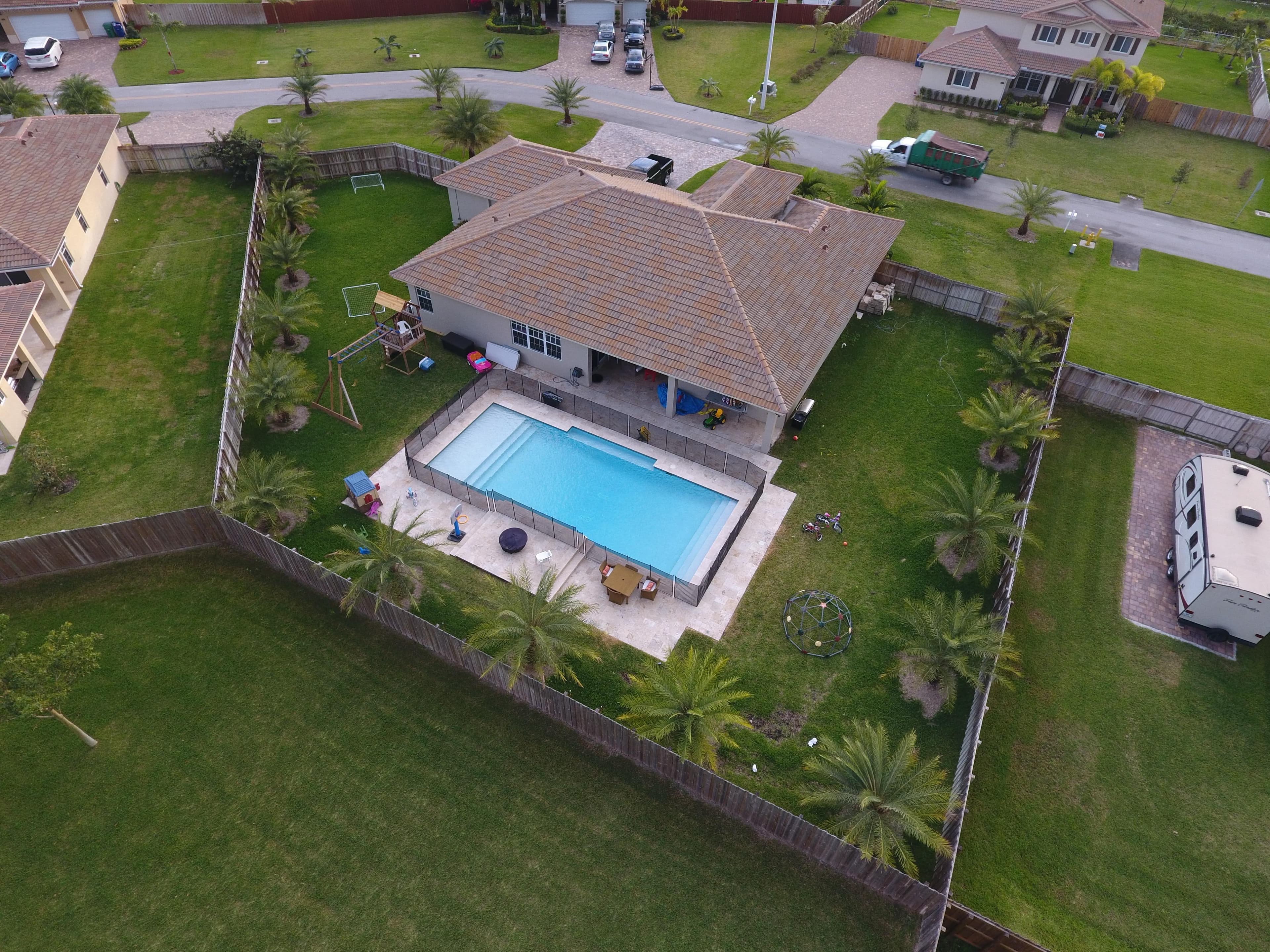
Florida insurance rates are dropping for the first time since 2015. Learn how combining market rate decreases with strategic roof upgrades can save Miami homeowners $1,400-$2,600 per year on premiums.
Read More