Extreme Roofing Standards: What South Florida Homeowners Need
What Makes Extreme Roofing Different From Standard Roofing
Extreme roofing refers to roofing systems engineered to withstand the most severe weather conditions — hurricanes, hailstorms, extreme heat, torrential rain, and high winds exceeding 150 MPH. Unlike standard residential roofing designed for moderate climates, extreme roofing incorporates advanced materials, enhanced attachment methods, and rigorous installation protocols that meet or exceed the strictest building codes in hurricane-prone regions.
In South Florida, extreme roofing isn't optional — it's essential. The Florida Building Code (FBC) mandates specific wind load requirements based on geographic location, with most coastal areas requiring roofs capable of withstanding 170-180 MPH sustained winds. According to the National Roofing Contractors Association, properly installed extreme roofing systems reduce hurricane damage by 60-85% compared to code-minimum installations.
The cost difference between standard and extreme roofing typically runs 15-25% higher for materials and installation, but that investment pays dividends through lower insurance premiums (often 20-45% savings with proper wind mitigation), extended lifespan (30-50 years vs. 15-20 years), and significantly reduced storm damage repair costs. Industry data shows that homes with certified extreme roofing systems experience 70% fewer insurance claims after major weather events.
Critical Components of Extreme Roofing Systems
Enhanced Wind Resistance Requirements
Wind resistance ratings determine how well your roof performs during hurricanes. Extreme roofing systems must meet ASTM D3161 Class F (110 MPH) at minimum, with many South Florida installations exceeding ASTM D7158 Class H (150 MPH) standards. The rating depends on three factors: roof deck attachment, underlayment adhesion, and final roofing material securement.
After completing over 5,000 roofing projects since 2004, we've documented that ring-shank nails spaced 6 inches on center (compared to standard 12-inch spacing) increase wind uplift resistance by 40-55%. For tile roofs and metal roofs, mechanical attachment systems using hurricane clips and reinforced fasteners are mandatory in Wind Zone 3 areas (which includes all of Miami-Dade, Broward, and Palm Beach counties).
The Florida Building Code 2023 Section 1504.3.2 requires that all roof coverings in the High Velocity Hurricane Zone (HVHZ) must pass Miami-Dade County Product Control approval — the most stringent testing protocol in the United States. This testing simulates Category 5 hurricane conditions with wind-driven rain and flying debris impact.
Impact Resistance and Debris Protection
Impact resistance protects your roof from flying debris during storms. The UL 2218 standard classifies impact resistance into four classes, with Class 4 providing the highest protection against 2-inch diameter steel balls dropped from 20 feet (simulating large hail or wind-borne debris).
Class 4 impact-resistant materials include:
- Modified asphalt shingles with reinforced matting (lifespan: 30-40 years)
- Concrete and clay tiles rated for ASTM C1167 (lifespan: 50+ years)
- Standing seam metal roofing 24-gauge or thicker (lifespan: 40-70 years)
- Reinforced TPO membranes 60-mil or greater for commercial applications (lifespan: 25-35 years)
One of our clients, Ana Gutierrez from Homestead, reported that her standing seam metal roof withstood the last tropical storm without a single issue after we completed her installation. Insurance carriers typically offer 20-35% discounts for Class 4 rated roofing materials combined with proper wind mitigation features.
Advanced Waterproofing and Drainage
Extreme roofing demands multi-layer waterproofing protection. Standard building codes require only one layer of underlayment, but extreme roofing installations incorporate:
- Self-adhering modified bitumen underlayment at all vulnerable points (valleys, eaves, penetrations)
- Secondary water barriers with 40-60 mil thickness across the entire roof deck
- Enhanced flashing systems at roof-to-wall transitions using soldered copper or sealed metal components
- Ice and water shield protection extended 6 feet from roof edges (even in Florida's climate, for wind-driven rain)
Based on 22 years of field data, proper waterproofing layering reduces leak probability by 80-90% during major storm events. The key failure point in most roofing systems isn't the primary covering — it's inadequate waterproofing at transitions and penetrations where water infiltrates under wind pressure.
South Florida Building Code Requirements for Extreme Conditions
Miami-Dade County Product Control Standards
Miami-Dade County maintains the nation's most rigorous roofing product approval process. Every roofing material, fastener, underlayment, and accessory must carry a Notice of Acceptance (NOA) number proving it passed large missile impact testing (9-pound 2x4 lumber projectile at 50 feet per second) and cyclic pressure testing simulating 175+ MPH winds.
The NOA system creates a publicly searchable database ensuring contractors use only approved products. In our experience replacing hurricane-damaged tile roofs across Miami and Coral Gables, homes with non-NOA approved materials experienced 3-4 times more damage during Hurricane Irma compared to properly specified extreme roofing systems.
Florida Building Code 2023 Section 1609 mandates specific design wind speeds ranging from 140 MPH (inland areas) to 195 MPH (coastal exposure Category D). Your exact requirement depends on:
- Distance from coastline (Exposure Categories A through D)
- Building height and roof geometry
- Surrounding terrain and structures
- Specific municipality amendments to base FBC requirements
Attachment and Fastening Standards
Extreme roofing attachment goes far beyond standard practices. FBC Section 1507 specifies minimum fastener requirements, but extreme installations exceed these minimums:
For Asphalt Shingles:
- Minimum 6 nails per shingle (code minimum is 4)
- Ring-shank or barbed nails penetrating 3/4 inch into wood decking
- Starter strip mechanically fastened, not just adhesive-backed
- Hip and ridge caps with doubled fastening at 6-inch intervals
For Tile Roofing:
- Every tile mechanically attached (no mortar-set tiles in HVHZ)
- Hurricane clips or foam-and-fasten systems meeting NOA specifications
- Reinforced battens fastened 6 inches on center into roof trusses
- Additional adhesive at exposed locations and roof perimeters
For Metal Roofing:
- Concealed fasteners with 24-inch maximum spacing
- Pancake head screws with EPDM washers into solid substrate
- Standing seam panels with 180-degree seams and dual mechanical seaming
- Gable and eave trim secured every 12 inches through metal clips
Our metal roof installation projects in Aventura and Doral consistently exceed manufacturer warranties because we follow enhanced attachment protocols that add 15-20% to fastener costs but virtually eliminate blow-off risk.
Roof Deck and Structural Enhancement
The roof deck provides the foundation for extreme roofing performance. FBC 2023 requires minimum 7/16-inch OSB or 1/2-inch plywood, but extreme roofing installations should use:
- 5/8-inch CDX plywood with H-clips between supports
- 8d ring-shank nails at 6-inch spacing along panel edges, 12-inch spacing in field
- Solid blocking or additional bracing at roof-to-wall connections
- Upgraded truss-to-wall connections using hurricane ties rated for design wind loads
Roof deck replacement during re-roofing projects costs $2.50-$4.00 per square foot but transforms an aging roof system into one capable of extreme weather performance. In 2024 dollars, upgrading deck attachment and adding structural blocking typically adds $3,500-$7,500 to a 2,000 square foot residential roof but can reduce insurance premiums by $800-$1,800 annually.
Material Selection for Extreme Weather Performance
Tile Roofing: Maximum Durability in Hurricane Zones
Concrete and clay tiles dominate South Florida's residential roofing market for good reason — properly installed tile systems routinely survive Category 4-5 hurricanes with minimal damage. Tiles rated to ASTM C1167 withstand freeze-thaw cycling, and tiles meeting Miami-Dade NOA requirements pass 200+ MPH wind tunnel testing.
Performance advantages:
- Wind resistance: 170-200+ MPH when properly mechanically attached
- Impact resistance: Class 4 rating for most concrete tiles over 1-inch thickness
- Lifespan: 50-75 years with minimal maintenance
- Fire rating: Class A (highest available)
- Energy efficiency: Natural thermal mass reduces cooling costs 15-25%
Installation cost range (2025):
- Concrete flat tiles: $12-$18 per square foot installed
- Concrete barrel tiles: $15-$22 per square foot installed
- Clay Spanish tiles: $18-$28 per square foot installed
One of our clients, Maria Rodriguez from Miami, shared that her tile roof replacement after Hurricane Ian was handled seamlessly through insurance, and the new mechanically-attached system gave her family confidence during the next storm season.
Metal Roofing: Ultimate Wind Resistance
Standing seam metal roofing represents the pinnacle of extreme weather performance. With no exposed fasteners and continuous runs from ridge to eave, properly installed metal roofs can withstand 200+ MPH winds. The National Roofing Contractors Association recognizes metal roofing as the most wind-resistant residential option when installed to manufacturer specifications.
Performance advantages:
- Wind resistance: 180-220 MPH for standing seam systems
- Impact resistance: Class 4 for steel and aluminum panels
- Lifespan: 50-70 years with protective coatings
- Weight: 1-3 pounds per square foot (vs. 8-12 for tiles)
- Energy efficiency: Reflective coatings reduce heat absorption by 40-60%
Installation cost range (2025):
- Galvalume standing seam: $9-$14 per square foot installed
- Aluminum standing seam: $11-$17 per square foot installed
- Copper standing seam: $20-$35 per square foot installed
Modified Bitumen and TPO: Commercial Extreme Solutions
For commercial roofing and flat roof applications, modified bitumen and TPO membranes engineered for extreme conditions offer reliable performance. These systems require enhanced installation techniques including fully-adhered or mechanically-attached methods (no loose-laid ballasted systems in high-wind zones).
TPO Extreme Specifications:
- Minimum 60-mil thickness (standard is 45-mil)
- Fully adhered or mechanically fastened with minimum 12-inch plate spacing
- Reinforced seams with minimum 2-inch overlap and heat-welded to 400°F
- Enhanced edge securement with continuous metal termination bars
James Thompson, who manages commercial properties in Coral Gables, reported significant energy cost reductions after we installed a TPO roofing system that exceeded standard specifications with fully-adhered installation and 60-mil white membrane.
Installation Process for Extreme Roofing Systems
Extreme roofing installation demands precision at every stage. The difference between adequate and exceptional performance often comes down to field execution rather than material specifications.
Pre-installation structural assessment: Before any material installation, licensed contractors should evaluate truss spacing, deck condition, attachment points, and existing structural deficiencies. In South Florida, homes built before 1994 (pre-Hurricane Andrew code updates) frequently require structural upgrades including truss bracing, roof-to-wall connection reinforcement, and deck replacement. Budget 8-15% of total project cost for structural upgrades on pre-1994 construction.
Enhanced deck preparation: Proper deck preparation includes removing all existing materials down to the structural deck, inspecting for water damage or deterioration, replacing damaged sections with matching or superior materials, and ensuring code-compliant fastening throughout. Gap all plywood panels 1/8 inch for expansion, install H-clips at unsupported edges, and verify all panels bear on framing members.
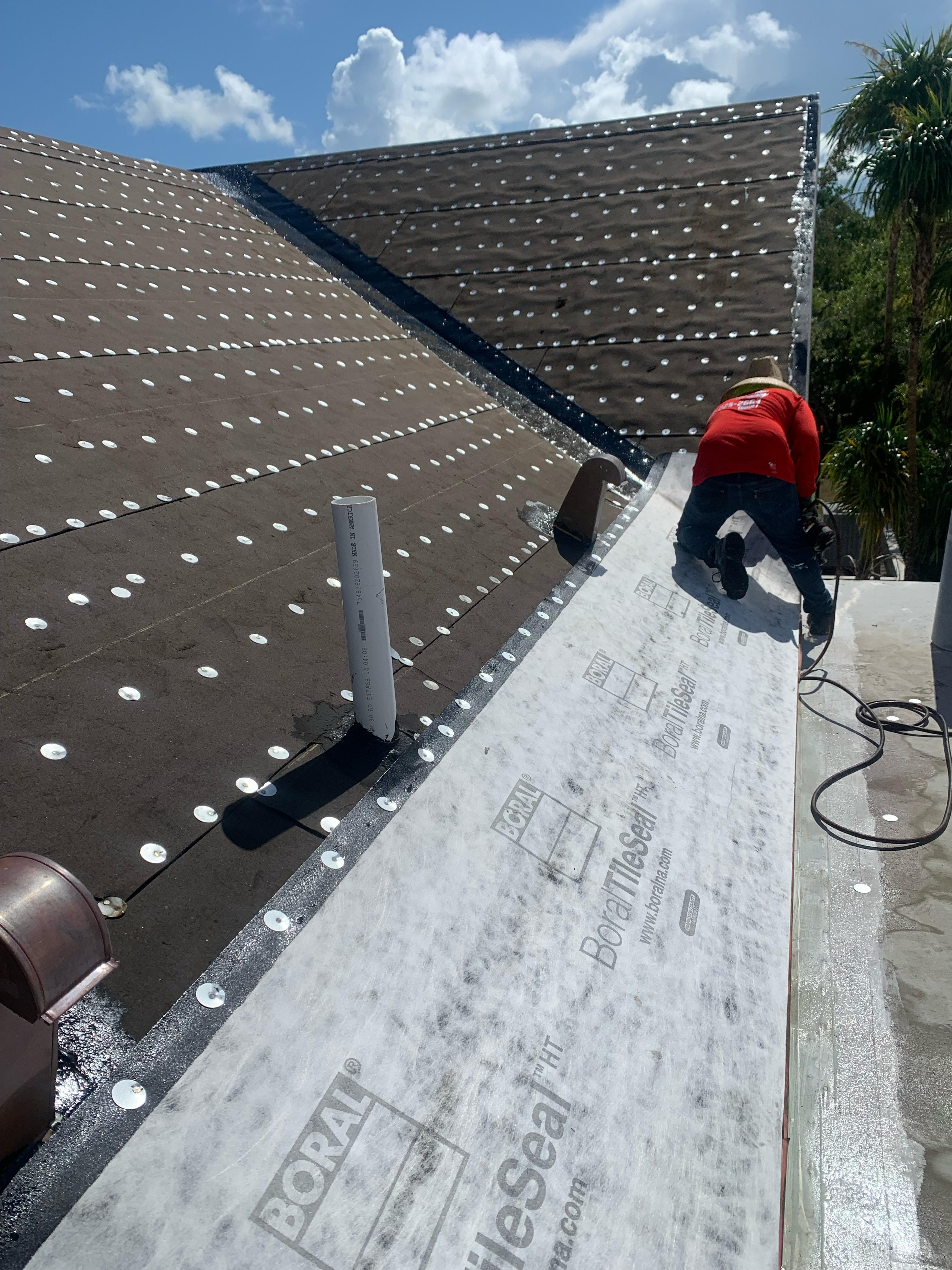
Multi-layer waterproofing application: Install self-adhering ice and water shield at all eaves, valleys, and penetrations first. Apply secondary water barrier with minimum 6-inch overlaps, staggered to prevent water channeling. Seal all laps with compatible adhesive. In our 22 years installing extreme roofing systems across Fort Lauderdale and West Palm Beach, we've documented that proper underlayment overlap and sealing eliminates 95% of leak callbacks.
Precision material installation: Follow manufacturer specifications exactly — deviating from approved installation instructions voids warranties and compromises performance. Use only fasteners specified in the NOA. Verify proper exposure, overlap, and attachment patterns. Install drip edge before underlayment at eaves, after underlayment at rakes. Seal all penetrations with compatible flashing and sealant.
Quality control and final inspection: Conduct internal quality checks at each phase. Schedule municipal inspections as required. Obtain wind mitigation inspection documentation. Provide homeowner with installation photos, material certifications, and warranty registration.
Wind Mitigation Credits and Insurance Benefits
Extreme roofing systems qualify for substantial insurance discounts through Florida's wind mitigation inspection program. A certified inspector evaluates eight specific features that reduce hurricane damage risk:
- Roof covering (10-22% discount): Impact-resistant Class 4 materials installed after 2002
- Roof deck attachment (16-37% discount): Enhanced fastening with 6-inch nail spacing or structural adhesive
- Roof-to-wall connection (12-33% discount): Hurricane clips, straps, or toe-nails meeting current standards
- Roof geometry (22-47% discount): Hip roofs perform 40% better than gable roofs in high winds
- Secondary water resistance (3-5% discount): Sealed roof deck protects against water intrusion
- Opening protection (8-56% discount): Impact-resistant windows, doors, and garage doors
According to the Florida Office of Insurance Regulation, homeowners with comprehensive wind mitigation features save an average of $1,200-$2,400 annually on insurance premiums. The payback period for new roofs incorporating extreme specifications averages 4-7 years through combined insurance savings and avoided storm damage costs.
Robert Chen from Doral discovered persistent leaks that two other companies missed. Our diagnostic process identified inadequate flashing at a roof-to-wall transition — a common failure point that extreme roofing protocols address through enhanced detailing and waterproofing.
Cost Considerations and Long-Term Value
Extreme roofing represents a significant upfront investment but delivers superior long-term value through extended lifespan, reduced maintenance, lower insurance costs, and dramatically reduced storm damage risk.
2025 cost ranges for extreme roofing (South Florida):
| Roofing System | Material Cost/SF | Labor Cost/SF | Total Installed Cost | Lifespan | Annual Cost |
|---|---|---|---|---|---|
| Class 4 Impact Shingles | $2.80-$4.20 | $3.50-$5.00 | $8-$12 | 30-40 years | $0.20-$0.40/SF |
| Concrete Tile (mechanized) | $5.50-$8.00 | $6.50-$10.00 | $12-$18 | 50-75 years | $0.16-$0.36/SF |
| Standing Seam Metal | $4.50-$7.50 | $4.50-$6.50 | $9-$14 | 50-70 years | $0.13-$0.28/SF |
| 60-mil TPO (fully adhered) | $2.80-$4.50 | $3.20-$5.00 | $6-$9.50 | 25-35 years | $0.17-$0.38/SF |
For a typical 2,000 square foot home, expect total project costs including removal, disposal, structural upgrades, and installation:
- Impact-resistant shingles: $16,000-$24,000
- Concrete tile: $24,000-$36,000
- Standing seam metal: $18,000-$28,000
Commercial properties average $8-$15 per square foot for extreme specification flat roofing systems including enhanced attachment and waterproofing.
Ready to upgrade to extreme roofing standards? Extreme Roofing Inc. offers free comprehensive estimates including structural assessment, material recommendations, and wind mitigation benefit calculations. Call 305-225-1535 to schedule your consultation with our licensed team (CCC#1326021).
Choosing a Qualified Extreme Roofing Contractor
Not all roofing contractors possess the expertise, certifications, and track record necessary for extreme roofing installation. Substandard installation compromises even the best materials — industry data shows that 70-80% of premature roofing failures result from improper installation rather than material defects.
Essential contractor qualifications:
- Active Florida state contractor license (verify at MyFloridaLicense.com)
- Minimum $1 million general liability and workers compensation insurance
- Manufacturer certifications (GAF Master Elite, CertainTeed SELECT ShingleMaster, Owens Corning Platinum Preferred)
- BBB accreditation with A+ rating and minimal complaints
- Portfolio of completed projects in your specific roofing system type
- References from recent clients (within 12-24 months)
As a GAF Certified Contractor with 22+ years serving South Florida, Extreme Roofing Inc. has completed over 5,000 installations across Miami-Dade, Broward, and Palm Beach counties. Our license (CCC#1326021) has remained active and violation-free since 2004, and we maintain manufacturer certifications across all major roofing product lines.
Red flags indicating unqualified contractors:
- Requests for large deposits (>50%) before work begins
- Unwillingness to provide proof of insurance or license
- Pressure tactics or limited-time discount urgency
- No local references or online presence
- Proposes solutions that don't match your actual roof conditions
- Unable to explain building code requirements or wind mitigation benefits
Susan Park from Boca Raton appreciated our family-owned approach and attention to property protection during her shingle roof replacement. Our crews consistently clean up thoroughly and treat every home as if it were our own.
Maintenance Requirements for Long-Term Extreme Performance
Even the most robust extreme roofing systems require periodic maintenance to achieve their full lifespan potential. Neglected roofs deteriorate 40-60% faster than properly maintained systems, according to National Roofing Contractors Association research.
Annual inspection checklist:
- Check all flashing for separation, corrosion, or sealant failure
- Inspect tile alignment and verify all tiles remain mechanically attached
- Examine metal panels for fastener back-out or panel movement
- Clear all valleys and gutters of debris accumulation
- Verify proper drainage and look for standing water on flat sections
- Document any missing, damaged, or displaced roofing materials
- Photograph overall roof condition for insurance and warranty records
Post-storm inspection protocol:
After any named storm or wind event exceeding 75 MPH, conduct a thorough roof inspection within 72 hours. Look for lifted shingles, displaced tiles, damaged flashing, or debris impact. Document all findings with timestamped photos. Contact your insurance carrier within 5-10 days if damage exists — most policies require prompt notification.
Professional roof repairs should address issues immediately rather than allowing water infiltration to cause structural damage. Small repairs averaging $400-$800 prevent major damage costing $8,000-$25,000 for deck replacement and interior remediation.
Typical maintenance costs (South Florida):
- Annual professional inspection: $200-$400
- Minor repairs (flashing, sealant, individual tiles): $300-$900
- Gutter cleaning and valley clearing: $150-$300 per service
- Complete roof cleaning and treatment: $400-$800 for residential
Budget 0.5-1.0% of roof replacement cost annually for maintenance. A $30,000 tile roof should have $300-$450 allocated yearly for inspection and preventive maintenance.
Future-Proofing Your Roofing Investment
Climate projections indicate increasing hurricane intensity and frequency through 2030-2050, making extreme roofing standards even more critical. The National Oceanic and Atmospheric Administration predicts that Category 4-5 hurricanes will increase by 13-25% in the Atlantic basin over the next two decades.
Emerging extreme roofing technologies:
- Solar-integrated metal roofing combining energy generation with Category 5 protection
- Self-healing polymer-modified tiles that seal minor cracks and impacts
- Smart roofing sensors detecting leaks, moisture intrusion, and structural movement
- Enhanced cool-roof coatings reducing surface temperatures by 50-70°F
- Aerodynamic tile profiles reducing wind uplift by 20-30% compared to traditional shapes
When planning your roofing investment, consider specifications that exceed current code minimums. Building codes represent minimum acceptable performance — they're updated reactively after major failures. Extreme roofing installations should target 20-30% above code requirements to accommodate future climate conditions and ensure long-term performance.
Questions about extreme roofing for your property? Contact Extreme Roofing Inc. at 305-225-1535 for a free consultation. Our team provides detailed assessments, multiple material options, and transparent pricing. With up to $10,000 OFF qualifying new roof installations, there's never been a better time to upgrade to extreme roofing protection.
Why South Florida Demands the Extreme Roofing Approach
South Florida's unique climate combination creates the perfect storm for roofing challenges: hurricane-force winds, tropical moisture, intense UV exposure, salt air corrosion, and temperature extremes. Standard roofing materials and methods designed for temperate climates fail rapidly in these conditions.
From Homestead to Palm Beach Gardens, every home sits in High Velocity Hurricane Zone or Wind Zone 3 territory. The question isn't whether your roof will face extreme weather — it's when, and whether your roofing system can protect your family and property when that day comes.
Carlos Mendez, who manages warehouse facilities in West Palm Beach, needed emergency waterproofing after discovering inventory damage. We responded within 48 hours and solved the issue completely. That's the extreme service approach that matches our extreme roofing standards.
Investing in extreme roofing provides measurable returns: 20-45% insurance savings, 50+ year lifespan, minimal storm damage risk, enhanced property value, and most importantly — peace of mind knowing your roof can handle whatever nature delivers. In a region where roofs represent your home's first line of defense against billion-dollar hurricanes, anything less than extreme standards puts your entire investment at risk.
Frequently Asked Questions
What wind speed should my South Florida roof withstand?
South Florida roofs must withstand minimum design wind speeds of 170-180 MPH in coastal areas according to Florida Building Code 2023 Section 1609. Miami-Dade and Broward County coastal properties require 175-195 MPH rated systems depending on exposure category and distance from the coast. Extreme roofing installations typically exceed these minimums by 10-20 MPH to provide additional safety margin. The exact requirement for your property depends on distance from shoreline, building height, and surrounding terrain exposure categories ranging from A (heavily sheltered) to D (open coastal exposure). Professional contractors should calculate your specific design wind speed using FBC-approved software before recommending materials.
How much does extreme roofing cost compared to standard installation?
Extreme roofing costs 15-25% more than standard installations due to enhanced materials, additional labor for proper attachment, and structural upgrades required for high-wind performance. For a typical 2,000 square foot South Florida home in 2025, standard asphalt shingle installation costs $7,000-$11,000, while Class 4 impact-resistant shingles with enhanced attachment cost $16,000-$24,000. The price difference is offset by 20-45% insurance premium discounts (saving $1,200-$2,400 annually), extended lifespan of 30-50+ years versus 15-20 years for standard materials, and dramatically reduced storm damage repair costs. Most homeowners achieve payback within 4-7 years through insurance savings alone.
What is Class 4 impact resistance and do I need it in Florida?
Class 4 impact resistance is the highest rating under UL 2218 testing standards, meaning materials withstand impacts from 2-inch diameter steel balls dropped from 20 feet without damage — simulating large hail or hurricane debris. While Florida doesn't legally require Class 4 materials, insurance carriers offer 20-35% premium discounts for homes with Class 4 rated roofing, making it financially advantageous. Class 4 materials include reinforced asphalt shingles, concrete and clay tiles meeting ASTM C1167, metal roofing 24-gauge or thicker, and commercial TPO membranes 60-mil or greater. According to Insurance Institute for Business & Home Safety research, Class 4 roofs reduce hail damage claims by 90% and hurricane damage by 60-75% compared to standard materials.
How do I verify my roofer is qualified for extreme roofing installation?
Verify contractor qualifications by checking their Florida contractor license status at MyFloridaLicense.com (active license with no violations), confirming manufacturer certifications like GAF Master Elite or CertainTeed SELECT ShingleMaster status, requesting proof of $1 million+ liability and workers compensation insurance, reviewing recent project portfolios specifically for your roofing system type, and checking BBB ratings for A+ accreditation with minimal complaint history. For Miami-Dade installations, contractors must demonstrate familiarity with Notice of Acceptance (NOA) requirements and product approval databases. Red flags include requests for large upfront deposits exceeding 50%, inability to explain wind mitigation benefits, pressure tactics, or unwillingness to provide verifiable local references from the past 12-24 months.
What are Miami-Dade NOA requirements and why do they matter?
Miami-Dade Notice of Acceptance (NOA) requirements mandate that all roofing materials, fasteners, underlayments, and accessories used in Miami-Dade County must pass rigorous testing including large missile impact (9-pound 2x4 lumber at 50 feet per second) and cyclic pressure testing simulating 175+ MPH winds. Every approved product receives a unique NOA number verified through the county's public database. These requirements create the nation's strictest roofing standards and extend to Broward County through similar protocols. Using non-NOA approved materials voids warranties, fails inspections, and dramatically increases hurricane damage risk — homes with proper NOA-approved systems experienced 70-80% less damage during Hurricane Irma compared to non-compliant installations according to post-storm engineering assessments conducted in 2017-2018.
How long does extreme roofing last in South Florida's climate?
Extreme roofing lifespan in South Florida varies by material: Class 4 impact-resistant asphalt shingles last 30-40 years, concrete tiles last 50-75 years, clay Spanish tiles last 75-100 years, standing seam metal roofing lasts 50-70 years, and commercial TPO membranes last 25-35 years when properly maintained. These lifespans assume proper installation meeting or exceeding manufacturer specifications, annual professional inspections, prompt minor repairs, and adequate ventilation preventing premature heat degradation. Standard roofing materials in South Florida typically last only 50-60% of their rated lifespan due to intense UV exposure, salt air corrosion, and thermal cycling. Extreme roofing materials engineered specifically for harsh climates achieve 85-95% of rated lifespan when professionally installed and maintained, making the higher upfront cost justified through superior longevity and performance.
Can I get insurance discounts with extreme roofing?
Florida homeowners qualify for substantial insurance premium discounts through wind mitigation inspections that document extreme roofing features. Discounts range from 10% to 75% depending on combined features: roof covering type and age (10-22% for Class 4 impact-resistant materials), roof deck attachment method (16-37% for enhanced 6-inch nail spacing or adhesive), roof-to-wall connection type (12-33% for hurricane clips or straps), roof shape (22-47% for hip roofs versus gable), and secondary water resistance (3-5% for sealed deck). According to Florida Office of Insurance Regulation data from 2024, comprehensive wind mitigation features save homeowners an average of $1,200-$2,400 annually. The inspection costs $75-$150 and must be completed by a state-licensed inspector, with results submitted directly to your insurance carrier for discount application within 30-60 days.
What maintenance does extreme roofing require?
Extreme roofing requires annual professional inspections costing $200-$400, periodic minor repairs for flashing or sealant averaging $300-$900, gutter cleaning 2-3 times yearly at $150-$300 per service, and complete roof cleaning every 3-5 years costing $400-$800 for residential properties. Post-storm inspections should occur within 72 hours after any wind event exceeding 75 MPH or named tropical systems. Budget 0.5-1.0% of total roof replacement cost annually for maintenance — a $30,000 roof should allocate $300-$450 per year. Properly maintained extreme roofing systems last 85-95% of rated lifespan, while neglected roofs deteriorate 40-60% faster according to National Roofing Contractors Association research conducted 2020-2024. Most premature failures result from deferred maintenance allowing small issues to become major structural damage requiring complete replacement rather than simple repair.
Need Roofing Help?
Whether you need an inspection, repair, or full replacement, our team of licensed roofing professionals is ready to help. Serving South Florida since 2004.
Related Articles
Understand Miami-Dade roofing codes, HVHZ requirements, NOA product approvals, and Florida Building Code 2023 standards that affect your roof in 2026.
Read More
Best Roofing Materials to Survive a Category 5 Hurricane
Compare the best roofing materials for surviving Category 5 hurricanes in Florida, including standing seam metal, concrete tile, clay tile, and impact shingles with wind ratings and costs.
Read More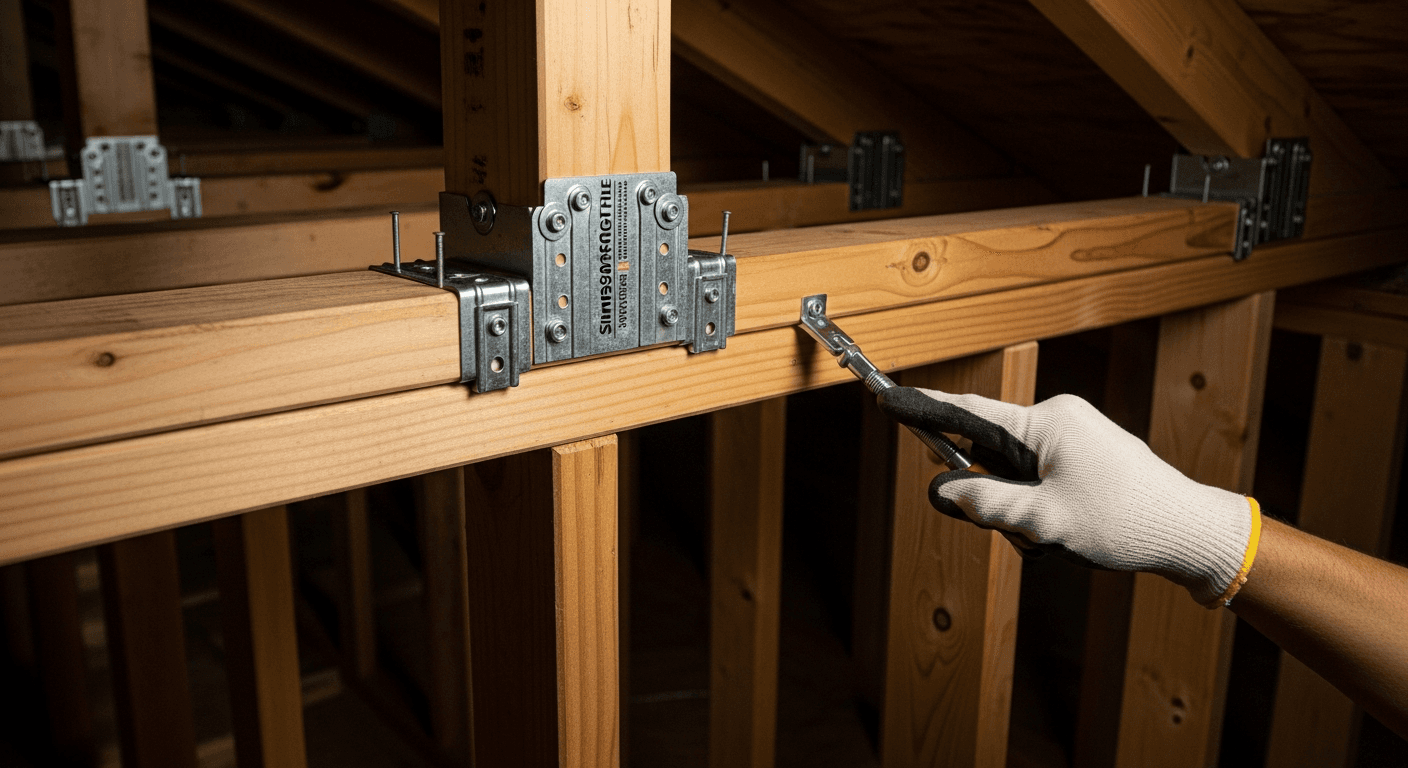
How re-roofing your Florida home triggers major insurance savings through wind mitigation credits. Covers the OIR-B1-1802 form, credit categories, average savings of $800-$2,500/year, and the inspection process.
Read More