
Flat Roof Repair in Miami: Commercial and Residential Solutions
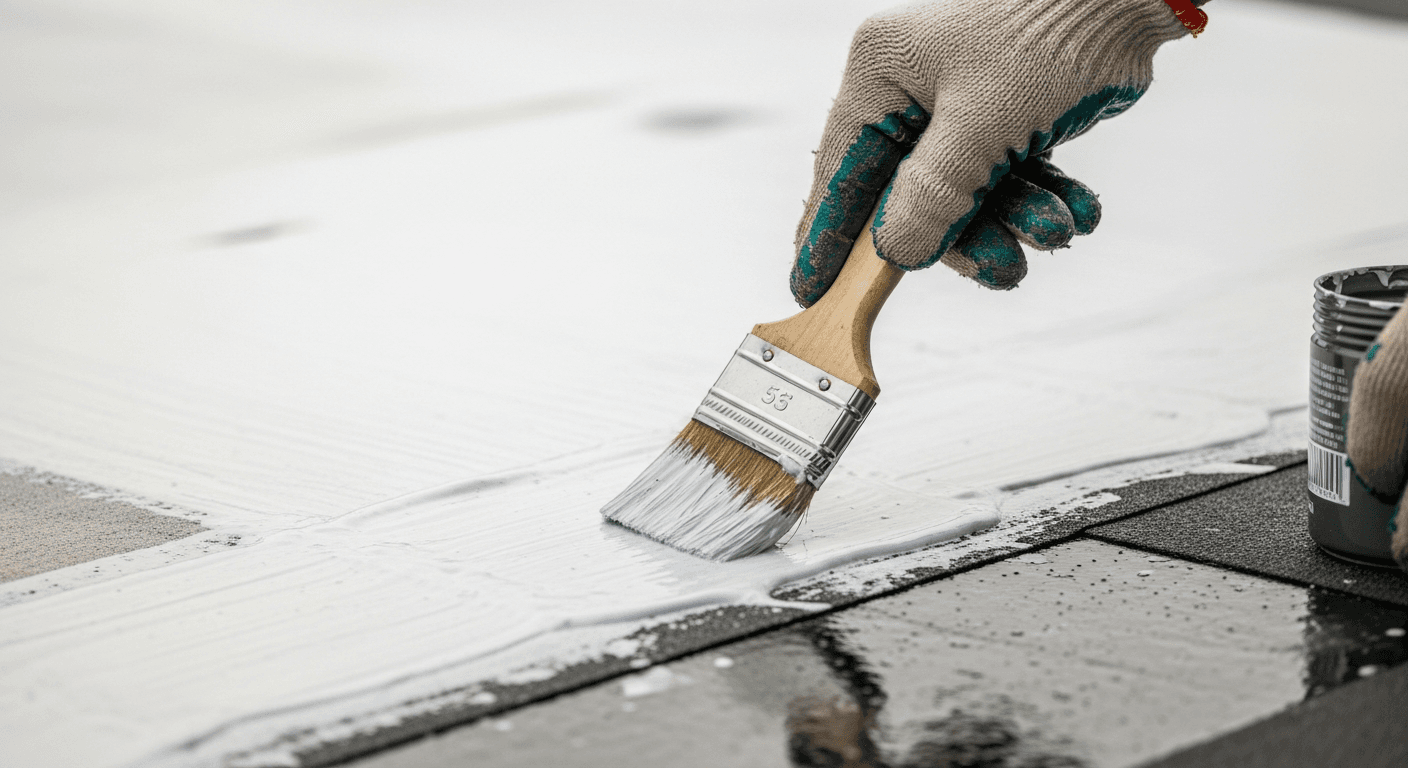
Miami Has More Flat Roofs Than People Realize
Most people picture flat roofs as commercial buildings and warehouses. In Miami, that's only half the story. We have thousands of residential flat roofs across the city. MiMo architecture in Miami Shores, 1950s ranch homes with flat carport additions, contemporary homes in Coconut Grove and Bal Harbour with intentional flat designs, condo buildings in Brickell and Sunny Isles, and hybrid homes in Kendall and Doral with partial flat sections over garages and additions.
Residential flat roofs fail differently than commercial ones. Smaller footprints, different drainage patterns, often installed over the original sloped roof rather than new construction. I've been repairing residential flat roofs across Miami-Dade since 2004 and this post covers what I've learned about residential-specific repair needs. For commercial flat roof work (larger footprints, HVAC curbs, parapet walls, internal drainage), read my flat roof repair problems and solutions post focused on commercial work.
The Three Residential Flat Roof Situations I See in Miami
Most residential flat roofs I repair fall into one of three categories:
1. MiMo and Mid-Century Modern homes. Miami Shores, North Miami, Biscayne Park, Upper East Side. Homes from the 1950s and 1960s with intentional flat or shallow-pitched roofs as architectural statements. Original construction was usually BUR (built-up roofing with tar and gravel) or modified bitumen. These roofs are now 40 to 60+ years old and most have been partially or fully replaced, but many still have their original substrates, original drainage, and original structural decks. Repair work often involves dealing with legacy materials and structural quirks.
2. Partial flat sections on otherwise-sloped homes. Very common in Kendall, Doral, Miami Lakes, Homestead, and anywhere with 1970s-1990s homes. Flat section over the garage addition, flat patio cover, flat Florida room, flat carport. These are usually TPO, EPDM, or modified bitumen, retrofitted onto the original sloped home. The junction between the flat section and the sloped main roof is almost always the source of leaks.
3. Contemporary architect-designed homes. New builds in Coconut Grove, Coral Gables contemporary, Miami Beach, Bal Harbour, and waterfront areas. Intentional flat-roof architecture with modern TPO, PVC, or SPF spray foam systems. These are usually only 5 to 15 years old but can develop problems earlier than expected due to design ambition, complex drainage, and green roof or rooftop deck add-ons.
Each category has different failure modes and different repair approaches. Let me walk you through what I find on residential flat roof calls and how I fix it.
The Most Common Residential Flat Roof Failures
On residential flat roof calls, I see the same five issues over and over:
1. Ponding on the garage addition flat section. A 1980s Kendall ranch home adds a two-car garage with a flat roof. The contractor doesn't slope it correctly. Water pools in a 10-foot diameter area near the house-to-garage junction. Over 10 to 15 years, the pond eats through the membrane, water gets into the deck, and the garage ceiling starts staining. Fix: strip the failed membrane in the ponding area, install tapered insulation to create slope, install new membrane and flashing at the house-to-garage junction. Cost: $2,500 to $6,500 depending on ponding size.
2. Failed modified bitumen on a 1950s MiMo flat roof. The original 1955 installation used coal-tar BUR. Someone covered it with modified bitumen in 1985. Now it's 40 years old and the modified bitumen has cracked, blistered, and let water into the substrate. Fix depends on substrate moisture content: if dry, strip the modified bitumen and install new TPO or PVC over clean insulation; if wet, full tear-off to deck is required. Cost: $6 to $12 per square foot for residential flat roof replacement in Miami.
3. Seam failure at flat-to-sloped junction. The most common leak location on hybrid homes. The transition where the flat garage roof meets the shingle or tile main roof. The original roofer didn't install proper counterflashing and a kick-out diverter. Water runs down the main roof, hits the junction, and wicks behind the membrane. Interior signs: staining on the garage ceiling 6 to 18 months after heavy rain season. Fix: strip 4 feet of membrane along the junction, install new ice and water shield up the wall and under the sloped roof, install counterflashing with proper overlap, install new membrane with sealed termination bar. Cost: $800 to $2,200 depending on length.
4. Pipe boot failure on plumbing vents. Every flat roof has plumbing vents and bathroom exhaust fans. The rubber boots that seal around these penetrations degrade within 10 to 15 years in Miami sun. When they fail, water gets directly around the pipe and runs down inside the house. Usually the first sign is a water stain on the ceiling directly below the pipe. Fix: cut out old boot, install new Miami-Dade NOA pipe boot with membrane collar, seal and flash. Cost: $300 to $600 per penetration.
5. Foot traffic damage from AC technicians. Miami homes have rooftop AC condenser units on flat sections all over the suburbs. Every time an HVAC tech walks to the unit, they're stepping on the membrane. Over 10 years of quarterly service visits, that foot traffic creates worn spots, punctures, and membrane thinning. Fix: install walk pads along the service path (which should have been done on day one), patch the damaged sections. Cost: $800 to $2,500.
Real 2026 Residential Flat Roof Repair Pricing
Here's what I'm quoting on residential flat roof work in Miami-Dade this year:
| Repair Type | Cost |
|---|---|
| Single pipe boot replacement | $300 to $600 |
| Small patch under 15 sq ft | $350 to $750 |
| Medium patch 15 to 100 sq ft | $750 to $2,500 |
| Seam re-weld at house-to-garage junction | $800 to $2,200 |
| Ponding area re-slope with tapered insulation | $2,500 to $6,500 |
| Full flat section replacement (garage roof, 400 sq ft) | $4,500 to $8,500 |
| Full flat section replacement (Florida room, 600 sq ft) | $6,500 to $12,000 |
| Full MiMo home flat roof replacement (2,000 sq ft) | $18,000 to $32,000 |
| Elastomeric coating (over structurally sound roof) | $2 to $4 per sq ft |
| Emergency tarp (storm response) | $400 to $1,200 |
Residential flat roof costs per square foot are generally 15 to 25 percent higher than commercial work because of smaller footprint, harder access, and higher detail work around residential penetrations.
The Elastomeric Coating Option for Older Flat Roofs
If your flat roof is 15 to 25 years old and structurally sound but starting to show surface weathering, an elastomeric coating can extend its life by 8 to 15 years at a fraction of full replacement cost. I recommend this for MiMo homes and 1990s-era hybrid roofs where the underlying membrane is still intact.
The coatings I use:
- Silicone (GE Enduris, Henry Tropi-Cool 100% Silicone): Best for ponding water areas, doesn't require primer on most substrates, UV stable. Runs $2.50 to $4 per square foot.
- Acrylic (Gaco, Henry 587): Lower cost, good for areas without standing water, 100% recyclable. Runs $1.75 to $3 per square foot.
- Urethane (Gaco Topcoat, Uniflex): Best for high-traffic areas, excellent impact resistance. Runs $3 to $4.50 per square foot.
Coatings only work on structurally sound roofs with limited damage. A professional inspection tells us whether your roof is a coating candidate or whether it needs full replacement. I'd say about 40 percent of the residential flat roofs I inspect are coating candidates. The other 60 percent need partial or full replacement.
Leak Detection Methods for Residential Flat Roofs
Finding the source of a residential flat roof leak is harder than it sounds. Water enters at one point, travels laterally under the membrane or through the insulation, and emerges inside the house somewhere else entirely. I've traced leaks 20+ feet from the interior water stain.
My diagnostic process on residential flat roof leak calls:
- Interior inspection first. Start with the water stain inside the house. Note its exact location, size, and pattern. Ceiling stains that appear during rain but not after indicate active leaks. Dry stains with no moisture meter reading are old issues.
- Exterior visual inspection. Walk the roof and photograph everything. Focus on the area directly above the interior stain but don't assume that's the leak source.
- Moisture meter readings. Use a moisture meter to map the substrate beneath the membrane. Wet areas indicate the leak path.
- Infrared thermography on larger roofs. An infrared camera reveals wet insulation as cooler areas. Best used at dusk after a hot sunny day when the temperature differential is greatest.
- Flood testing. If visual and moisture inspection don't reveal the source, I can dam an area and flood it with water to force the leak to reproduce. This is labor-intensive but definitive.
- Smoke testing (rare). Pumping non-toxic smoke under the membrane reveals leak paths. I use this on complex commercial roofs more than residential.
Most residential flat roof leaks I find within 30 minutes of walking the roof. The hard ones take 2 to 4 hours and a moisture meter.
How to Choose a Residential Flat Roof Contractor
Residential flat roof work is a niche inside a niche. Most Miami roofers work on sloped asphalt shingle or tile roofs 90 percent of the time. Flat work is 10 percent, and residential flat work is maybe 2 percent. You want someone who does it regularly, not as an occasional side job.
Ask every contractor you interview:
- How many residential flat roof repairs do you complete per month in Miami-Dade? Look for 5+ per month as a sign of genuine specialization.
- What membrane systems are you certified to install? Should include at least TPO and modified bitumen. Carlisle, GAF, Versico, and Johns Manville all have certification programs.
- Do you have heat-welding equipment for TPO and PVC work? Essential for doing modern residential flat roof repairs correctly.
- Can you show me 3 residential flat roof jobs completed in the last 6 months? Local references matter.
- What's your leak diagnosis process before quoting a repair? They should describe something similar to what I outlined above.
- What warranty do you provide on residential flat roof repairs? 2 years minimum workmanship, plus whatever the material manufacturer provides.
Also verify the Florida Certified Roofing Contractor license (CCC prefix), workers comp insurance, general liability coverage, and complaint history at the DBPR and BBB.
Ready for a Real Diagnosis?
Call us at 305-225-1535 or request a free estimate. We'll walk the roof, run moisture meter readings, trace the leak path, and give you an honest diagnosis. If it's a small repair, we'll tell you that. If the roof is past its useful life, we'll tell you that too and walk through replacement options. No upsell pressure, no pretending a failing roof can be saved with a band-aid.
Frequently Asked Questions
How much does flat roof repair cost in Miami?
Flat roof repair costs range from $200 to $6,000 depending on damage extent. Small patches cost $200-$500, medium patches cost $500-$2,000, and large patches cost $2,000-$6,000. Seam re-welding costs $3-$8 per linear foot, drain repairs cost $400-$1,500, and parapet flashing costs $8-$15 per linear foot. Emergency repairs and difficult access can increase costs by 20-100%.
What is the most common cause of flat roof leaks?
Ponding water is the most common cause of flat roof leaks in Miami. Water that remains on the roof for more than 48 hours after rain accelerates membrane deterioration, promotes algae growth, and increases leak risk. Other common causes include membrane punctures, seam failures, flashing separation, and roof equipment damage. Regular inspections and proper drainage prevent most leaks.
Should I repair or replace my flat roof?
Repair is appropriate if your roof is less than 50% through its lifespan, damage is localized (less than 25% of area), and there are no recurring leaks. Replace if the roof is beyond 75% of its lifespan, damage is widespread (more than 30% of area), insulation is wet, or you have recurring leaks. A professional inspection can help you decide.
How long does a flat roof repair take?
Small repairs (patches and punctures) can be completed in 2-4 hours. Medium repairs (multiple patches, seam repairs) take 1-2 days. Large repairs (extensive membrane replacement, multiple drain repairs) take 3-7 days. Emergency temporary repairs can be completed in 1-3 hours to prevent further damage until permanent repairs are scheduled.
Can flat roofs handle Miami's hurricanes?
Yes, when properly installed and maintained. Modern flat roofing systems like TPO and EPDM with fully-adhered installation methods can withstand sustained winds of 110-140 mph when installed to Miami-Dade County standards. Regular maintenance, proper drainage, and secure edge details are critical for hurricane performance. Loose gravel on BUR systems should be removed before storms.
Need Roofing Help?
Whether you need an inspection, repair, or full replacement, our team of licensed roofing professionals is ready to help. Serving South Florida since 2004.
Related Articles
Complete guide to TPO roofing for Miami commercial properties covering benefits, costs, installation, energy efficiency, hurricane performance, maintenance, and why TPO is becoming the dominant flat roofing choice.
Read More
Florida insurance rates are dropping for the first time since 2015. Learn how combining market rate decreases with strategic roof upgrades can save Miami homeowners $1,400-$2,600 per year on premiums.
Read More