Impact-Resistant Shingles: Are They Worth It in South Florida?
The Class 4 Shingle Payback Math That Makes the Decision Easy
Let me save you the suspense. If you're choosing between standard architectural shingles and Class 4 impact-resistant shingles on a Miami home, go with Class 4. Every time. The $2 to $3 per square foot premium pays back through insurance savings in 4 to 7 years, and then you're banking the difference every year for another 20+ years. I've done the math on dozens of jobs, and it works out the same way almost every time.
The harder question is which Class 4 product to pick. GAF Timberline HDZ, Owens Corning Duration Storm, Atlas StormMaster Slate, CertainTeed Landmark IR, and IKO Dynasty all carry the same UL 2218 Class 4 rating, but they don't perform identically in Miami's specific climate. I install all five, and I have opinions about which one belongs on which house. Let me walk you through it.
What Class 4 Actually Means
Impact-resistant shingles are tested under UL 2218, which drops a steel ball onto the shingle from a specified height. The shingle has to show no cracking, splitting, or tearing after two impacts in the exact same spot. Class 4 is the highest rating. Here's the test breakdown:
| Class | Steel Ball Diameter | Drop Height | Impact Energy |
|---|---|---|---|
| Class 1 | 1.25 inches | 12 feet | Low |
| Class 2 | 1.50 inches | 15 feet | Moderate |
| Class 3 | 1.75 inches | 17 feet | High |
| Class 4 | 2.00 inches | 20 feet | Very High |
A Class 4 shingle survives impacts that would shatter a standard three-tab shingle. The key to that performance is SBS-modified asphalt. Standard shingles use oxidized asphalt that becomes brittle in Miami heat. SBS (styrene-butadiene-styrene) modified asphalt contains a rubber polymer that keeps the shingle flexible across temperature extremes. It's the same kind of elastomer used in tires. It absorbs impact instead of cracking.
Add a heavier fiberglass mat, better granule adhesion, and stronger sealant strips and you have a shingle that performs closer to metal roofing than to its cheap cousins.
Real Pricing in Miami-Dade for 2026
Here's what I'm actually quoting on Class 4 shingle jobs across Miami this year. These include tear-off, deck re-nail to HVHZ code, synthetic self-adhered underlayment, starter strip, field shingles, ridge and hip caps, flashing, permit, and inspection.
| Shingle Type | Installed Cost per Sq Ft | 2,200 Sq Ft Home Total |
|---|---|---|
| Standard 3-tab (legacy, don't install) | $4.50 to $5.50 | $9,900 to $12,100 |
| Standard architectural | $5.50 to $7.50 | $12,100 to $16,500 |
| Class 3 impact-resistant | $6.50 to $8.50 | $14,300 to $18,700 |
| Class 4 impact-resistant (GAF, Owens Corning, Atlas) | $7.50 to $9.50 | $16,500 to $20,900 |
| Class 4 premium designer (GAF Grand Sequoia, OC Berkshire) | $9.00 to $12.00 | $19,800 to $26,400 |
The premium for Class 4 over standard architectural is about $2 to $3 per square foot, or $4,400 to $6,600 on a typical home. That sounds like a lot until you look at the insurance math.
The Insurance Math That Makes This a No-Brainer
Florida's wind mitigation insurance system gives you a documented credit off the wind portion of your homeowners premium when you install a qualifying roof. Your roofer orders a Wind Mitigation Inspection (Form OIR-B1-1802) from a licensed inspector after the job passes final, and your insurance carrier uses that form to calculate credits on your next renewal.
For a typical Miami home with a $5,500 annual insurance premium (the wind portion runs about 55 to 65 percent of that, so call it $3,200), here's what the roof covering credit looks like by material:
| Roof Covering | Wind Credit | Annual Savings |
|---|---|---|
| Non-rated standard shingles | 0% | $0 |
| Class 3 impact-resistant shingles | 15% to 20% | $480 to $640 |
| Class 4 impact-resistant shingles | 22% to 28% | $704 to $896 |
| FBC equivalent non-impact | 5% to 10% | $160 to $320 |
| Tile with hurricane clips and foam | 18% to 24% | $576 to $768 |
| Standing seam metal (Miami-Dade NOA) | 28% to 35% | $896 to $1,120 |
For Class 4 shingles at 25 percent wind credit, you're saving around $800 per year in a typical scenario. That's $4,000 in 5 years. Over the 28 to 32 year lifespan of Class 4 shingles in Miami, you're looking at $22,000 to $26,000 in cumulative insurance savings. The $5,000 upfront premium over standard shingles pays back in year 6 or 7, then everything after that is money in your pocket.
There's a second benefit that's harder to quantify but real: Class 4 shingles file fewer damage claims. In Florida's current insurance crisis, carriers have been canceling policies and non-renewing homeowners who file multiple roof claims. A roof that doesn't get damaged in tropical storms and near-miss hurricanes keeps you in your carrier's good graces.
The Five Class 4 Products I Actually Install
I've installed every major Class 4 shingle on Miami homes over the last 20 years. Here's my honest assessment of each one.
GAF Timberline HDZ. This is my default recommendation and my highest-volume Class 4 install. LayerLock sealant technology holds the shingle courses together through hurricane-force winds. StainGuard Plus algae protection keeps the shingles from streaking in Miami's humid climate. Lifetime limited warranty with a 15-year non-prorated material period. Color palette is strong (Charcoal, Hickory, Weathered Wood, Slate, Pewter Gray, Mission Brown are my most-installed colors). Runs $7.50 to $9 per square foot installed. If you're not sure what to pick, pick this.
Owens Corning Duration Storm. The SureNail nailing zone is the engineering advantage. A fabric strip runs through the nailing area of every shingle, giving the nails something stronger to bite into. In my experience, this translates to noticeably better uplift resistance during storms. Color options are slightly more limited than GAF. Similar price ($7.50 to $9.50 installed). I recommend Duration Storm on homes with exposed locations, coastal proximity, or clients who want the peace of mind of the strongest fastener retention.
Atlas StormMaster Slate. The Scotchgard Protector algae treatment is the best algae resistance I've seen on any shingle in Miami. If your home has north-facing slopes or is shaded by trees, algae streaking is a real issue, and Atlas handles it better than anyone. Scalloped profile mimics slate for a premium look. Price runs $8.00 to $10 installed. Recommended for Coconut Grove, Miami Shores, Pinecrest, and any home where biological growth is a concern.
CertainTeed Landmark IR. Lower wind rating (110 mph vs 130 on the others) but the color palette is the best in the industry, with 16+ color options including some unique weathered and stone-textured looks. Good fit for clients who want a very specific color that GAF or Owens Corning doesn't carry. Runs $7.50 to $9.00 installed. I recommend it on historic district homes and architect-designed builds where color matching matters more than maximum wind rating.
IKO Dynasty. The budget Class 4 option. ArmourZone reinforced nailing area, Class 4 rating, 130 mph wind rating, and pricing that runs about $0.75 per square foot below GAF and Owens Corning. Color palette is more limited. If your budget is tight and you still want Class 4, this is the product that gets you there at around $14,500 total on a 2,200 square foot home.
The Installation Details That Separate Good Jobs From Bad
Class 4 shingles installed poorly perform worse than standard shingles installed well. Here's what your roofer has to do right:
Six-nail pattern. Miami-Dade HVHZ requires six nails per shingle (not the four-nail pattern you see in Tampa or Orlando). Every shingle gets six ring-shank nails placed along the nailing zone, fully driven but not over-driven. Over-driven nails cut through the shingle mat and create tear-out failures in high winds. Under-driven nails don't hold. This is a skill that comes from experience. Ask any contractor you interview how they train crews on nail depth and drive angle.
Matching starter strip. Use a matching impact-resistant starter strip along eaves and rakes. Standard starter strip under Class 4 field shingles compromises the system at the exact edges most vulnerable to wind uplift. If your quote doesn't specifically list the starter product, ask.
Self-adhered underlayment. Miami-Dade HVHZ requires a self-adhered synthetic underlayment beneath all shingle installations. Polyglass Polystick TU-P Plus, GAF StormGuard, and Grace Ice & Water Shield HT are the three I use. This is your secondary water barrier if shingles ever get blown off in a storm. Budget synthetic underlayment without self-adhesive backing fails in 10 to 15 years in Miami heat.
Matching hip and ridge caps. Use Class 4 hip and ridge cap shingles that match the field product. Standard ridge caps are the weakest point on most shingle roofs in high winds. GAF Seal-A-Ridge, Owens Corning DuraRidge, and Atlas Pro-Cut Hip and Ridge all match their Class 4 field products.
Six-inch deck re-nail. Before underlayment goes on, the deck has to be re-nailed to HVHZ code: 6 inches on edges, 6 inches in field, ring-shank nails, fully penetrated into the trusses or blocking. This is a hidden line item that cheap contractors skip. Ask specifically if it's included.
If your quote doesn't mention any of these, walk away. They're not upgrades. They're the minimum required by Miami-Dade HVHZ code.
How Long Class 4 Shingles Actually Last in Miami
Manufacturer warranties on Class 4 shingles are usually "lifetime limited," which is marketing language. The honest lifespan in Miami's climate is:
- Class 4 on shaded roofs (north-facing, tree-covered): 30 to 35 years
- Class 4 on normal exposure (mixed sun): 28 to 32 years
- Class 4 on full-sun west-facing slopes: 25 to 28 years
- Class 4 within 2 miles of the coast: 22 to 26 years (salt spray accelerates aging)
- Class 4 on barrier islands directly facing ocean: 18 to 22 years (don't install shingles here, go metal or tile)
Standard architectural shingles in the same conditions last 8 to 12 years less. Standard 3-tab shingles last 15 to 20 years less. The SBS modifier is doing real work.
When Class 4 Shingles Are the Wrong Call
Be honest about your situation. Class 4 shingles are not the right answer if:
- You're in Coral Gables, Gables Estates, Pinecrest, Cocoplum, or another neighborhood where HOA requires tile
- You're within 1 mile of the coast on a barrier island (Fisher Island, Star Island, Bal Harbour, Sunny Isles, Key Biscayne, Golden Beach) where salt spray ages asphalt too fast
- You're planning to own the home for 20+ years and can afford metal or tile (those systems last longer and deliver better insurance credits)
- Your roof has extreme complexity with lots of valleys where shingles create failure points
For everyone else in Kendall, Doral, Miami Lakes, Hialeah, Homestead, Palmetto Bay, Cutler Bay, and most of the Miami-Dade suburbs, Class 4 shingles are the smartest value play in residential roofing.
Ready for a Real Quote?
Call us at 305-225-1535 or request a free estimate. We'll walk the roof, pull the right Class 4 product for your specific exposure and HOA requirements, and give you an itemized quote that includes the projected insurance savings based on your actual zip code and current premium. You'll see the true net cost after the wind mitigation credit kicks in, not just the sticker price.
Frequently Asked Questions
How much do impact-resistant shingles cost in Miami?
Impact-resistant Class 4 shingles cost $6 to $9 per square foot installed in Miami, compared to $4 to $6 for standard architectural shingles. For a typical 2,000-square-foot home, expect $12,000 to $18,000 total. The $4,000 to $6,000 premium over standard shingles is typically recovered through insurance savings within 3 to 5 years.
What is the difference between Class 3 and Class 4 shingles?
Class 3 shingles withstand a 1.75-inch steel ball dropped from 17 feet, while Class 4 shingles withstand a 2-inch ball from 20 feet. Class 4 shingles provide greater impact protection and qualify for larger insurance discounts in Florida. Typical Class 4 credits are 22% to 28% off the wind portion of your premium compared to 15% to 20% for Class 3.
How much can I save on insurance with impact-resistant shingles in Florida?
Class 4 impact-resistant shingles can save 22% to 28% off the wind portion of your Florida homeowners insurance premium. For a typical Miami home, this translates to $400 to $800 per year. Over the 25 to 35 year lifespan of the shingles, cumulative savings can reach $10,000 to $20,000.
Which brand of impact-resistant shingle is best for Miami?
GAF Timberline HDZ and Owens Corning Duration Storm are the top-performing impact-resistant shingles for Miami. Both are Class 4 rated with 130 mph wind ratings. GAF's LayerLock technology and Owens Corning's SureNail strip both provide excellent fastener retention in hurricane conditions. Atlas StormMaster Slate offers the best algae resistance.
How long do impact-resistant shingles last in South Florida?
Impact-resistant shingles last 25 to 35 years in South Florida, compared to 15 to 25 years for standard architectural shingles. The SBS-modified asphalt used in impact-resistant shingles resists UV degradation and maintains flexibility better than standard oxidized asphalt, extending the roof's useful life by approximately 10 years.
Need Roofing Help?
Whether you need an inspection, repair, or full replacement, our team of licensed roofing professionals is ready to help. Serving South Florida since 2004.
Related Articles
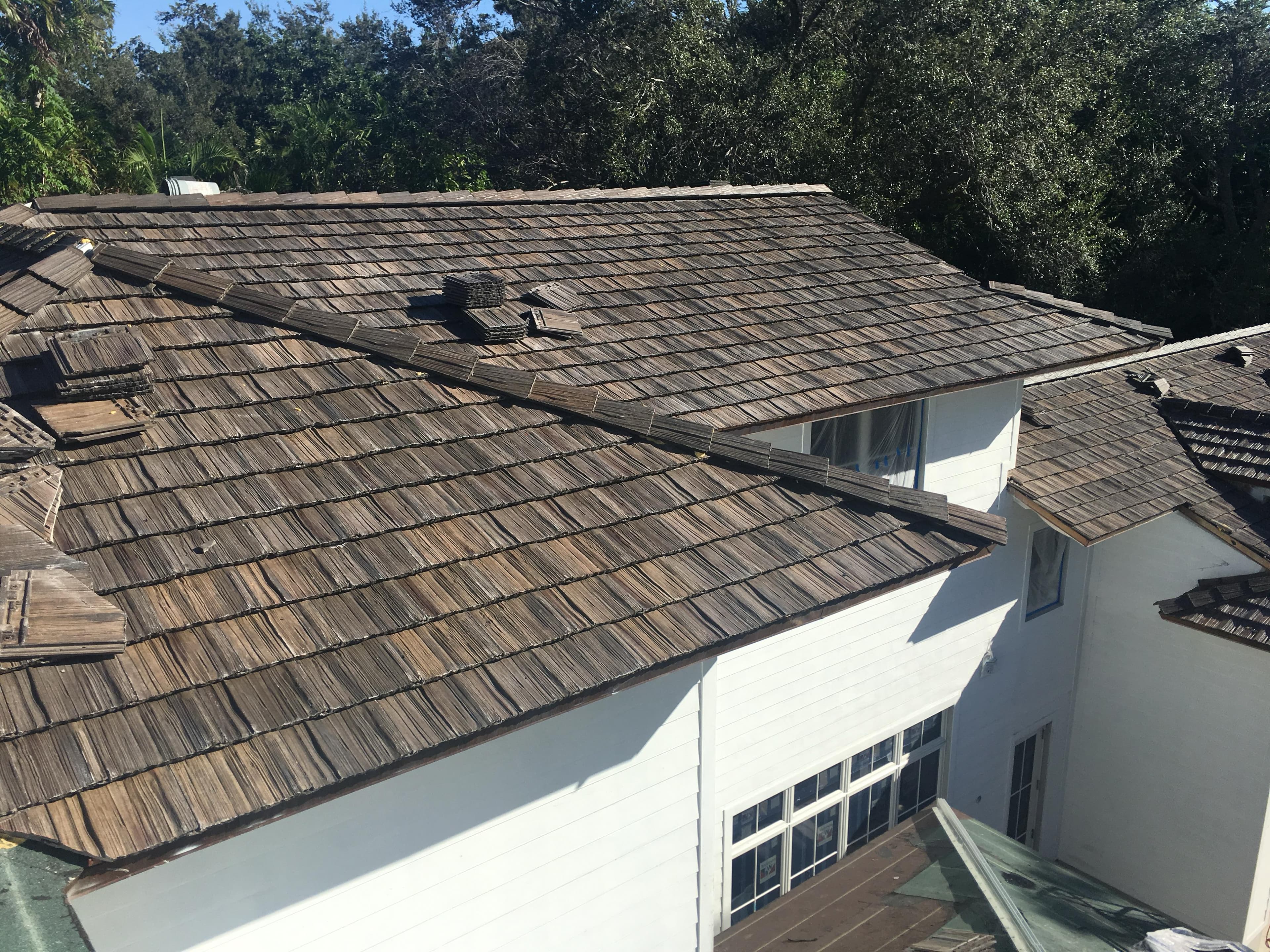
Compare metal, shingle, and tile roofs side by side for Miami homes. Costs, wind ratings, lifespans, and insurance savings explained.
Read More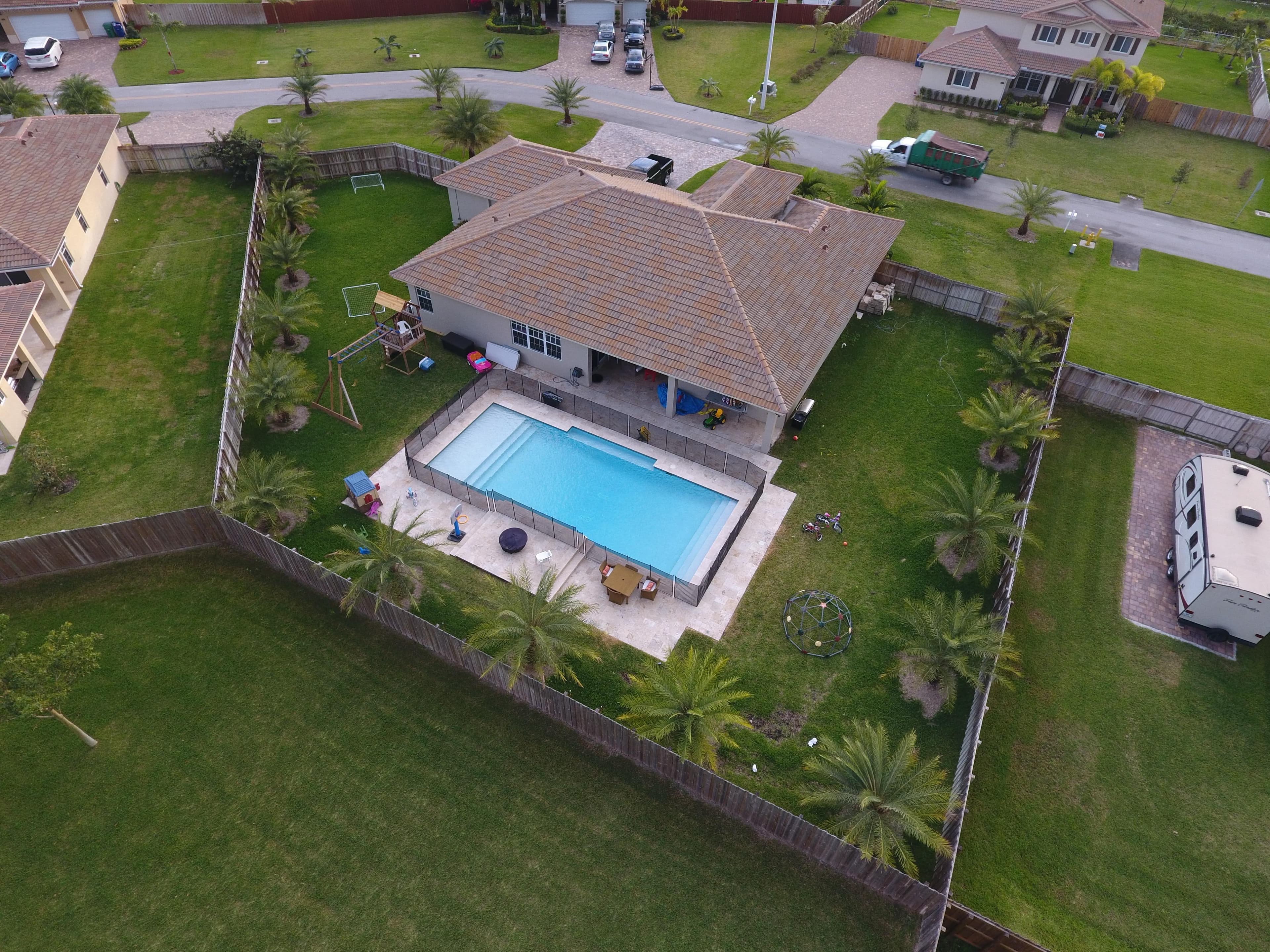
Florida insurance rates are dropping for the first time since 2015. Learn how combining market rate decreases with strategic roof upgrades can save Miami homeowners $1,400-$2,600 per year on premiums.
Read More