
How Much Does a New Roof Cost in Miami? 2026 Price Guide
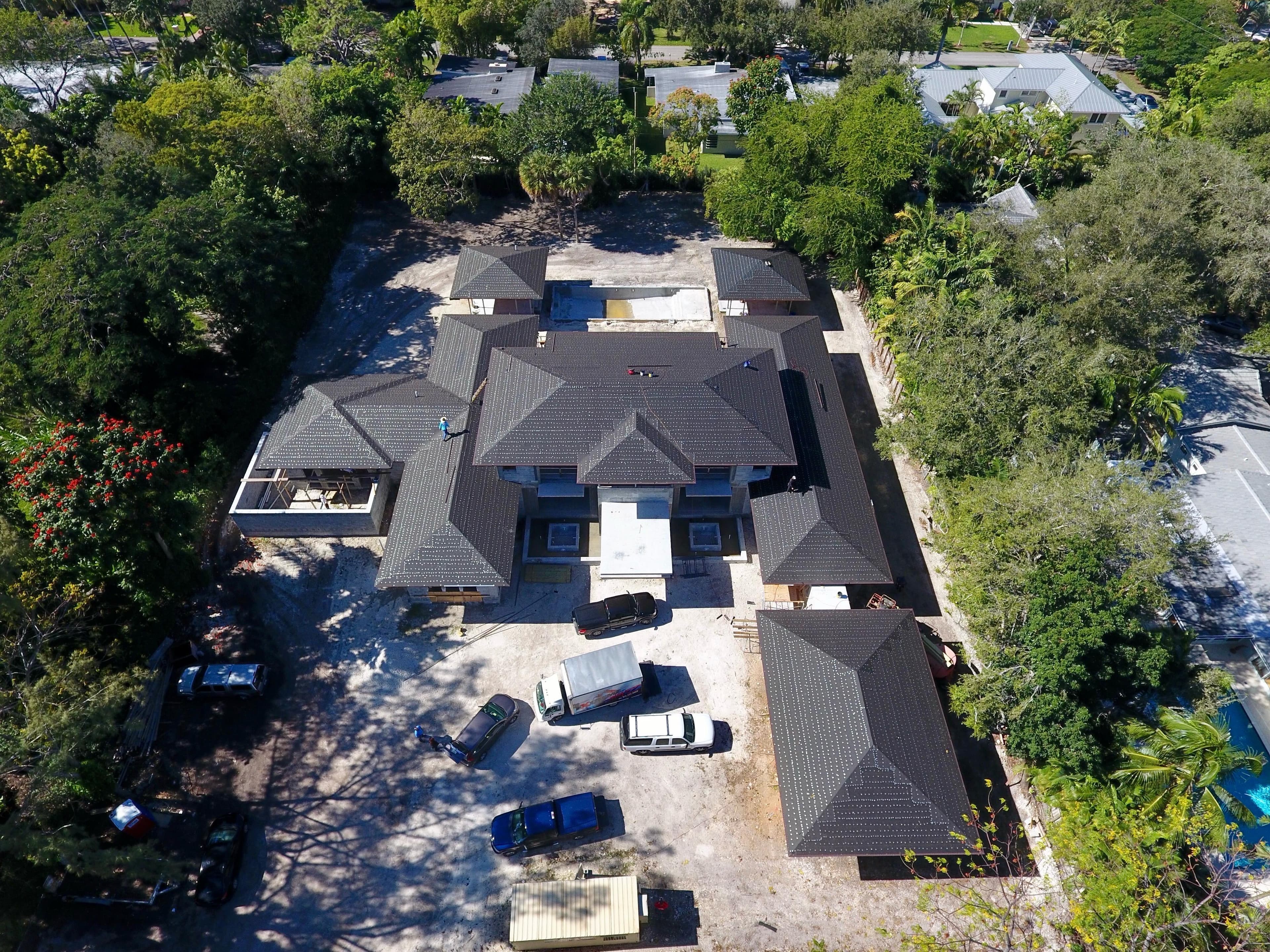
What a New Miami Roof Actually Costs in 2026
I'm going to give you the straight numbers on what a new roof costs in Miami right now, based on jobs I'm actually quoting and invoicing across Miami-Dade County. The number ranges you see in most online articles are outdated by 15 to 25 percent because material prices, labor, and HVHZ code requirements have all moved up since 2023.
For a typical 2,200 square foot Miami home in 2026, expect to pay:
- $15,000 to $20,000 for Class 4 impact-resistant architectural shingles
- $28,000 to $38,000 for concrete tile (S-tile or barrel)
- $32,000 to $48,000 for clay tile (S-tile or barrel)
- $34,000 to $46,000 for Galvalume standing seam metal
- $38,000 to $52,000 for aluminum standing seam metal
- $15,000 to $22,000 for TPO flat roof replacement
These numbers reflect the HVHZ premium (roughly 15 to 25 percent more than non-HVHZ markets like Orlando or Tampa) for deck re-nailing, NOA-approved products, self-adhered underlayment, and enhanced fastening requirements. They're not optional upgrades. They're the minimum required by Miami-Dade code.
Here's the full breakdown by material, home size, and what drives the price variations.
2026 Miami Roofing Cost Table by Material and Home Size
Here's the complete pricing table I'm actually quoting across Miami-Dade this year. All prices include tear-off, deck re-nail to HVHZ code, self-adhered underlayment, HVHZ-compliant fastening, flashings, permit, and final inspection. They do not include structural deck repairs or tapered insulation for slope correction.
| Material | Cost per Sq Ft | 1,500 sq ft | 2,200 sq ft | 3,000 sq ft |
|---|---|---|---|---|
| Class 4 impact-resistant shingles | $7.50 - $9.50 | $11,250 - $14,250 | $16,500 - $20,900 | $22,500 - $28,500 |
| Standard architectural shingles | $6.00 - $7.50 | $9,000 - $11,250 | $13,200 - $16,500 | $18,000 - $22,500 |
| Concrete S-tile | $14 - $17 | $21,000 - $25,500 | $30,800 - $37,400 | $42,000 - $51,000 |
| Concrete barrel tile | $14 - $18 | $21,000 - $27,000 | $30,800 - $39,600 | $42,000 - $54,000 |
| Clay S-tile | $16 - $20 | $24,000 - $30,000 | $35,200 - $44,000 | $48,000 - $60,000 |
| Clay barrel one-piece | $16 - $22 | $24,000 - $33,000 | $35,200 - $48,400 | $48,000 - $66,000 |
| Clay two-piece Mission | $20 - $28 | $30,000 - $42,000 | $44,000 - $61,600 | $60,000 - $84,000 |
| Galvalume standing seam metal | $14 - $19 | $21,000 - $28,500 | $30,800 - $41,800 | $42,000 - $57,000 |
| Aluminum standing seam metal | $18 - $25 | $27,000 - $37,500 | $39,600 - $55,000 | $54,000 - $75,000 |
| TPO 60 mil flat roof | $8 - $12 | $12,000 - $18,000 | $17,600 - $26,400 | $24,000 - $36,000 |
| Modified bitumen 2-ply flat | $7 - $10 | $10,500 - $15,000 | $15,400 - $22,000 | $21,000 - $30,000 |
These are real numbers from real 2026 jobs. If you're getting quotes significantly below the low end of these ranges, something is wrong. The contractor is either cutting corners on code compliance, using non-NOA products, or planning to hit you with change orders during the job.
Where Your Money Actually Goes
Understanding the cost breakdown helps you evaluate quotes and spot corners being cut. Here's how the total project cost is typically distributed:
Materials: 40 to 50 percent of total cost
- Primary roofing material (shingles, tile, or metal panels)
- Self-adhered HVHZ underlayment (required in Miami-Dade)
- Flashing at penetrations, valleys, ridges, and walls
- Ring-shank fasteners, clips, and HVHZ-rated adhesives
- Ridge and hip caps or specialty trim
- Drip edge and starter strips
Labor: 35 to 45 percent of total cost
- Tear-off and disposal of existing roof (heavier on tile jobs)
- Deck inspection and re-nail to HVHZ code schedule
- Installation labor for underlayment, flashings, and roof covering
- Final cleanup and magnet-sweep for stray fasteners
Permits, inspections, and overhead: 10 to 20 percent of total cost
- Miami-Dade permit fees ($400 to $1,200 depending on scope)
- NOA documentation and product specification paperwork
- Building department inspections (deck, dry-in, final)
- Contractor overhead (insurance, workers comp, equipment, office)
If a contractor's quote is missing any of these components or doesn't show a reasonable balance between them, ask why.
What Drives Price Variations
No two Miami roofs cost the same. Here's what drives the variation you'll see in quotes:
Roof complexity. Simple hip or gable roofs are cheapest. Roofs with multiple valleys, dormers, skylights, hips meeting hips, and lots of penetrations add 20 to 35 percent to the base cost because every detail has to be hand-formed and flashed individually.
Roof slope. Low slope (3/12 to 5/12) is standard. Moderate slope (6/12 to 8/12) adds 10 to 15 percent for safety equipment and slower work pace. Steep slope (9/12+) adds 20 to 35 percent for specialized scaffolding, fall protection, and increased labor time.
Number of stories. Single-story is standard. Two-story adds 10 to 20 percent. Three-story adds 25 to 40 percent and may require crane delivery for tile or metal.
Deck condition. The deck under your existing roof may have rot, water damage, soft spots, or inadequate fastening. Repairs and replacement sheets add $80 to $150 per sheet (4 ft x 8 ft plywood or OSB). On older Miami homes, budget $1,500 to $5,000 for deck repairs on average. Severe cases run $8,000 to $15,000.
Structural repairs. Pre-1994 Miami homes often need hurricane strap retrofits before a new tile roof can be installed on an inadequate truss system. Engineer assessment runs $400 to $800, strap retrofits run $1,500 to $5,000, and full truss reinforcement runs $5,000 to $15,000 when needed.
HOA and historic district requirements. Coral Gables, Gables Estates, Cocoplum, Pinecrest, and other premium neighborhoods add 15 to 30 percent for historic tile matching, Board of Architects approval fees, and specialty materials.
Material choice within a category. Premium Kynar 500 finishes add $1.50 to $2 per square foot over standard polyester coatings. Thicker gauge metal (22-gauge vs 24-gauge) adds about 15 percent. 80 mil TPO vs 60 mil TPO adds 30 percent. Better materials last longer and perform better but cost more upfront.
HVHZ Premium: Why Miami Costs More Than Orlando
Miami-Dade and southern Broward counties fall within Florida's High Velocity Hurricane Zone, which adds 15 to 25 percent to roofing costs compared to non-HVHZ markets like Orlando, Tampa, or Jacksonville. The premium comes from:
- Self-adhered modified bitumen underlayment (required in HVHZ, optional elsewhere)
- Enhanced fastener schedules (ring-shank nails at 6-inch spacing throughout)
- Impact-rated materials with Miami-Dade NOA (not just Florida Product Approval)
- NOA product documentation required on every permit application
- Enhanced three-inspection process at deck, dry-in, and final
This premium isn't optional. It's required by code. Any contractor quoting you Orlando-level pricing for a Miami-Dade job is either planning to cut corners on code compliance or doesn't know what HVHZ requires.
Insurance Savings That Offset the Cost
A new Miami-Dade NOA-compliant roof with proper wind mitigation documentation typically saves $900 to $2,500 per year on homeowners insurance. On a typical $6,000 annual premium, that's 15 to 40 percent off. Over the lifespan of the roof:
- 25-year shingle roof: $22,500 to $62,500 cumulative insurance savings
- 50-year tile or metal roof: $45,000 to $125,000 cumulative insurance savings
Those savings are real and they should factor into your cost analysis. A $42,000 metal roof with $2,000 annual insurance savings effectively costs $42,000 minus $40,000 in cumulative insurance savings over 20 years. That changes the math significantly compared to a $20,000 shingle roof that has to be replaced again in year 22.
Financing Options for Miami Homeowners
Most Miami homeowners don't pay cash for a roof replacement. Common financing paths:
Roofing contractor financing. Most established Miami roofers partner with third-party lenders offering 12 to 144 month terms. Promotional 0 percent interest rates are common for 12 to 18 months on qualifying credit. Rates after promotional periods run 7 to 15 percent depending on credit.
Home Equity Line of Credit (HELOC). Leverages your home's equity. Rates run 7 to 11 percent in 2026. Interest may be tax-deductible if used for home improvement. Requires sufficient equity and good credit.
Home equity loan. Similar to HELOC but with fixed rates and fixed monthly payments. Typically 7 to 10 percent fixed rates.
Personal loan. Unsecured loan from $5,000 to $100,000 from banks, credit unions, or online lenders. Rates run 8 to 18 percent depending on credit. No home equity required.
PACE financing. Property Assessed Clean Energy financing available in qualifying Florida counties for energy-efficient roof upgrades. Repaid through property tax bill.
Insurance proceeds. If your existing roof was damaged by a covered event (hurricane, windstorm, hail), insurance may cover most or all of the replacement cost minus your deductible. File the claim first, then match the settlement against replacement quotes.
My Safe Florida Home grant. Up to $10,000 from the state for qualifying hurricane hardening improvements. Current funding cycle ends in 2026 and hasn't been renewed. Apply immediately if you qualify.
How to Compare Miami Roofing Quotes
Get 3 to 5 quotes from licensed Miami-Dade contractors. When comparing, make sure each quote:
- Specifies the same exact product (NOA number, manufacturer, gauge, color)
- Uses the same underlayment (self-adhered synthetic with Miami-Dade NOA)
- Includes the same deck re-nail schedule (6-inch ring-shank per HVHZ code)
- Lists permit and inspection fees separately (Miami-Dade charges varies by scope)
- Specifies deck repair pricing per sheet ($80 to $150 per 4x8 sheet)
- Details warranty terms (manufacturer material warranty plus contractor workmanship warranty minimum 2 years)
- Includes final cleanup and magnet-sweep
- Lists all HVHZ-required components (flashings, drip edge, starter strip, ridge caps)
The lowest quote isn't always the best value. A contractor cutting corners on underlayment, fastener schedules, or permit compliance will save you money today and cost you 3 to 10 times more in the first storm or failed inspection.
Ready for a Real Quote?
Call us at 305-225-1535 or request a free estimate. Every quote we provide itemizes every line item, specifies the exact NOA products, includes deck repair pricing upfront, and projects your insurance wind mitigation savings based on your specific zip code. No surprise change orders, no bait-and-switch on products, no hidden code compliance costs.
Frequently Asked Questions
How much does it cost to replace a roof on a 2,000 sq ft house in Miami?
For a 2,000-square-foot home in Miami, expect to pay $10,000 to $18,000 for architectural shingles, $24,000 to $36,000 for concrete tile, and $24,000 to $36,000 for standing seam metal in 2026. These prices include tear-off, HVHZ-rated materials, installation, and permits. Your actual cost depends on roof complexity, number of stories, and decking condition.
Why are roofing costs higher in Miami than other cities?
Miami falls within Florida's High Velocity Hurricane Zone, which requires more expensive self-adhered underlayment, enhanced fastener schedules, and impact-rated materials with Miami-Dade NOA approval. These code requirements add 10% to 20% to the cost compared to non-HVHZ areas. Higher labor costs and insurance requirements for contractors in South Florida also contribute.
Does a new roof increase home value in Miami?
Yes. A new roof typically returns 60% to 70% of its cost in increased home value at the time of sale. In Miami, the impact can be even higher because buyers and their insurers heavily scrutinize roof condition and age. A new roof also makes your home significantly easier to sell and insure.
Can I finance a new roof in Miami?
Yes. Financing options include contractor-arranged financing with 12 to 84 month terms, home equity loans or HELOCs, personal loans, and PACE financing in qualifying counties. Many contractors offer promotional 0% interest rates for 12 to 18 months. Insurance proceeds may also cover most of the cost if your roof was damaged by a covered event.
How long does a roof replacement take in Miami?
Most residential roof replacements in Miami take 3 to 7 working days. Shingle roofs are typically faster at 2 to 4 days. Tile roofs take 5 to 7 days due to the weight and complexity of installation. Permit processing adds 1 to 2 weeks before work can begin. After major hurricanes, contractor backlogs can extend the total timeline significantly.
Need Roofing Help?
Whether you need an inspection, repair, or full replacement, our team of licensed roofing professionals is ready to help. Serving South Florida since 2004.
Related Articles
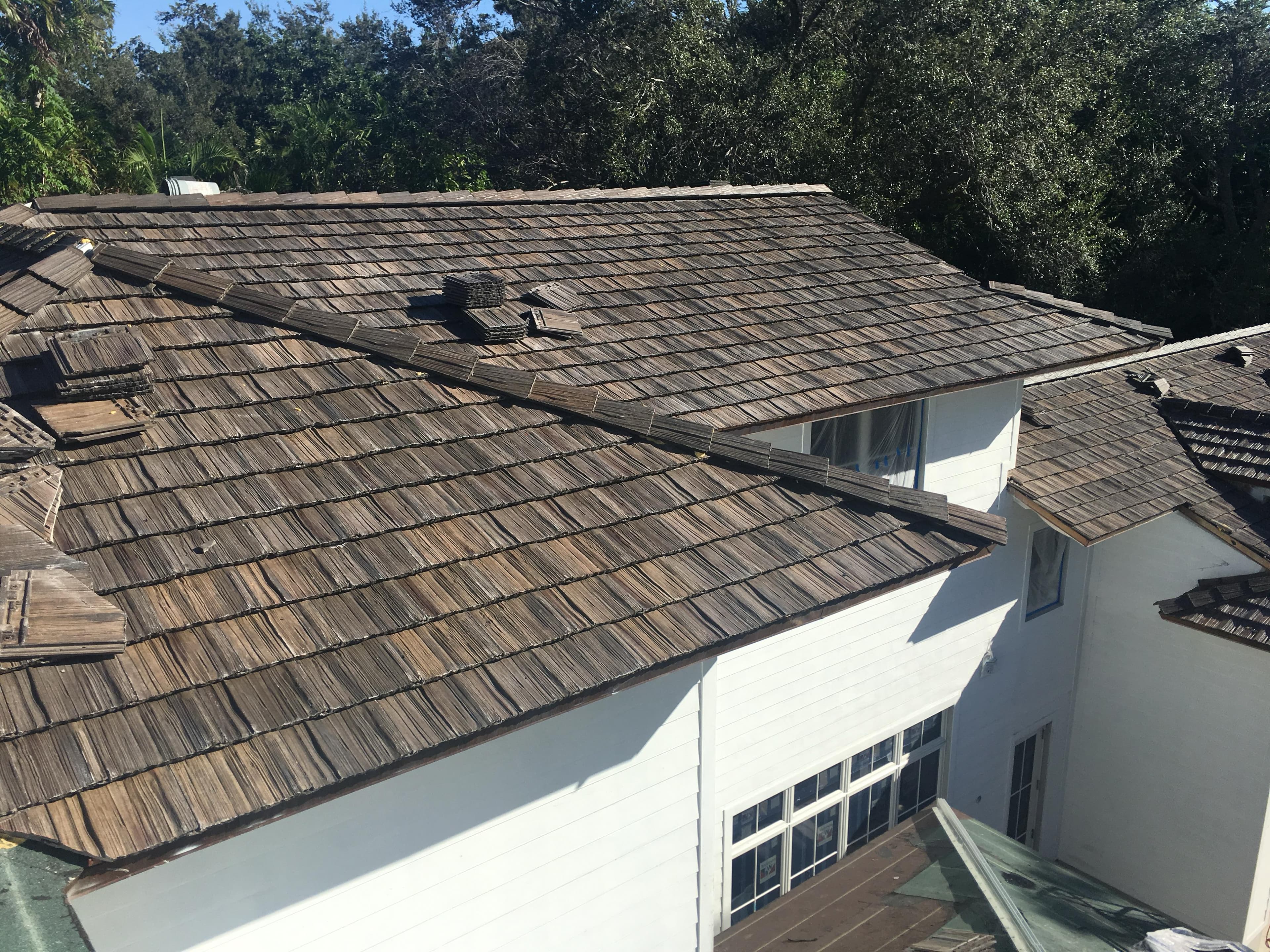
Compare metal, shingle, and tile roofs side by side for Miami homes. Costs, wind ratings, lifespans, and insurance savings explained.
Read More
Florida insurance rates are dropping for the first time since 2015. Learn how combining market rate decreases with strategic roof upgrades can save Miami homeowners $1,400-$2,600 per year on premiums.
Read More