Waterproofing Services in South Florida: Complete Guide
Why Waterproofing Matters More in South Florida Than Almost Anywhere Else
South Florida gets 62 inches of rain per year on average, with some heavy hurricane seasons hitting 80+ inches in Miami-Dade County. Combine that with 73 percent annual humidity, salt air within 15 miles of the coast, and Cat 4 storms every few years, and you have the most aggressive waterproofing environment in the continental United States.
This isn't theoretical. Every property I inspect in Miami has some form of water-related damage or deterioration. Roof coatings failing on flat sections. Balcony and patio deck membranes letting water into walls. Parapet walls with cracks that weep during every heavy rain. Below-grade water intrusion in older homes with compromised foundation membranes. Concrete spalling on coastal buildings from chloride penetration.
Waterproofing work in South Florida runs $2.50 to $6 per square foot for roof and deck coatings, and $8 to $15 per square foot for structural or below-grade waterproofing. This post covers every waterproofing service I offer across Miami-Dade, Broward, and Palm Beach counties, including which system solves which problem and realistic 2026 pricing for each.
Why Waterproofing Is Critical in South Florida
South Florida's climate is uniquely aggressive toward building materials. Understanding the specific environmental factors that drive water intrusion helps property owners appreciate why waterproofing is an essential investment rather than an optional upgrade.
Rainfall Intensity
South Florida does not just receive a lot of rain . it receives rain at extreme intensity. A typical summer afternoon thunderstorm can dump 2 to 4 inches of rain in under an hour. These events overwhelm drainage systems, create standing water on flat roofs, and drive water through any gap, crack, or compromised seal in a building's envelope. During hurricane events, wind-driven rain penetrates surfaces that remain dry during normal rainfall.
Humidity and Moisture Cycling
With average relative humidity of 73% year-round and regular dew points above 70 degrees Fahrenheit, building materials in South Florida are constantly absorbing and releasing moisture. This moisture cycling causes expansion and contraction that opens hairline cracks in concrete, degrades sealant joints, and accelerates the deterioration of unprotected surfaces.
Salt Air Corrosion
Properties within 15 miles of the Atlantic Ocean or Biscayne Bay are subject to airborne salt deposits that corrode metal flashings, degrade cementitious materials, and compromise coating adhesion. Salt air exposure is particularly damaging to untreated concrete, exposed rebar, and sheet metal components of roofing systems.
UV Radiation
South Florida ranks among the highest UV index regions in the continental United States. Ultraviolet radiation breaks down the molecular bonds in asphalt, rubber, and many polymer-based waterproofing products. Roof coatings and membranes that perform adequately in northern climates may degrade two to three times faster under South Florida's relentless sun exposure.
---
Get your free roofing estimate today. Extreme Roofing Inc. has served South Florida since 2004 with over 20 years of certified expertise. Call 305-225-1535 or request your free estimate online.
---
Types of Waterproofing Services
Roof Coatings
Roof coatings are the most cost-effective waterproofing solution for existing roofs in good structural condition. A properly applied roof coating system can extend a roof's functional life by 10 to 15 years at a fraction of the cost of a full replacement.
#### Silicone Roof Coatings
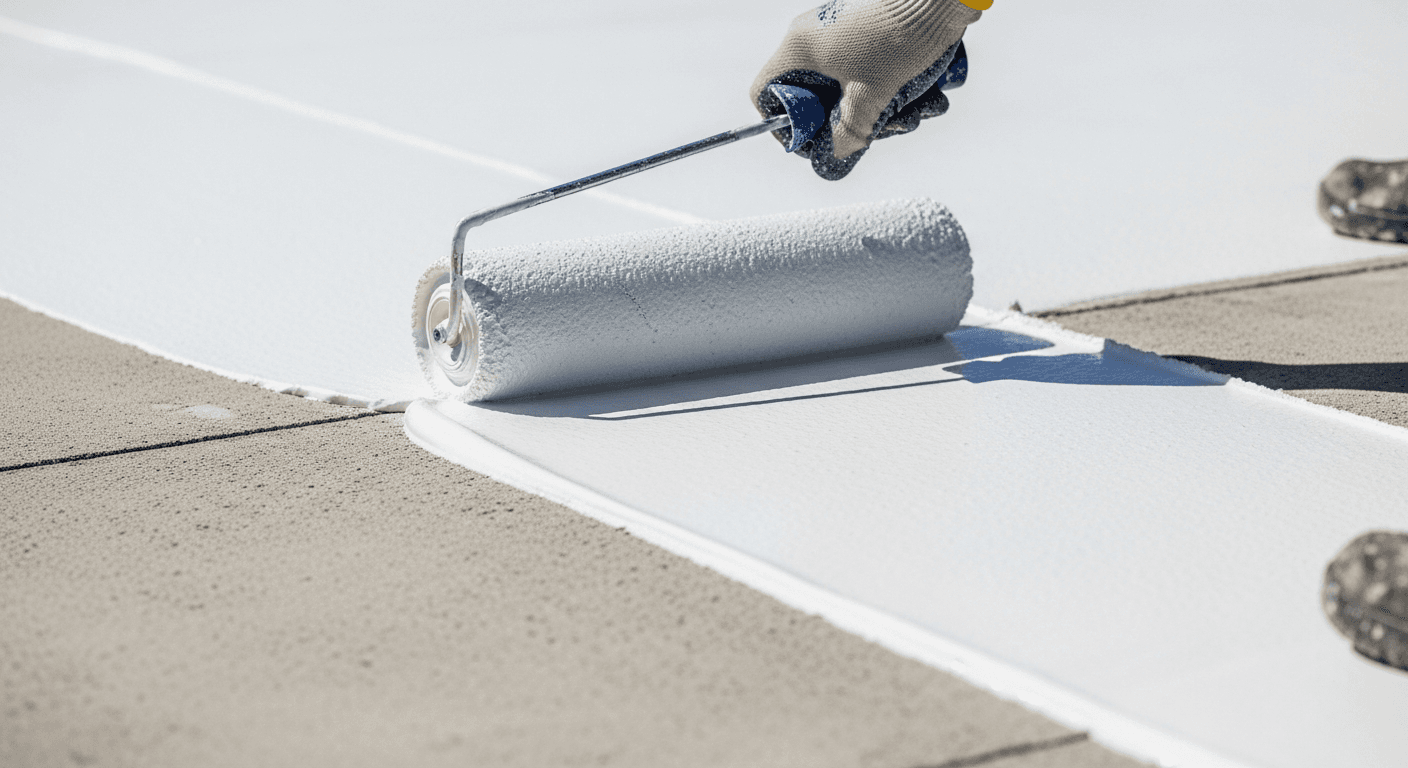
Silicone is the premier roof coating material for South Florida conditions. It is inherently waterproof (it does not absorb water even when ponding occurs), highly UV-resistant, and maintains its flexibility across the temperature range experienced in Miami-Dade and Broward counties.
Key characteristics:
- Cost: $3.00 - $5.00 per square foot applied
- Thickness: Typically applied at 20-30 mils dry film thickness
- Lifespan: 10 - 15 years before recoating
- Ponding water tolerance: Excellent . silicone does not degrade in standing water
- Reflectivity: High initial reflectance (0.80+), maintaining cool roof compliance
- Best for: Flat and low-slope roofs, especially those with drainage issues
Silicone coatings are particularly valuable in South Florida because they do not chalk or erode under UV exposure the way acrylic coatings do. Extreme Roofing Inc. has applied silicone roof coating systems on hundreds of commercial and residential flat roofs across Miami-Dade County, and it is our top recommendation for flat roof waterproofing.
#### Elastomeric Roof Coatings
Elastomeric coatings are acrylic-based products that form a flexible, rubber-like membrane over the roof surface. They offer excellent elongation properties (stretching up to 300% without cracking), making them effective at bridging small cracks and accommodating thermal movement.
Key characteristics:
- Cost: $2.50 - $4.50 per square foot applied
- Thickness: Applied at 16-24 mils dry film thickness
- Lifespan: 7 - 12 years before recoating
- Ponding water tolerance: Poor . degrades in standing water
- Reflectivity: High initial reflectance, moderate retention over time
- Best for: Sloped roofs with positive drainage, residential applications
The primary limitation of elastomeric coatings in South Florida is their vulnerability to ponding water. Any flat roof section where water pools for more than 48 hours after rain will see accelerated coating failure with an elastomeric product. For this reason, elastomeric coatings are best reserved for roofs with verified positive drainage.
#### Acrylic Roof Coatings
Acrylic coatings are the most affordable option and work well as a maintenance coating for roofs in fair condition. They provide UV protection and moderate waterproofing but lack the longevity and water resistance of silicone or elastomeric products.
Key characteristics:
- Cost: $2.50 - $3.50 per square foot applied
- Thickness: Applied at 10-16 mils dry film thickness
- Lifespan: 5 - 8 years before recoating
- Ponding water tolerance: Very poor
- Best for: Budget-conscious projects, steep-slope roofs, interim protection
Roof Coating Cost Comparison
| Coating Type | Cost/Sq Ft | Lifespan | Ponding Tolerance | UV Resistance | Best Application |
|---|---|---|---|---|---|
| Silicone | $3.00 - $5.00 | 10-15 yrs | Excellent | Excellent | Flat roofs |
| Elastomeric | $2.50 - $4.50 | 7-12 yrs | Poor | Good | Sloped roofs |
| Acrylic | $2.50 - $3.50 | 5-8 yrs | Very Poor | Moderate | Budget/interim |
Fluid-Applied Membrane Systems
Fluid-applied membranes represent the premium tier of waterproofing technology. These systems use polyurethane, PMMA (polymethyl methacrylate), or polyurea compounds that are spray-applied or roller-applied to create a seamless, monolithic waterproofing layer.
Key characteristics:
- Cost: $5.00 - $8.00 per square foot applied
- Thickness: 40-80 mils dry film thickness
- Lifespan: 15 - 25 years
- Best for: Balconies, parking decks, plaza decks, rooftop amenity areas
Fluid-applied membranes are ideal for areas that receive foot traffic because they can be topped with wear courses, pavers, or decorative finishes. Many luxury condominium buildings in Miami Beach, Aventura, and Brickell use fluid-applied systems on rooftop pool decks and resident amenity areas.
Below-Grade Waterproofing
Below-grade waterproofing protects foundation walls, basement slabs, and below-ground parking structures from hydrostatic water pressure. In South Florida, where the water table can be as high as 2 to 4 feet below grade in many coastal areas, below-grade waterproofing is critical.
Common below-grade systems:
- Sheet membrane (peel-and-stick): $6.00 - $10.00 per square foot
- Bentonite clay panels: $5.00 - $8.00 per square foot
- Cementitious coating: $4.00 - $7.00 per square foot
- Spray-applied rubberized asphalt: $8.00 - $12.00 per square foot
Below-grade waterproofing failures are among the most expensive building defects to remediate in South Florida. Retrofitting waterproofing on an existing foundation often requires excavation, shoring, and dewatering that can cost three to five times what the original waterproofing installation would have cost during construction.
Deck and Balcony Waterproofing
South Florida's outdoor living culture means most residential and commercial properties feature balconies, terraces, or elevated decks that require waterproofing. Balcony waterproofing failure is one of the most common sources of water intrusion complaints in Miami-Dade County.
Balcony waterproofing options:
- Traffic-bearing membrane systems: $8.00 - $15.00 per square foot
- Tile-over-membrane assemblies: $12.00 - $20.00 per square foot (including tile)
- Deck coating systems: $4.00 - $8.00 per square foot
Florida's building code was strengthened after the Surfside condominium collapse in 2021, and the Milestone Inspection requirement (SB 4-D, effective December 2024) now requires structural inspections of buildings 3 stories or taller at 25 years of age (or 20 years if within 3 miles of the coast). Waterproofing condition is a key element of these inspections.
Concrete Restoration and Waterproofing
Concrete spalling . the cracking and flaking of concrete surfaces due to rebar corrosion . is endemic in South Florida. When moisture and salt penetrate concrete and reach the embedded steel reinforcement, the steel corrodes and expands, cracking the concrete from within. Concrete restoration and waterproofing addresses this destructive cycle.
Concrete restoration process:
1. Sounding survey: Identify delaminated concrete areas
2. Removal: Chip out deteriorated concrete to expose corroded rebar
3. Rebar treatment: Clean, treat, or replace corroded reinforcement
4. Patching: Apply polymer-modified repair mortar
5. Waterproofing: Apply penetrating sealer, coating, or membrane to prevent recurrence
Typical costs:
- Minor restoration (< 10% surface area): $8.00 - $15.00 per square foot
- Major restoration (10-30% surface area): $15.00 - $30.00 per square foot
- Protective coating after restoration: $3.00 - $6.00 per square foot
Roof Coating Application Process
Understanding the application process helps property owners evaluate contractor proposals and set realistic expectations for their waterproofing project.
Step 1: Roof Inspection and Assessment
A qualified waterproofing contractor begins with a thorough inspection to determine whether the existing roof is a candidate for coating. The inspection evaluates:
- Structural integrity of the roof deck
- Condition of the existing membrane or surface
- Moisture content of the roof system (using infrared scanning or core samples)
- Drainage patterns and ponding areas
- Flashing and penetration conditions
If more than 25% of the roof area shows saturated insulation or membrane failure, a coating is generally not recommended . a full replacement or partial overlay is a better investment.
Step 2: Surface Preparation
Surface preparation is the single most important factor in coating longevity. A coating applied to a poorly prepared surface will fail prematurely regardless of product quality.
Preparation steps:
- Power washing at 2,500 - 3,500 PSI to remove dirt, debris, algae, and loose material
- Seam and crack repair using compatible sealants or reinforcing fabric
- Rust treatment on any exposed metal
- Primer application if required by the coating manufacturer
- Drying time: The roof must be completely dry before coating . typically 24 to 48 hours after washing in South Florida's humidity
Step 3: Coating Application
Professional-grade roof coatings are applied using airless sprayers, rollers, or a combination of both. The coating is typically applied in two coats with a minimum 24-hour cure time between coats.
Application conditions:
- Air temperature: 50°F to 100°F (rarely an issue in South Florida)
- No rain expected for 24 hours after application
- Surface temperature: Below 150°F (morning application recommended in summer)
- Wind speed: Below 15 mph for spray application
Step 4: Quality Verification
After the final coat cures, the contractor should perform:
- Mil thickness readings to verify specified coverage
- Adhesion testing to confirm proper bond to the substrate
- Visual inspection of all details, penetrations, and edges
- Photo documentation for warranty records
Cost vs. Replacement Savings Analysis
The financial case for waterproofing is compelling. Consider a 10,000-square-foot flat commercial roof in Miami-Dade County:
| Option | Cost | Lifespan Added | Cost Per Year |
|---|---|---|---|
| Silicone coating | $30,000 - $50,000 | 10-15 years | $2,000 - $5,000 |
| Full TPO replacement | $60,000 - $95,000 | 20-25 years | $2,400 - $4,750 |
| Modified bitumen overlay | $50,000 - $80,000 | 15-20 years | $2,500 - $5,333 |
A silicone roof coating delivers a comparable cost-per-year to a full replacement while avoiding the disruption, waste, and permitting complexity of a tear-off project. For roofs with 5 to 10 years of remaining structural life, coating is almost always the better financial decision.
Commercial vs. Residential Waterproofing Differences
While the fundamental goal . keeping water out . is the same, commercial and residential waterproofing differ in several important ways:
Scale and Access
Commercial projects involve larger surface areas, higher buildings, and more complex access requirements. Commercial waterproofing often requires boom lifts, scaffolding, and phased scheduling to avoid disrupting business operations. Residential projects are typically manageable with ladders and standard safety equipment.
Code Requirements
Commercial waterproofing in Miami-Dade County must comply with the Florida Building Code . Commercial volume, which includes more stringent testing, documentation, and inspection requirements than the residential code. Commercial projects require engineered specifications and product submittals.
Warranty Structures
Commercial waterproofing warranties are typically NDL (No Dollar Limit) warranties issued directly by the manufacturer, lasting 10 to 20 years. These warranties cover both materials and labor for the full term. Residential warranties are usually manufacturer material warranties supplemented by the contractor's workmanship warranty.
Annual Maintenance Schedule for Waterproofed Surfaces
Waterproofing is not a one-time treatment. Even the best-applied systems require regular maintenance to deliver their full expected lifespan. Extreme Roofing recommends the following maintenance schedule for waterproofed surfaces in South Florida:
Quarterly (Every 3 Months)
- Clear all drains, scuppers, and gutters of debris
- Inspect for ponding water areas . any area retaining water 48+ hours after rain needs attention
- Check sealant at penetrations and edges
Semi-Annually (Every 6 Months)
- Professional inspection of coating or membrane condition
- Pressure wash to remove algae, mold, and salt deposits
- Touch-up any minor damage (scuffs, punctures, bird damage)
Annually
- Full infrared moisture scan (commercial properties)
- Adhesion testing of coating system
- Detailed photo documentation for warranty maintenance records
- Budget planning for recoating or restoration needs
After Every Major Storm Event
- Visual inspection within 48 hours of any tropical storm or hurricane
- Document any damage with photos and written notes
- Contact your waterproofing contractor for professional assessment if damage is suspected
Signs Your Property Needs Waterproofing
Property owners in South Florida should watch for these indicators that waterproofing intervention is needed:
Exterior Warning Signs
- Visible staining or streaking on exterior walls below the roofline . this indicates water is migrating behind the wall surface
- Efflorescence (white crystalline deposits) on concrete or masonry surfaces . a clear sign that moisture is moving through the material and depositing mineral salts on the surface
- Blistering or peeling paint on exterior walls or soffits, which occurs when trapped moisture pushes outward through the paint film
- Spalling concrete . exposed aggregate or flaking concrete surfaces, especially on balcony edges, parking deck surfaces, and building corners exposed to weather
- Rusty staining running down from concrete surfaces, indicating that internal rebar is corroding due to moisture penetration
Interior Warning Signs
- Water stains on ceilings that grow after rain events . even small stains indicate an active leak path
- Musty or moldy odors in upper-floor units or rooms directly below the roof
- Bubbling or warping of ceiling or wall finishes
- Elevated humidity readings on moisture meters (above 60% relative humidity in enclosed spaces)
Roof Surface Warning Signs
- Visible membrane cracking, alligatoring, or splitting . especially on modified bitumen and BUR systems
- Ponding water remaining 48+ hours after rain on flat roofs
- Exposed fibers or reinforcing fabric visible through worn coating or membrane surfaces
- Spongy or soft areas when walking on the roof . indicating saturated insulation beneath the membrane
If you observe any combination of these signs, scheduling a professional waterproofing assessment is the most cost-effective next step. Early intervention with a coating or localized repair can prevent the need for a full roof replacement.
Waterproofing for Specific South Florida Building Types
Condominium Buildings
High-rise and mid-rise condominium buildings in South Florida face waterproofing challenges at every level . from the roof deck to below-grade parking structures. Common waterproofing needs include roof membrane systems, balcony deck membranes, planter box waterproofing, expansion joint treatment, and parking garage traffic coatings. The new Milestone Inspection requirement (SB 4-D) has made waterproofing assessment a mandatory part of structural inspections for buildings 25 years old or older.
Single-Family Homes
Residential waterproofing in South Florida most commonly involves flat roof coating (for homes with flat roof sections), tile roof underlayment protection, exterior wall waterproofing (especially stucco homes), and patio/pool deck sealing. For homes with concrete tile roofs, applying a silicone coating to the flat roof sections while maintaining the tile on sloped areas is a common and cost-effective strategy.
Commercial Retail and Office Buildings
Commercial properties benefit most from proactive waterproofing programs. A bi-annual inspection combined with a silicone or elastomeric roof coating applied every 10 to 15 years eliminates most emergency leak calls and keeps tenant spaces dry. For multi-tenant buildings, a single leak can result in business interruption claims, mold remediation costs, and tenant turnover . all far more expensive than preventive waterproofing.
Choosing a Waterproofing Contractor in South Florida
Not all roofing contractors are qualified to perform waterproofing work. When selecting a contractor, verify the following:
- Active Florida roofing license . waterproofing coatings applied on roofs require a roofing license (CCC or CRC)
- Manufacturer certification for the specific coating system being proposed
- South Florida experience . contractors unfamiliar with local humidity, salt air, and code requirements produce inferior results
- Insurance . minimum $1 million general liability and workers' compensation
- References from commercial properties in Miami-Dade or Broward County
Extreme Roofing Inc. holds Florida State Certified Roofing Contractor license CCC# 1326021 and has provided waterproofing services across South Florida since 2004. Our certifications from GAF, Owens Corning, and CertainTeed ensure every waterproofing project meets manufacturer specifications for maximum warranty coverage.
Get a Free Estimate
Whether you need a roof coating to extend the life of your flat roof, balcony waterproofing for your condominium, or concrete restoration for a parking structure, Extreme Roofing Inc. provides comprehensive waterproofing services throughout South Florida. Call [305-225-1535](tel:305-225-1535) or visit our free estimate page to schedule a free waterproofing assessment. We serve all of Miami-Dade County, Broward County, and Palm Beach County . from West Palm Beach to Homestead.
Frequently Asked Questions
How much does roof waterproofing cost in South Florida?
Roof waterproofing in South Florida costs between $2.50 and $6.00 per square foot for coating systems. Silicone coatings, the premium option, cost $3.00 to $5.00 per square foot. Elastomeric coatings range from $2.50 to $4.50, and acrylic coatings are $2.50 to $3.50. For a 2,000-square-foot residential flat roof, expect to pay $5,000 to $12,000 for a professional silicone coating application.
How long does roof waterproofing last in South Florida?
The lifespan of roof waterproofing in South Florida depends on the product used. Silicone roof coatings last 10 to 15 years, elastomeric coatings last 7 to 12 years, and acrylic coatings last 5 to 8 years. Fluid-applied membrane systems can last 15 to 25 years. Regular maintenance including semi-annual inspections and prompt repair of any damage helps achieve maximum lifespan from any waterproofing system.
Can waterproofing extend my roof's lifespan?
Yes. A properly applied roof coating can extend an existing roof's functional life by 10 to 15 years. This is the primary financial benefit of waterproofing . for approximately one-third to one-half the cost of a full roof replacement, you gain a decade or more of additional service life. The roof must be structurally sound with less than 25% moisture saturation to be a good candidate for coating.
What is the best waterproofing for flat roofs in Miami?
Silicone roof coating is the best waterproofing option for flat roofs in Miami. Unlike elastomeric and acrylic coatings, silicone does not degrade in ponding water, which is a common issue on flat roofs in South Florida. Silicone also offers superior UV resistance, maintains its flexibility in Miami's heat, and provides high solar reflectance that meets Florida's cool roof energy code requirements.
Is waterproofing required by code in South Florida?
While waterproofing itself is not a standalone code requirement, the Florida Building Code mandates that all building envelope assemblies prevent water intrusion. For flat roofs, this means a properly installed and maintained waterproof membrane or coating. For balconies and elevated decks, waterproofing membranes beneath tile or pavers are required by code. The 2024 Milestone Inspection law also evaluates waterproofing condition on buildings 3 stories or taller.
How often should waterproofing be reapplied in South Florida?
Silicone coatings should be inspected annually and typically need recoating every 10 to 15 years. Elastomeric coatings need reapplication every 7 to 12 years. Acrylic coatings have the shortest cycle at 5 to 8 years. In coastal areas with direct salt air exposure, coating lifespan may be reduced by 10% to 20%. Regular maintenance . clearing drains, pressure washing, and touching up damage . extends the interval between full recoating applications.
Can I waterproof my roof myself or do I need a contractor?
While consumer-grade roof coatings are available at home improvement stores, professional application is strongly recommended for South Florida properties. Professional contractors use commercial-grade products with longer warranties, apply coatings at the correct mil thickness using calibrated equipment, and properly prepare the surface . which is the most critical factor in coating longevity. In Miami-Dade County, any roofing work exceeding $500 in value also requires a permit and licensed contractor.
Need Roofing Help?
Whether you need an inspection, repair, or full replacement, our team of licensed roofing professionals is ready to help. Serving South Florida since 2004.
Related Articles
Florida insurance rates are dropping for the first time since 2015. Learn how combining market rate decreases with strategic roof upgrades can save Miami homeowners $1,400-$2,600 per year on premiums.
Read More
My Safe Florida Home Grant 2026: Get Up to $10,000 for Roof Hardening (Before Funding Runs Out)
The My Safe Florida Home program has $270 million available for roof hardening grants up to $10,000, but the legislature has not approved new funding for 2027. Learn how to apply and maximize your grant.
Read More