
Emergency Roof Repair in Miami: What to Do When Your Roof Fails
When You Actually Need Emergency Roof Repair in Miami
I run an emergency roof service for Miami homeowners because the calls come in constantly from May through November. Afternoon thunderstorms, wind events, falling branches, and hurricanes all create roof emergencies that can't wait for a regular appointment. If you have active leaking, visible structural damage, or a roof breach that's letting water into the house, that's an emergency and you need to call a licensed contractor now.
Not every roof issue is an emergency. A missing shingle on a sunny day can wait. A cracked tile without active leaking can wait. A clogged gutter can wait. But water pouring through the ceiling, exposed deck after a wind event, collapsed sections, or any situation where debris has impacted the roof and compromised the waterproofing layer are all emergencies that need response within hours, not days.
This post covers exactly what qualifies as a Miami roof emergency, how to respond in the first 6 hours, how to find a legitimate emergency roofer at 2 AM during a storm, and what to expect from the emergency repair process.
What Qualifies as a Roof Emergency
Not every roof issue is an emergency. Understanding the difference helps you respond appropriately and communicate effectively with contractors and your insurance company.
Immediate Emergencies (Act Now)
These situations require same-day response:
- Active leaking during rain with water entering your living space
- Visible holes or openings in the roof surface from storm damage, fallen trees, or structural failure
- Partial or complete roof section loss exposing the interior to weather
- Sagging ceiling indicating water weight accumulation above
- Fire damage that has compromised the roof structure
- Tree or large branch impact that has penetrated the roof
Urgent but Not Immediate (Act Within 48 Hours)
These situations need fast attention but allow time for planning:
- Missing shingles or tiles with no active leak but exposed underlayment
- Damaged flashing that is likely to leak in the next rain
- Cracked tiles that have not yet allowed water penetration
- Storm damage that is currently dry but will leak when it rains
- Damaged vent boots or pipe collars showing deterioration
Non-Emergency Repairs (Schedule Within 2 Weeks)
- Minor cosmetic damage
- Slow drips only during heavy rain
- Aging materials approaching end of life
- Preventive maintenance items
Emergency Response Protocol
Step 1: Ensure Personal Safety
Before addressing any roof emergency:
- Do not climb onto the roof, especially during or immediately after a storm
- Turn off electricity to affected areas if water is near electrical components
- Move family members and pets away from areas with ceiling leaks or sagging
- Avoid standing water indoors, which may be electrically charged
- Wear protective footwear, nails and debris are common after roof failures
Step 2: Minimize Interior Damage
While waiting for professional help:
- Place buckets and containers under active leaks
- Spread plastic sheeting over furniture, electronics, and valuables in affected rooms
- Remove standing water with mops, towels, or a wet/dry vacuum
- Move items away from wet walls, water travels down wall cavities and can damage items on the floor level
- Open windows in unaffected areas for ventilation if weather permits
- Run dehumidifiers if you have power, Miami's humidity accelerates mold growth
Step 3: Document Before Temporary Repairs
This step is critical for your insurance claim:
- Photograph every area of damage from multiple angles
- Video the active leak showing water entry point and the damage it is causing
- Photograph damaged personal property before moving it
- Note the date and time on each photo (use your phone's timestamp)
- Write down what happened, when you first noticed the problem, what caused it, weather conditions
Step 4: Temporary Emergency Repairs
If you can safely perform temporary repairs, these measures prevent additional damage while you wait for professional help:
For a small leak (under 2 sq ft):
- Place a bucket underneath and monitor
- Apply roofing cement to the underside of the decking from inside the attic if accessible
- Use self-adhering waterproof membrane patches from the attic side
For a larger breach (2 to 20 sq ft):
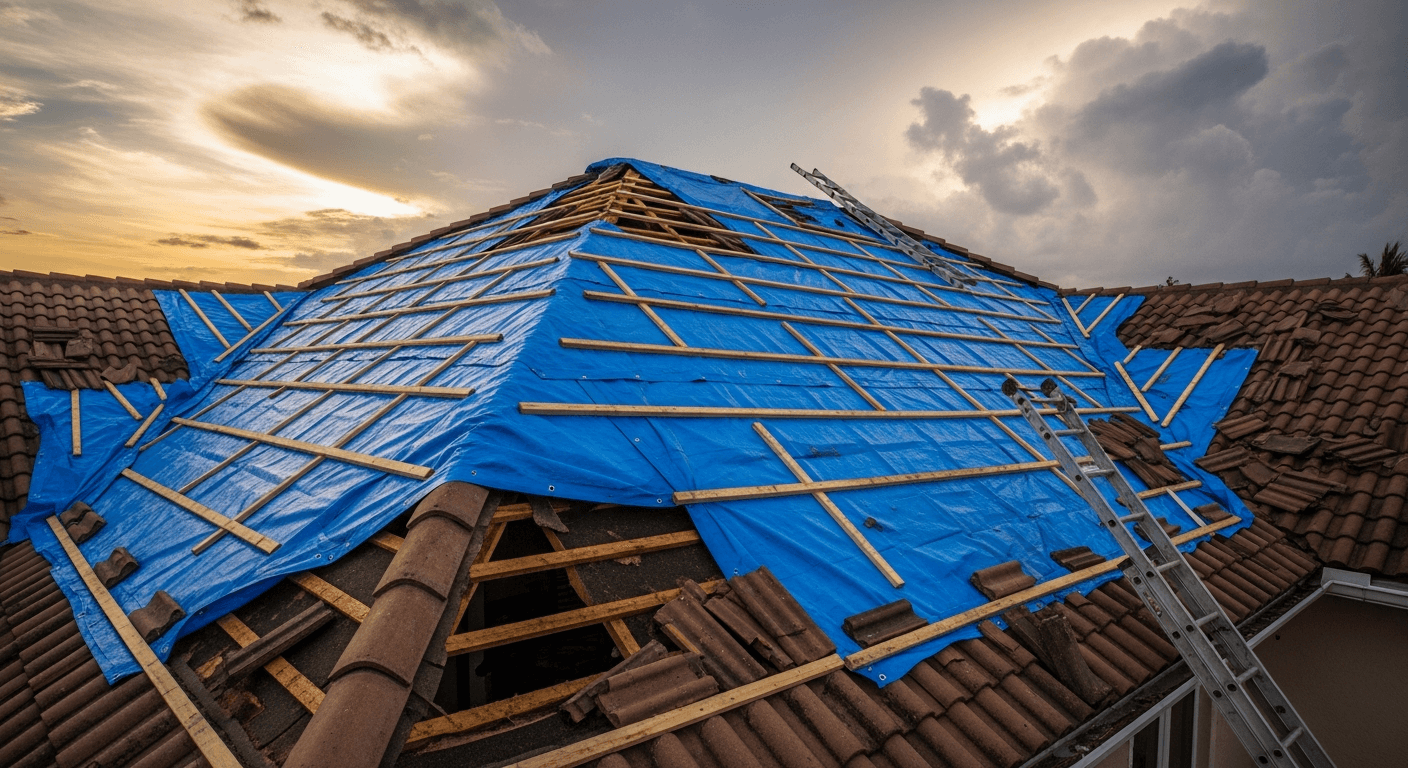
- Cover with a heavy-duty tarp from outside (only if safe to access)
- Secure the tarp with 2x4 lumber screwed through the tarp into the deck
- Extend tarp coverage at least 4 feet beyond the damage on all sides
For a major opening (over 20 sq ft):
- Call a professional emergency tarping service immediately
- Focus on interior water mitigation and protecting belongings
- Do not attempt to cover large openings yourself
Step 5: Call a Licensed Emergency Roofer
When calling for emergency roof repair, have this information ready:
- Your address and the best access point for the contractor
- Description of the damage (type, size, location on roof)
- Whether there is an active leak
- What caused the damage (storm, tree, age, unknown)
- Your insurance information
- Whether you have already performed any temporary repairs
Emergency Roof Repair Costs in Miami
Emergency roof repair costs are higher than scheduled repairs due to urgency, after-hours availability, and the temporary measures required. Here are current ranges for Miami-Dade County:
| Service | Cost Range | Notes |
|---|---|---|
| Emergency inspection and assessment | $150 - $400 | Often credited toward repair cost |
| Emergency tarping (small area) | $500 - $1,200 | Up to 200 sq ft covered |
| Emergency tarping (large area) | $1,200 - $3,000 | 200 to 1,000 sq ft covered |
| Emergency leak patch | $300 - $800 | Temporary seal of active leak |
| Board-up (skylight/vent) | $200 - $600 | Per opening |
| After-hours surcharge | 25% - 50% | Applied to evening/weekend calls |
| Tree removal from roof | $500 - $3,000 | Depends on size and damage |
Important : Emergency repair costs are separate from your permanent repair claim. Most insurance policies cover reasonable emergency repair expenses under your temporary repair provision. Keep all receipts.
After-Hours and Weekend Emergency Services
Roof emergencies do not follow business hours. When searching for after-hours emergency roof repair in Miami:
- Call established local contractors first, they have the equipment and crews
- Avoid search-engine-only "emergency roofer" listings, many are call centers that dispatch unknown subcontractors
- Verify the contractor's license even in an emergency, it takes 30 seconds at myfloridalicense.com
- Get a written or texted estimate before work begins, even for temporary repairs
- Document the emergency service with photos and receipts
Extreme Roofing Inc. offers emergency response services across Miami-Dade, Broward, and Palm Beach counties. Call 305-225-1535 to reach our team.
Insurance Coverage for Emergency Roof Repair
What Is Covered
Most Florida homeowners insurance policies cover:
- Emergency tarping and temporary repairs as a separate provision from your permanent repair claim
- Interior damage mitigation costs (water extraction, drying equipment rental)
- Permanent repairs for covered perils (wind, hail, fallen trees, fire)
- Additional living expenses (ALE) if your home is uninhabitable due to roof failure
What Is Typically Not Covered
- Maintenance neglect, if your roof failed due to age, wear, or lack of maintenance, the claim may be denied
- Pre-existing damage, damage that existed before the covered event
- Flood damage, standard homeowners policies exclude flooding (requires separate NFIP or private flood policy)
- Cosmetic damage, some policies exclude cosmetic damage that does not affect roof function
Filing an Emergency Claim
- Call your insurance company's 24/7 claims line immediately
- Request a claim number and record it
- Explain that you are making emergency temporary repairs to prevent further damage
- Confirm that temporary repair costs are covered under your policy
- Keep all receipts and documentation
- Follow up with a formal written claim submission within 48 hours
When to Consider Emergency Roof Replacement
In some cases, emergency repairs are not sufficient and an emergency re-roofing is necessary:
- Structural failure where trusses or rafters have collapsed
- Complete roof section loss with no material remaining to tarp over
- Fire damage that has compromised the structural integrity
- Condemnation notice from the building department
- Multiple emergency repairs to the same area indicating systemic failure
Emergency roof replacement follows the same Miami-Dade County permitting and inspection process as a standard replacement, but expedited permitting may be available for documented emergencies. Your contractor can coordinate with the building department to prioritize permits for emergency situations.
Building Your Emergency Preparedness Plan
Every Miami homeowner should have a roof emergency plan in place before they need it:
Emergency Contact List
Keep these contacts easily accessible (phone, wallet, and cloud storage):
- Your roofing contractor: Extreme Roofing Inc., 305-225-1535
- Your insurance company: Claims line phone number and policy number
- Miami-Dade County building department: 786-315-2000
- Florida Power & Light: 1-800-468-8243 (for downed lines near your roof)
- A licensed electrician: For water-near-electrical emergencies
Emergency Supply Kit
Stock these items before you need them:
- Heavy-duty tarps (minimum two, 20x25 ft, 6 mil or heavier)
- 2x4 furring strips (8-foot lengths)
- 3-inch deck screws (two boxes)
- Cordless drill with charged batteries
- Roofing cement and exterior caulk
- 5-gallon buckets (four or more)
- 6-mil plastic sheeting (for interior protection)
- Flashlights and headlamps with extra batteries
- Work gloves, safety glasses, hard-soled shoes
Annual Inspection
The best emergency plan is prevention. Schedule a professional roof inspection annually, ideally before June 1, to identify and repair vulnerabilities before they become emergencies. Read our hurricane preparedness guide for a complete pre-season checklist.
Act Fast, Act Smart
A roof emergency demands quick action, but not reckless action. Protect your safety first, minimize interior damage, document everything, and call a licensed professional. The difference between a $2,000 emergency repair and a $50,000 interior restoration project often comes down to how quickly and effectively you respond in the first few hours.
Call Extreme Roofing Inc. at 305-225-1535 or request a free estimate for emergency roof repair in Miami-Dade, Broward, or Palm Beach County.
Frequently Asked Questions
How fast can an emergency roofer respond in Miami?
During normal weather conditions, established Miami roofing contractors can typically respond to emergencies within 2 to 6 hours during business hours and within 4 to 12 hours after hours. During and immediately after hurricanes, response times extend to 1 to 7 days due to overwhelming demand. Having a relationship with a local contractor before an emergency occurs significantly improves your response time.
Can I make emergency roof repairs myself in Miami?
You can safely perform minor emergency measures from inside your home, such as placing buckets under leaks, applying roofing cement from the attic side, and protecting belongings with plastic sheeting. However, climbing onto a damaged roof is dangerous and not recommended. For exterior temporary repairs like tarping, call a professional unless the damage is small and safely accessible from a ladder.
Does my insurance cover emergency roof repair costs in Florida?
Yes, most Florida homeowners insurance policies cover reasonable emergency repair costs as a separate provision from your permanent repair claim. This includes emergency tarping, board-up, and water mitigation. These costs typically do not count against your hurricane deductible. Document everything with photos and receipts, and notify your insurer within 24 to 48 hours.
What should I do if a tree falls on my roof in Miami?
Immediately ensure all occupants are safe and evacuate if there is structural compromise. Do not attempt to remove the tree yourself. Call your insurance company to file a claim, then call a licensed roofing contractor for emergency assessment and tarping. Tree removal from a roof typically costs $500 to $3,000 and should be done by professionals to avoid causing additional structural damage.
How much does emergency roof repair cost in Miami?
Emergency roof repair in Miami ranges from $300 to $800 for a leak patch, $500 to $3,000 for tarping, and $200 to $600 for board-up per opening. After-hours and weekend calls may include a 25% to 50% surcharge. These costs are typically covered by your insurance as emergency temporary repairs, separate from your permanent repair claim and hurricane deductible.
Need Roofing Help?
Whether you need an inspection, repair, or full replacement, our team of licensed roofing professionals is ready to help. Serving South Florida since 2004.
Related Articles
Everything you need to know about emergency roof tarping in Miami, costs, methods, DIY vs. professional, FEMA Blue Roof program, and how to ensure your tarp survives until permanent repairs.
Read MoreLearn how to identify hurricane roof damage in Miami, document it properly for insurance claims, and choose the right repair strategy for your South Florida home.
Read MoreEverything Miami homeowners need to know about storm damage roof repair, from emergency response and insurance claims to choosing a licensed contractor and understanding repair timelines.
Read More