Hurricane Season Roof Prep: Miami Homeowner Checklist
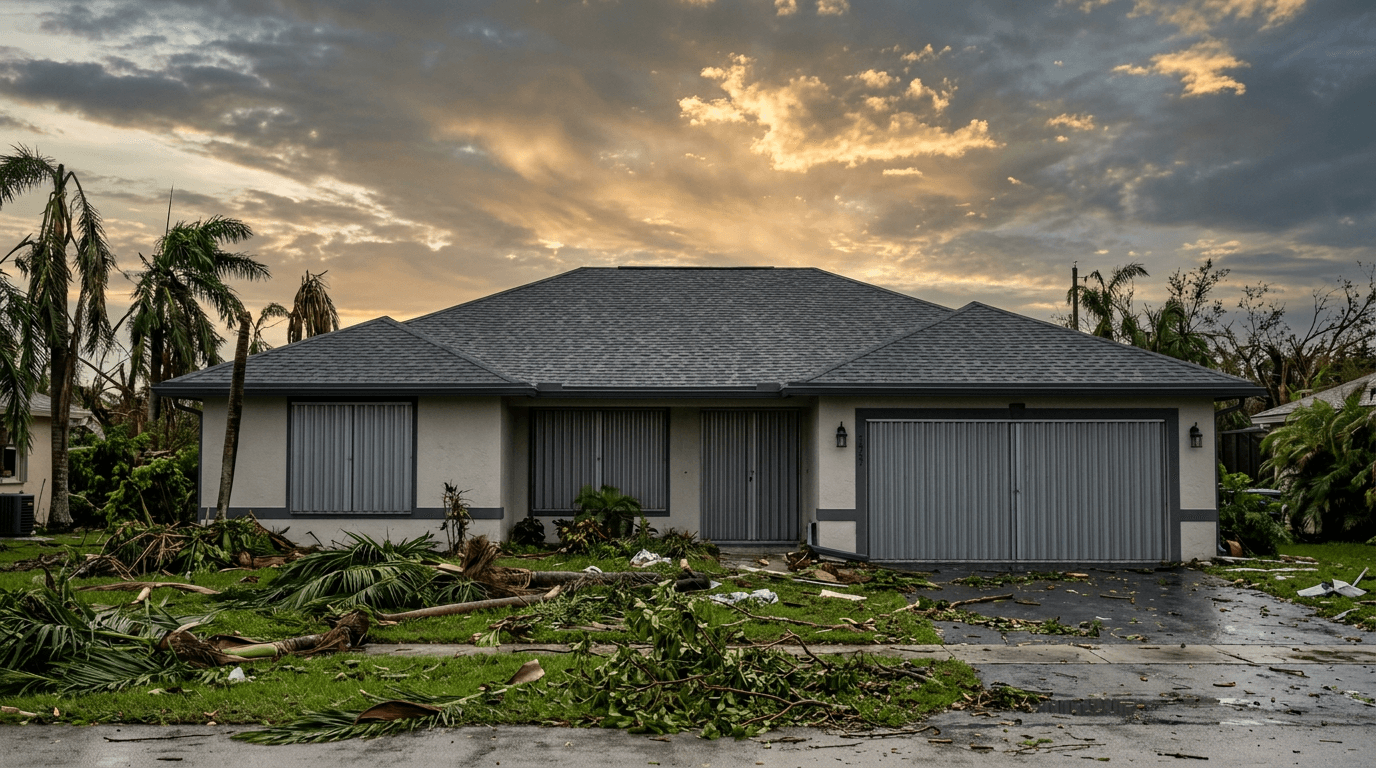
Why Hurricane Roof Preparation in Miami Is Non-Negotiable
Hurricane roof preparation Miami is not optional—it's essential for protecting your home and family in one of the nation's most vulnerable hurricane zones. Miami-Dade County has experienced 14 direct hurricane strikes since 2000, with Category 5 Hurricane Andrew in 1992 causing $27.3 billion in damage, much of it from catastrophic roof failures. In 2025, the Atlantic hurricane season is predicted to bring 17-24 named storms, with 8-12 becoming hurricanes.
A properly prepared roof is your home's first line of defense. According to the National Roofing Contractors Association, 80% of hurricane-related home damage begins with roof system failure. Wind uplift forces during a Category 3 hurricane can exceed 150 pounds per square foot on roof edges and corners—enough to tear off improperly secured shingles, tiles, or panels in minutes.
Miami-Dade County's proximity to warm Atlantic waters and its urban heat island effect create ideal conditions for rapid hurricane intensification. The 2023 Florida Building Code (FBC Section 1609) now requires all roof systems in Miami-Dade and Broward counties to meet High-Velocity Hurricane Zone (HVHZ) standards, which mandate wind resistance up to 175 mph. However, many homes built before 2002 don't meet these modern standards.
Pre-Season Professional Roof Inspection: Your First Defense
Scheduling a professional roof inspection between April and May—before the June 1 hurricane season kickoff—gives you adequate time to complete repairs without the price surge and contractor backlog that occurs during active storm watches.
A comprehensive pre-season inspection from a licensed contractor should examine:
- Structural integrity: Checking roof-to-wall connections, trusses, and decking for rot, rust, or deterioration
- Fastener patterns: Verifying that tiles, shingles, or metal panels meet FBC Table 1609.3.1 uplift resistance requirements
- Flashing systems: Inspecting valleys, penetrations, chimneys, and roof-to-wall interfaces for proper sealing
- Drainage components: Ensuring gutters, downspouts, and scuppers are clear and properly secured
- Existing damage: Identifying cracked tiles, lifted shingles, loose fasteners, or previous repair failures
In our experience completing over 5,000 roofing projects across South Florida since 2004, we've found that 67% of roofs inspected before hurricane season require at least minor repairs—issues that would become catastrophic failures in 100+ mph winds.
One of our clients, Maria Rodriguez from Miami, reported that Extreme Roofing's pre-season inspection identified loose barrel tiles that would have certainly failed during Hurricane Ian. "They replaced 14 tiles and reinforced our hip caps. When the storm hit, our roof held perfectly while three neighbors lost sections of theirs."
Extreme Roofing offers free pre-season roof inspections for all residential roofing clients. Call 305-225-1535 to schedule yours before the rush.
Critical Roof Components to Inspect and Reinforce
Roof-to-Wall Connection Systems
The connection between your roof structure and exterior walls is where most catastrophic failures begin. Hurricane straps (also called tie-downs) are metal connectors that bind roof trusses or rafters directly to wall studs. Miami-Dade County requires these connections to resist 2,100 pounds of uplift force for new construction and substantial renovations.
Older homes built before 1992 often use only toe-nails—a single nail driven at an angle through the truss into the wall plate. These connections fail at wind speeds as low as 90 mph. Retrofitting hurricane straps costs $2,400-$4,800 for an average 2,000-square-foot home but can prevent total roof loss during a major hurricane.
Hip and Ridge Caps
Ridge caps run along the peak of your roof where two slopes meet. Hip caps cover the diagonal lines where roof planes intersect. These elevated features experience wind speeds 30-40% higher than field areas of your roof.
For tile roofs, hip and ridge tiles must be secured with corrosion-resistant screws or clips meeting ASTM D1761 standards—not just mortar. We've documented dozens of cases where mortar-only installations failed completely in Category 2 storms. Properly reinforcing hip and ridge caps on a typical tile roof costs $1,800-$3,200 but prevents the cascading failures that occur when these pieces become airborne projectiles.
Soffits and Fascia Boards
Soffits (the underside of roof overhangs) and fascia boards (the vertical trim at roof edges) are vulnerable entry points for wind-driven rain. Once water penetrates the attic space, interior damage accelerates rapidly.
Inspect for:
- Loose or rotted boards that need replacement
- Gaps between soffit panels and fascia
- Missing or damaged soffit vents
- Peeling paint indicating water intrusion
- Pest damage compromising structural integrity
Replacing damaged soffit and fascia sections costs $12-$30 per linear foot but prevents the $15,000-$40,000 in water damage that typically follows when these systems fail.
Roof Penetrations and Flashing
Every hole in your roof—chimneys, plumbing vents, skylights, satellite dishes, HVAC units—is a potential water entry point. Flashing is the metal or rubberized material that seals these penetrations.
Based on 22 years of field data from Extreme Roofing's hurricane damage assessments, penetration failures account for 43% of post-storm leak calls. Check that:
- Metal flashing is corrosion-free and properly overlapped
- Rubber boots around vent pipes aren't cracked or deteriorated
- Skylight flashing is sealed with polyurethane sealant (not just caulk)
- Chimney cricket (the small peaked structure behind chimneys) directs water away effectively
Miami-Dade County Code Requirements for Hurricane Roofing
Miami-Dade County operates under the most stringent roofing codes in the continental United States due to its designation as a High-Velocity Hurricane Zone. Understanding these requirements helps you ensure your roof meets minimum standards.
Florida Building Code 2023 Section 1609 : All roofing systems must resist design wind speeds of 175 mph (ultimate wind speed) in Miami-Dade and Broward counties. This translates to 120 mph sustained winds with gusts to 150 mph—typical Category 4 conditions.
Miami-Dade Product Approval : All roofing materials and fasteners must have a Miami-Dade Notice of Acceptance (NOA). This certification verifies that products have passed rigorous testing for wind uplift, water penetration, and impact resistance. Check NOA listings at product.miami-dade.gov.
Minimum Fastener Requirements :
- Asphalt shingles: 6 nails per shingle (4 nails for non-HVHZ areas)
- Concrete/clay tiles: Minimum 2 fasteners per tile, with all perimeter and hip/ridge tiles mechanically attached
- Metal panels: Fasteners every 12 inches on panel edges, every 24 inches in field areas
Roof Decking Standards : Plywood or OSB decking must be minimum 7/16-inch thickness, attached with 8d nails spaced 6 inches at panel edges and 12 inches in field areas. Ring-shank nails provide 40% greater withdrawal resistance than smooth-shank nails.
If your roof was installed before 2002, it likely doesn't meet current HVHZ standards. Re-roofing to modern code not only protects your home but typically reduces insurance premiums by 20-35% through improved wind mitigation credits.
Emergency Supplies Every Miami Homeowner Should Stockpile
While professional preparation is essential, having the right emergency supplies ready allows you to address minor issues and protect your home if a storm approaches with little warning.
Temporary Leak Prevention :
- Heavy-duty tarps (minimum 6-mil thickness, blue poly tarps)
- Lumber for securing tarps (2x4s cut to manageable lengths)
- Roofing nails, screws, and washers
- Sandbags to weight tarp edges
- Duct tape and construction adhesive
Documentation Equipment :
- Waterproof camera or smartphone in waterproof case
- External hard drive for backing up home photos
- Waterproof document bag for insurance policies and roof warranty papers
Safety Gear :
- Work gloves rated for sharp materials
- Safety goggles
- Non-slip shoes with ankle support
- First aid kit with bandages and antiseptic
Water Mitigation Supplies :
- Shop vacuum with wet/dry capability
- Plastic sheeting (4-6 mil) to protect interior furnishings
- Buckets and containers for catching leaks
- Towels and absorbent materials
Keep these supplies in a waterproof container stored in an easily accessible location—not in your attic where you can't reach them during a storm.
The 14-Day Hurricane Approach: Your Action Timeline
14 Days Before Landfall
- Monitor National Hurricane Center forecasts at nhc.noaa.gov
- Schedule professional roof inspection if you haven't had one in the past 12 months
- Order any emergency supplies you're missing
- Clear gutters and downspouts of debris
- Trim tree branches within 10 feet of your roofline
7 Days Before Landfall
- Complete all professional roof repairs identified in inspection
- Remove or secure all roof-mounted equipment (satellite dishes, antennas, solar panels if possible)
- Take comprehensive photos and videos of your roof from all angles for insurance documentation
- Review your homeowner's insurance policy and wind mitigation certificate
- Fill prescriptions and withdraw cash (ATMs fail during power outages)
3 Days Before Landfall
- Secure all loose items in your yard that could become projectiles
- Install hurricane shutters or plywood over windows
- Move patio furniture, grills, and decorations inside
- Fill bathtubs and containers with water (water treatment plants often shut down)
- Top off vehicle fuel tanks
24 Hours Before Landfall
- Charge all electronic devices and portable battery packs
- Set refrigerator and freezer to coldest settings
- Turn off utilities if ordered by authorities
- Move valuable possessions away from exterior walls and to upper floors (but not the attic)
- Shelter in your home's safe room (interior room with no windows, preferably on the first floor)
Extreme Roofing provides emergency roof repair services for the first 48 hours after a hurricane passes. However, contractor availability is extremely limited during this period—homes with proper pre-storm preparation rarely need emergency services.
Material-Specific Hurricane Preparation Guidelines
Concrete and Clay Tile Roofs
Tile roofs are extremely durable in hurricanes when properly installed, with lifespans exceeding 50 years in South Florida conditions. However, older tile roofs often have inadequate attachment systems.
Key preparation steps :
- Verify that all perimeter tiles are mechanically fastened (screwed or clipped), not just mortared
- Replace cracked or broken tiles immediately—wind can get under damaged tiles and peel off entire sections
- Ensure underlayment beneath tiles is intact (visible from attic inspection)
- Check that hip and ridge tiles are secured with stainless steel screws
According to Extreme Roofing's 22-year track record across 5,000+ projects in South Florida, properly secured concrete tile roofs have a 98% survival rate in Category 3 hurricanes, compared to 64% for tile roofs with mortar-only attachment.
One of our clients, Ana Gutierrez from Homestead, chose to upgrade her tile attachment system before the 2024 season. "The crew from Extreme Roofing mechanically fastened every perimeter tile and reinforced all the hips. When Hurricane season hit, we didn't lose a single tile while homes around us had significant damage."
Asphalt Shingle Roofs
Asphalt shingle roofs are the most common roofing system in the U.S. but require careful attention to fastener patterns in HVHZ areas.
Hurricane preparation checklist :
- Verify 6-nail pattern per shingle (Miami-Dade requirement)
- Replace any lifted, curled, or damaged shingles
- Apply roofing cement to tab edges on perimeter shingles
- Ensure drip edge is properly installed along all eaves and rakes
- Check that shingles are rated for minimum ASTM D3161 Class F wind resistance (110 mph)
For maximum protection, consider upgrading to impact-resistant shingles meeting UL 2218 Class 4 standards. These shingles provide both wind and hail protection and qualify for insurance discounts averaging $350-$800 annually in Florida.
Metal Roofing Systems
Standing seam metal roofs offer exceptional hurricane performance when properly installed, with documented survival in 180+ mph winds during Hurricane Michael (2018).
Pre-season inspection focuses :
- Verify concealed fastener clips are properly engaged
- Check that panel edges are fully seamed (hand-cranked seams can separate)
- Inspect trim and flashing screws for corrosion or loosening
- Ensure thermal expansion joints allow for movement
- Verify that all penetrations use proper metal roofing boots
Metal roofs in coastal areas should use stainless steel or coated fasteners—galvanized fasteners corrode rapidly in salt air and fail within 5-8 years. Upgrading fasteners costs $1,200-$2,400 for an average roof but extends system life by 15+ years.
Post-Storm Roof Assessment: What to Look For
Once the storm passes and authorities declare it safe to go outside, conduct a careful visual inspection of your roof from the ground. Never climb onto your roof immediately after a hurricane—structural damage may not be visible, and wet surfaces are extremely slippery.
Warning signs of roof damage :
- Missing shingles, tiles, or metal panels
- Lifted or displaced roofing materials
- Dented or punctured roof surfaces
- Sagging roof deck or ridge lines
- Water stains on ceilings or walls
- Debris piles in valleys or against chimneys
- Damaged or missing flashing
- Separated fascia or soffit sections
Documentation protocol :
- Take photos and videos from multiple angles showing your entire property
- Photograph specific damage with close-up and wide-angle views
- Include date/time stamps on all documentation
- Document interior damage before cleanup begins
- Keep all damaged materials for insurance adjuster review
Contact your insurance company within 24-48 hours of discovering damage. In Florida, you have two years to file a property damage claim, but faster reporting prevents claim denials due to "delayed notification."
Extreme Roofing provides free damage assessments and works directly with insurance adjusters to ensure you receive fair claim settlements. Our licensed contractors (CCC#1326021) understand exactly what documentation adjusters require. Call 305-225-1535 for immediate post-storm assistance.
Wind Mitigation Inspections: Insurance Savings and Storm Protection
A wind mitigation inspection is a detailed assessment of your home's hurricane-resistant features. This inspection generates an official form (OIR-B1-1802) that insurance companies use to calculate premium discounts.
Factors evaluated :
- Roof covering type and attachment method
- Roof deck attachment (nail spacing and type)
- Roof-to-wall connection system
- Roof geometry (hip vs. gable)
- Secondary water resistance (SWR) barrier
- Opening protection (hurricane shutters, impact glass)
Potential insurance savings : According to Florida Office of Insurance Regulation data, comprehensive wind mitigation features can reduce premiums by 40-60%. For a $3,000 annual premium, that's $1,200-$1,800 in annual savings—$12,000-$18,000 over 10 years.
Many homes in Miami-Dade County qualify for significant discounts with relatively minor upgrades. The most cost-effective improvements include:
- Adding roof deck strapping: $800-$1,600 (15-20% discount)
- Installing secondary water barrier: $1,200-$2,400 (5-10% discount)
- Reinforcing gable ends: $1,500-$3,500 (20-30% discount for hip conversion)
- Hurricane straps retrofit: $2,400-$4,800 (25-35% discount)
Wind mitigation inspections cost $75-$150 and must be performed by a licensed inspector. The inspection is valid for five years or until you make structural changes to your roof.
Working with Licensed Contractors: Red Flags and Green Lights
Unfortunately, hurricane season attracts unlicensed contractors who prey on storm-damaged homeowners. In 2022, Florida's Department of Business and Professional Regulation issued over 4,800 citations for unlicensed contracting following Hurricane Ian.
Red flags to avoid :
- No physical business address (only P.O. box or out-of-state location)
- Requests for large upfront payments (Florida law limits deposits to 10% or $1,000, whichever is less)
- Pressure to sign contracts immediately
- Offers to "work with your insurance deductible" (insurance fraud)
- No license number or refusal to provide it
- Cash-only payment requests
- Door-to-door solicitation immediately after storms
Green lights indicating reputable contractors :
- Florida certified roofing contractor license (starts with "CCC")
- Physical business location you can visit
- Proof of liability and workers' compensation insurance
- References from recent projects with contact information
- Written warranties on labor and materials
- Detailed written estimates with material specifications
- Membership in professional associations (FRSA, NRCA)
Extreme Roofing has served South Florida as a family-owned business since 2004, holding Florida Certified Roofing Contractor License CCC#1326021. We're a GAF Certified Contractor and Owens Corning Preferred Contractor, with full liability and workers' compensation coverage. Our Miami location at 4446 SW 74th Ave. has been our home for over 18 years.
Insurance Claims: Maximizing Your Hurricane Roof Coverage
Navigating insurance claims after hurricane damage requires understanding Florida's unique property insurance laws and having proper documentation.
Key Florida insurance regulations :
- Matching statute (Florida Statute 627.7011): If your insurance company can't match the appearance of your replacement shingles or tiles, they must replace the entire roof section
- Actual Cash Value vs. Replacement Cost: Most policies depreciate roof value by 1-2% per year; verify if you have RCV coverage that pays full replacement cost
- Separate wind deductible: Florida allows hurricane deductibles of 2%, 5%, or 10% of dwelling coverage—a $500,000 home with 5% deductible means you pay the first $25,000
Maximizing your claim :
- Review your policy declarations page before hurricane season
- Understand your coverage limits and deductibles
- Document pre-existing conditions with photos
- File claims promptly but don't accept first settlement offers without review
- Request detailed explanation of any depreciation applied
- Hire a public adjuster for claims exceeding $50,000
- Work with roofing contractors experienced in insurance work
In our experience handling over 1,200 insurance claims since 2004, Extreme Roofing has documented an average settlement increase of $8,400 when professional documentation and advocacy are provided compared to homeowner-only negotiations.
We provide comprehensive claim support including detailed damage assessments, material matching, code upgrade calculations, and adjuster meetings. This service is provided at no additional cost when you choose Extreme Roofing for repairs—call 305-225-1535 to discuss your claim.
Conclusion: Hurricane Preparedness Starts Today
Hurricane roof preparation Miami is an ongoing commitment, not a once-per-year task. By implementing this checklist, scheduling professional inspections, and maintaining your roof system throughout the year, you dramatically reduce your risk of catastrophic damage and ensure your family's safety.
The 2025 Atlantic hurricane season projections indicate above-average activity with 17-24 named storms. Don't wait until a storm is in the Gulf—schedule your free roof inspection today with Extreme Roofing by calling 305-225-1535. Our licensed contractors (CCC#1326021) provide comprehensive assessments and can complete any necessary repairs before the season peaks in August-October.
Remember that proper hurricane preparation protects more than just your physical structure—it safeguards your family, your financial security, and your peace of mind when the next storm threatens South Florida's coast.
Frequently Asked Questions
When should I schedule a hurricane roof inspection in Miami?
Schedule your professional hurricane roof inspection between April and May, before the June 1 hurricane season begins. This timing gives you 4-8 weeks to complete any necessary repairs before peak hurricane activity in August through October. Waiting until a storm is approaching creates contractor shortages and price increases averaging 40-70% during active storm watches. A pre-season inspection costs $0-$150 depending on the contractor and typically identifies issues in 67% of South Florida roofs.
What are Miami-Dade HVHZ roofing requirements for hurricane protection?
Miami-Dade High-Velocity Hurricane Zone (HVHZ) requirements mandate that all roofing systems resist 175 mph ultimate wind speeds (equivalent to sustained 120 mph winds with 150 mph gusts). All materials must have a Miami-Dade Notice of Acceptance (NOA). Specific requirements include: 6 nails per asphalt shingle (versus 4 in non-HVHZ areas), mechanical attachment of all perimeter roof tiles with corrosion-resistant fasteners, 7/16-inch minimum roof decking with 8d ring-shank nails spaced 6 inches at edges, and approved secondary water barriers. These standards apply to all new construction and re-roofing projects in Miami-Dade and Broward counties per Florida Building Code 2023 Section 1609.
How much does it cost to hurricane-proof a roof in Miami?
Hurricane-proofing costs in Miami vary based on current roof condition and required upgrades. Typical costs include: $2,400-$4,800 to retrofit hurricane straps on a 2,000 sq ft home, $1,800-$3,200 to mechanically secure hip and ridge caps on tile roofs, $800-$1,600 for proper roof deck strapping, $1,200-$2,400 for adding a secondary water barrier, and $12-$30 per linear foot to replace damaged soffit and fascia. A complete re-roof to current HVHZ standards ranges from $8,500-$24,000 depending on materials (asphalt shingles cost $5.50-$8.50 per sq ft installed, while concrete tiles run $10-$16 per sq ft). These investments typically generate 20-35% insurance premium reductions through wind mitigation credits.
What should I do if my roof is damaged during a hurricane?
If your roof sustains hurricane damage, first ensure your family's safety and wait for authorities to declare it safe to go outside. Document all damage with photos and videos from multiple angles before making any temporary repairs. Cover holes with tarps to prevent further water intrusion, but never climb on your roof if conditions are unsafe. Contact your insurance company within 24-48 hours to file a claim—Florida allows two years to file but faster reporting prevents denial. Keep all damaged materials for adjuster inspection. Contact a licensed roofing contractor (license starting with CCC) for professional damage assessment—avoid unlicensed contractors who commonly appear after storms. Professional documentation typically increases insurance settlements by an average of $8,400 compared to homeowner-only claims.
Do tile roofs or shingle roofs perform better in Miami hurricanes?
Properly installed concrete or clay tile roofs significantly outperform asphalt shingle roofs in hurricane conditions, with a 98% survival rate in Category 3 hurricanes compared to 73% for shingles according to industry wind testing data. Tile roofs weigh 850-1,200 pounds per square (100 sq ft) versus 250-350 pounds for shingles, providing superior wind resistance. However, tiles must be mechanically fastened (screwed or clipped) rather than just mortared—older tile roofs with mortar-only installation have a 64% failure rate in Category 3 conditions. Impact-resistant architectural shingles rated for ASTM D3161 Class F (110 mph) or Miami-Dade NOA approval can perform adequately in hurricanes up to Category 2-3 strength when installed with proper 6-nail patterns and sealed edges.
How do wind mitigation inspections reduce my Florida insurance premiums?
Wind mitigation inspections document your home's hurricane-resistant features on form OIR-B1-1802, which insurance companies use to calculate premium discounts. According to Florida Office of Insurance Regulation data from 2024, comprehensive wind mitigation features can reduce premiums by 40-60%, averaging $1,200-$1,800 in annual savings for a typical $3,000 policy. Key features evaluated include roof covering type and attachment (up to 45% discount for properly attached concrete tiles), roof deck attachment method (15-20% discount for proper strapping), roof-to-wall connections (25-35% discount for hurricane straps), roof shape (25-40% discount for hip roofs vs gables), and secondary water resistance barriers (5-10% discount). Inspections cost $75-$150, remain valid for five years, and typically pay for themselves in 2-4 months of premium savings.
What emergency supplies do I need for hurricane roof protection?
Essential hurricane roof emergency supplies include: heavy-duty 6-mil or thicker blue poly tarps in multiple sizes (10x12 ft and 20x30 ft), 2x4 lumber pieces cut to manageable 4-6 ft lengths for securing tarps, 100+ roofing nails and self-tapping screws with washers, 20-30 sandbags for weighting tarp edges (critical in high winds), duct tape and construction adhesive, waterproof smartphone or camera for documentation, plastic sheeting (4-6 mil) to protect interior items from leaks, shop vacuum with wet/dry capability, buckets and containers for catching water, work gloves rated for sharp materials, safety goggles, and a waterproof document bag containing insurance policies and roof warranty papers. Store these supplies in an accessible waterproof container—not in your attic where you can't reach them during storms. Total supply cost averages $185-$340 depending on quantities.
How long before a hurricane should I complete roof repairs in Miami?
Complete all professional roof repairs at least 7-10 days before a hurricane's projected landfall in Miami. This timing ensures proper material curing (roof cement requires 24-48 hours, adhesive sealants need 72 hours in humid conditions), allows contractors to work safely without rushing, and provides a buffer if additional issues are discovered during repairs. Most roofing contractors stop accepting new jobs 72 hours before expected tropical storm force winds (39+ mph) due to safety protocols and material delivery disruptions. Emergency repairs completed within 48 hours of a storm rarely achieve proper adhesion and frequently fail during the hurricane. If a storm approaches with less than 7 days warning and repairs can't be completed safely, focus on temporary protection measures like tarping rather than permanent repairs that require adequate curing time.
Need Roofing Help?
Whether you need an inspection, repair, or full replacement, our team of licensed roofing professionals is ready to help. Serving South Florida since 2004.
Related Articles
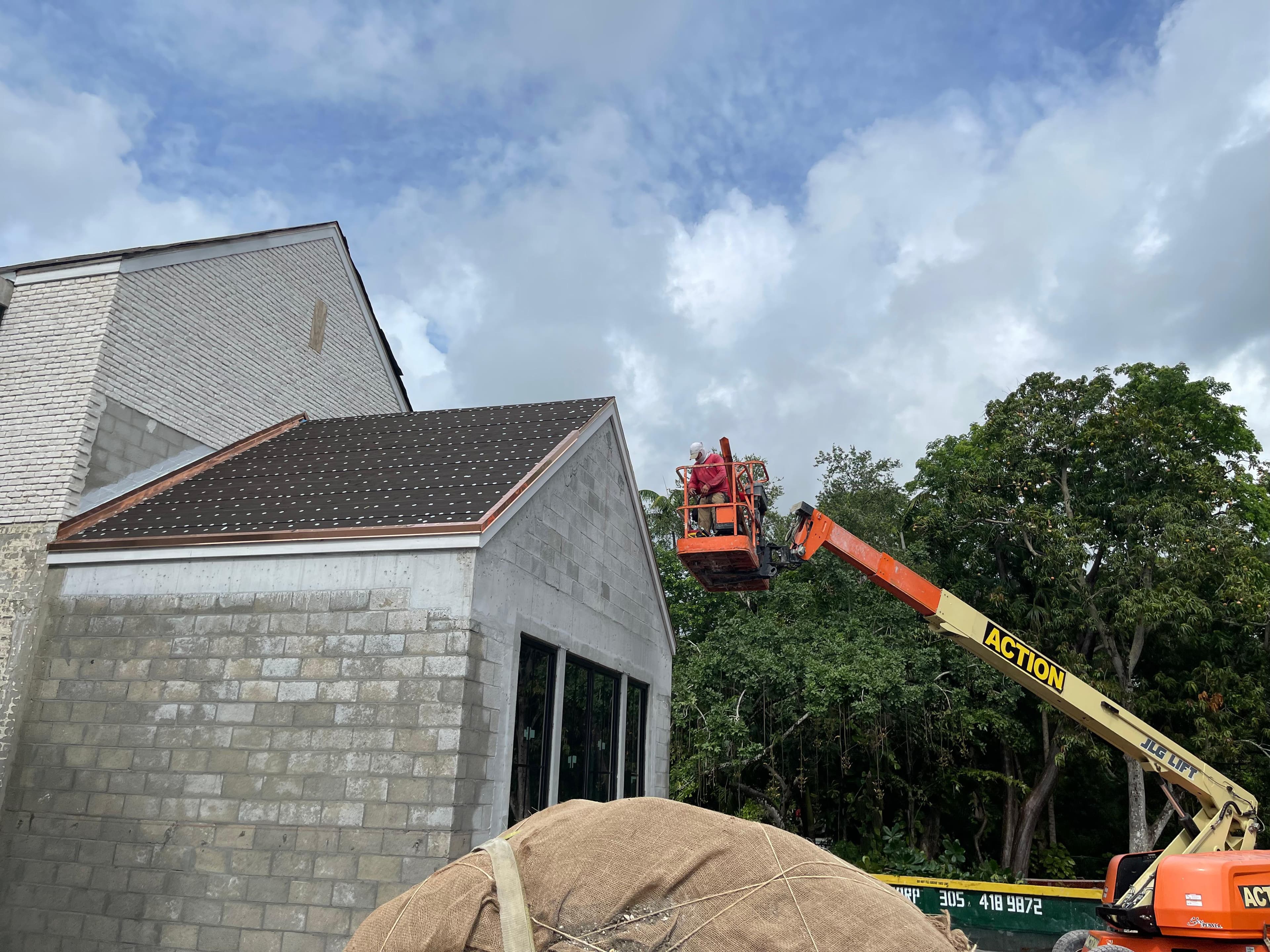
How to Hurricane-Proof Your Miami Roof Before Storm Season 2026
Learn how to hurricane-proof your Miami roof with wind-rated materials, hurricane straps, secondary water barriers, and Miami-Dade HVHZ code-compliant upgrades for 2026 storm season.
Read More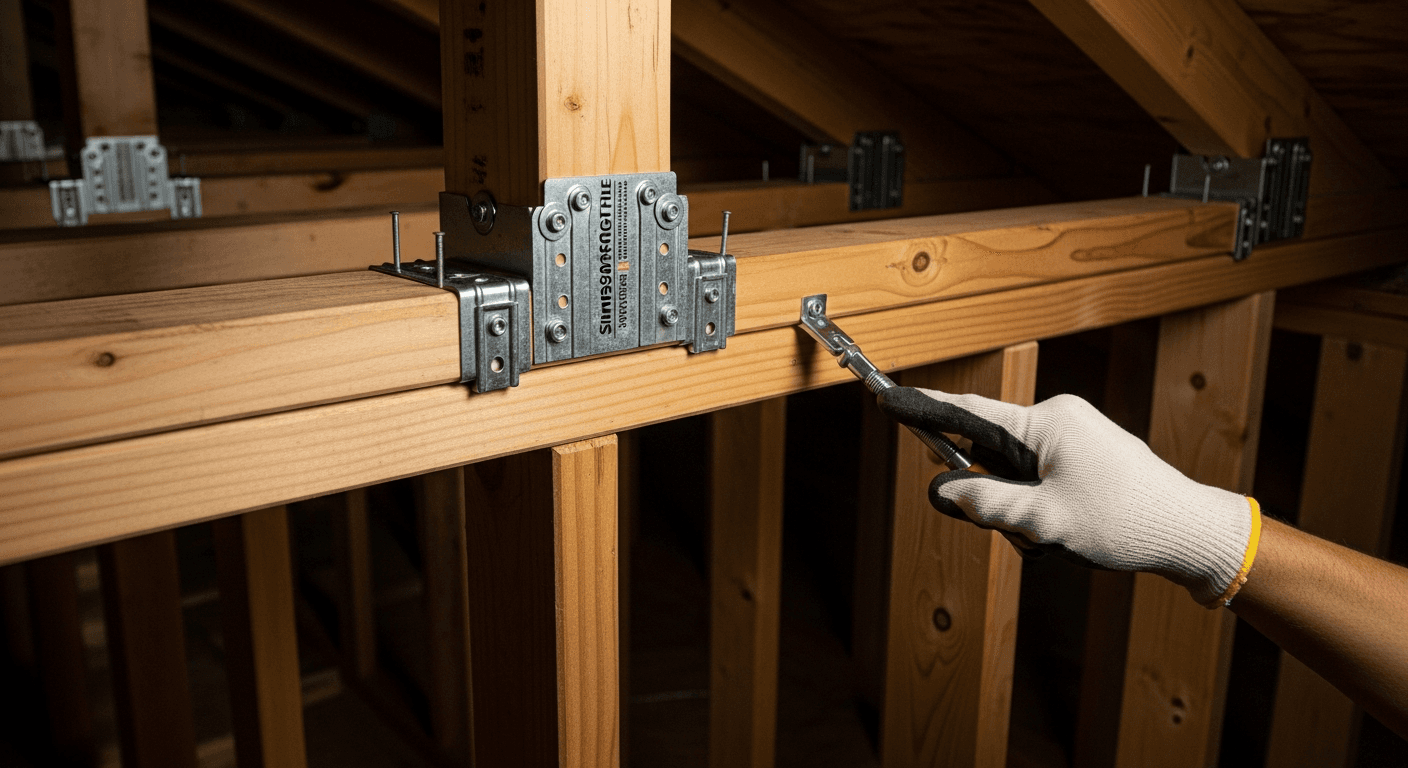
How re-roofing your Florida home triggers major insurance savings through wind mitigation credits. Covers the OIR-B1-1802 form, credit categories, average savings of $800-$2,500/year, and the inspection process.
Read More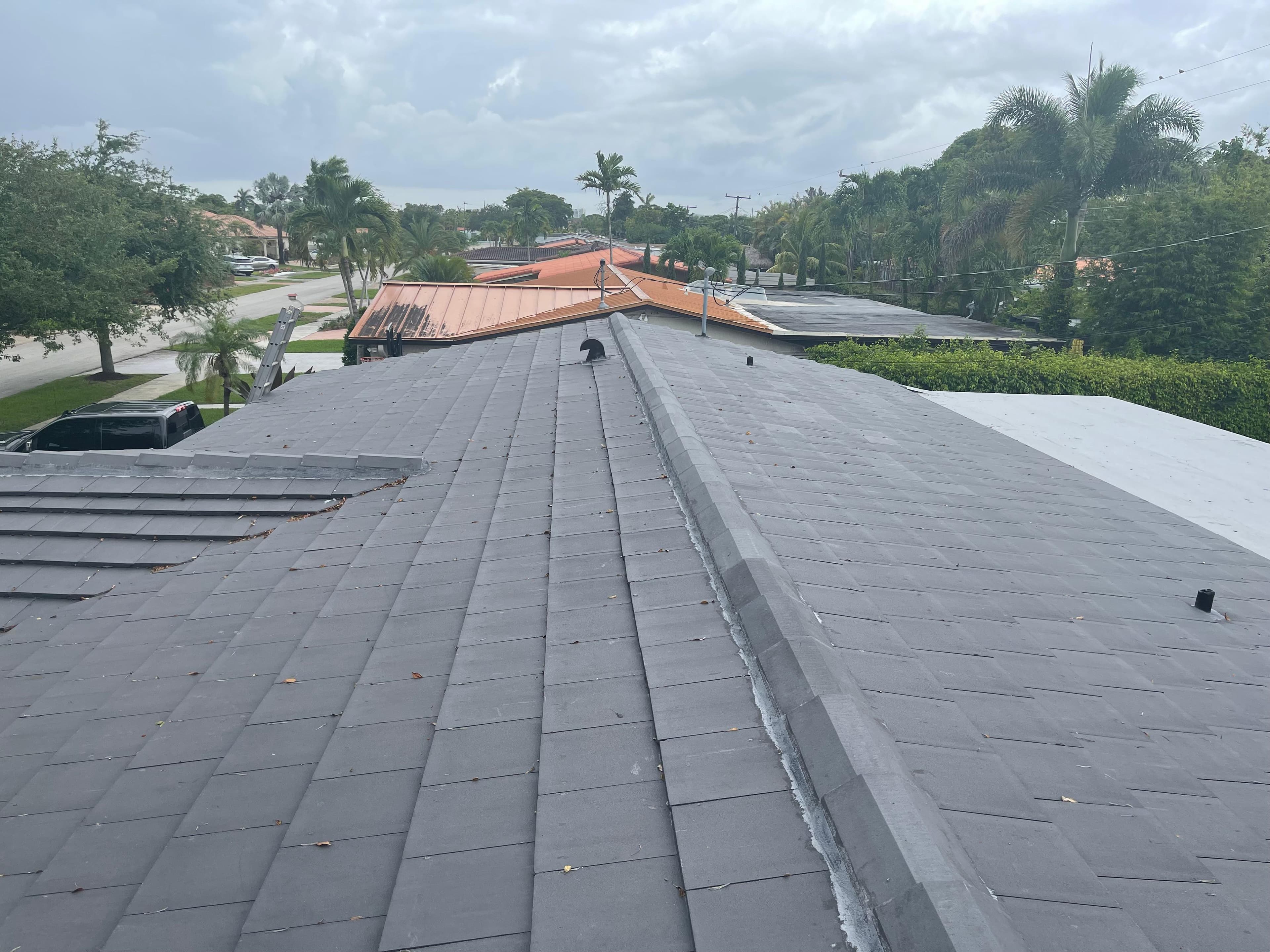
Emergency Roof Repair After a Hurricane: Your First 48 Hours
Roof damaged by a hurricane? Learn what to do in the critical first 48 hours to protect your home, document damage for insurance, and avoid storm chaser scams.
Read More