
Metal Roof vs Tile Roof in South Florida: Complete 2026 Comparison
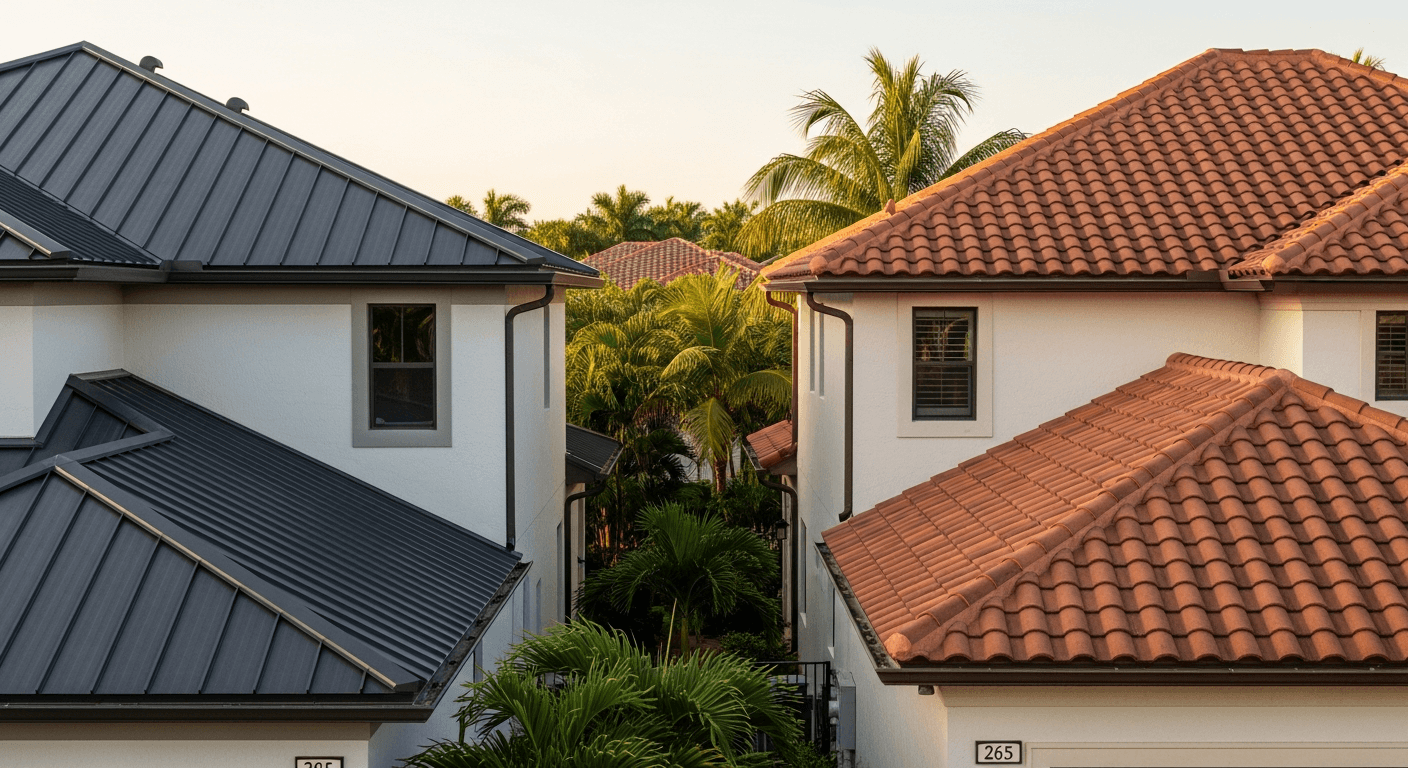
Metal or Tile? The Only Two Premium Roof Options for South Florida
If you've decided you don't want asphalt shingles, you're choosing between metal and tile. Those are the two premium options that actually make sense for South Florida homes in 2026. Both last 40 to 80+ years, both carry the highest insurance credits, both perform well in hurricanes, and both cost similar amounts ($32,000 to $55,000 for a 2,200 sq ft home). But they're not interchangeable, and the right choice depends on your specific neighborhood, architecture, and priorities.
I install both systems regularly across Miami-Dade, Broward, and Palm Beach counties. I'm not biased toward either product. Here's my honest head-to-head comparison of metal and tile for South Florida homes, including where each one is the right call and where you'll regret the choice.
Overview: Two Premium Roofing Systems
Both metal and tile are considered premium roofing materials that outperform standard architectural shingles in durability, wind resistance, and lifespan. The decision between them involves weighing trade-offs across more than a dozen factors, from upfront cost and structural requirements to insurance impacts and aesthetic preferences.
Quick Comparison Summary
| Category | Standing Seam Metal | Concrete Tile | Clay Tile |
|---|---|---|---|
| Cost per square | $300 – $450 | $350 – $550 | $500 – $700 |
| Lifespan | 40 – 60 years | 40 – 60 years | 50 – 75 years |
| Wind rating | Up to 180 mph | Up to 180 mph | Up to 150 mph |
| Weight (per sq) | 50 – 150 lbs | 900 – 1,100 lbs | 800 – 1,000 lbs |
| Energy efficiency | Excellent | Good | Good |
| Maintenance | Very low | Moderate | Moderate |
| Installation time | 3 – 5 days | 5 – 10 days | 6 – 12 days |
| Insurance impact | Strong discounts | Strong discounts | Moderate discounts |
| Resale value | High | High | Very high |
| Salt air resistance | Varies by metal | Excellent | Excellent |
| Noise (rain) | Low-moderate | Very low | Very low |
| Aesthetic options | Modern/contemporary | Traditional FL | Premium traditional |
Detailed Comparison: Category by Category
Cost Analysis
Cost is typically the first factor homeowners evaluate. Here is a detailed breakdown for three common South Florida home sizes.
#### 2,000 Sq Ft Home (Approx. 2,400 – 3,000 sq ft roof area)
| Material | Low Estimate | High Estimate | Average |
|---|---|---|---|
| Standing seam metal | $18,000 | $32,000 | $25,000 |
| Concrete tile | $21,000 | $38,000 | $29,500 |
| Clay tile | $30,000 | $50,000 | $40,000 |
#### 2,500 Sq Ft Home (Approx. 3,000 – 3,750 sq ft roof area)
| Material | Low Estimate | High Estimate | Average |
|---|---|---|---|
| Standing seam metal | $22,000 | $38,000 | $30,000 |
| Concrete tile | $26,000 | $46,000 | $36,000 |
| Clay tile | $38,000 | $58,000 | $48,000 |
#### 3,500 Sq Ft Home (Approx. 4,200 – 5,250 sq ft roof area)
| Material | Low Estimate | High Estimate | Average |
|---|---|---|---|
| Standing seam metal | $32,000 | $52,000 | $42,000 |
| Concrete tile | $37,000 | $62,000 | $49,500 |
| Clay tile | $52,000 | $78,000 | $65,000 |
Key takeaway : Standing seam metal is typically 15-25% less expensive than concrete tile and 40-50% less expensive than clay tile for the initial installation. However, upfront cost tells only part of the story.
---
Get your free roofing estimate today. Extreme Roofing Inc. has served South Florida since 2004 with over 20 years of certified expertise. Call 305-225-1535 or request your free estimate online.
---
Lifespan and Total Cost of Ownership
A true cost comparison must account for the total investment over the life of the roofing system, including maintenance, repairs, and mid-life interventions.
#### Metal Roof Lifetime Costs (40-Year Projection)
| Cost Component | Year | Amount |
|---|---|---|
| Initial installation | 0 | $30,000 |
| Annual maintenance inspections | 1-40 | $200/year = $8,000 |
| Sealant/fastener maintenance | 10, 20, 30 | $500 each = $1,500 |
| Panel refinishing (optional) | 25 | $3,000 |
| Total 40-year cost | $42,500 |
#### Concrete Tile Lifetime Costs (40-Year Projection)
| Cost Component | Year | Amount |
|---|---|---|
| Initial installation | 0 | $36,000 |
| Annual maintenance inspections | 1-40 | $250/year = $10,000 |
| Tile replacements (storm damage) | 5, 10, 15, 20, 25, 30, 35 | $500 avg. = $3,500 |
| Underlayment replacement | 22 | $10,000 – $15,000 |
| Total 40-year cost | $59,500 – $64,500 |
The underlayment replacement at the 20-25 year mark is a critical cost factor for tile roofs. While the tiles themselves may last 50+ years, the underlayment beneath them degrades from heat cycling and trapped moisture. Replacing the underlayment requires lifting and re-setting every tile . a labor-intensive process that costs $8,000 to $15,000 depending on roof size.
Metal roofs do not have this mid-life intervention because the panels are the waterproofing layer . there is no underlayment deterioration issue to address.
Key takeaway : Despite lower upfront costs, metal roofing's total 40-year cost of ownership is approximately 28-35% lower than concrete tile when accounting for the underlayment replacement cycle.
Hurricane and Wind Resistance
South Florida's primary roofing concern is hurricane performance. Both metal and tile can achieve exceptional wind ratings, but they resist wind forces differently.
#### Standing Seam Metal Wind Performance
Standing seam metal panels are mechanically locked to the roof deck through concealed clips, creating a continuous, interlocking surface with no exposed fasteners. This design provides:
- Wind ratings up to 180 mph for standard residential standing seam systems
- No individual component displacement . panels cannot be picked off individually like tiles
- Minimal debris generation . a metal roof that fails in extreme winds tends to peel as a section rather than creating dozens of individual projectiles
- Lightweight advantage . lower mass means less momentum if sections do separate
#### Tile Wind Performance
Tile roofing achieves wind resistance through mechanical attachment (clips, wire ties, or screws) rather than the interlocking panel design of metal:
- Concrete tile wind ratings up to 180 mph with proper mechanical attachment (HVHZ-compliant)
- Clay tile wind ratings up to 150 mph in most configurations
- Individual tile displacement risk . high winds can dislodge individual tiles, creating dangerous projectiles
- Mortar vs. mechanical attachment . older mortar-set tiles have significantly lower wind resistance than modern clip-attached systems
In Hurricane Andrew (1992) and Hurricane Irma (2017), both properly installed metal and tile roofs performed well. Failures were overwhelmingly associated with improper installation, aged materials, or pre-code construction rather than inherent material limitations.
Energy Efficiency
Energy performance is increasingly important to South Florida homeowners facing rising electricity costs and intense year-round cooling loads.
#### Metal Roof Energy Performance
Standing seam metal roofing with a reflective finish (Kynar 500/PVDF in light colors or cool-coated dark colors) offers the highest energy efficiency of any residential roofing material:
- Solar reflectance: 25-70% depending on color (white/light = 60-70%, medium = 35-50%, dark cool-coated = 25-40%)
- Thermal emittance: 80-90% (efficiently releases absorbed heat)
- Attic temperature reduction: 20-40 degrees F lower than dark shingle roofs
- Cooling cost reduction: 10-25% annual savings
- ENERGY STAR certification: Available for qualifying colors and coatings
On a typical South Florida home with a $300/month electric bill (heavily weighted toward A/C), a reflective metal roof can save $30 to $75 per month in cooling costs.
#### Tile Roof Energy Performance
Tile roofing provides moderate energy efficiency, primarily through its thermal mass and the air gap between the tile and the roof deck:
- Solar reflectance: 20-45% depending on color and finish (light concrete/clay = 35-45%, dark = 20-30%)
- Thermal mass: Tiles absorb heat slowly and release it slowly, dampening temperature swings
- Air gap benefit: The space between barrel tile and the roof deck provides a natural ventilation channel
- Cooling cost reduction: 5-15% annual savings versus dark shingle roofs
Key takeaway : Metal roofing provides significantly better energy efficiency than tile, with potential cooling savings of $360 to $900 per year in South Florida's climate. Over 40 years, this represents $14,000 to $36,000 in energy savings.
Structural Considerations
The weight difference between metal and tile roofing is dramatic and can determine which materials are structurally appropriate for your home.
#### Weight Comparison
| Material | Weight Per Square (100 sq ft) |
|---|---|
| Standing seam metal (aluminum) | 50 – 75 lbs |
| Standing seam metal (Galvalume steel) | 100 – 150 lbs |
| Concrete flat tile | 900 – 950 lbs |
| Concrete barrel tile | 950 – 1,100 lbs |
| Clay barrel tile | 800 – 1,000 lbs |
Tile roofing is approximately 8-15 times heavier than metal roofing. This has several practical implications:
- Older homes (pre-1990s construction) may require structural reinforcement to support tile. A structural engineer evaluation ($300-$600) is recommended before committing to a tile-to-tile replacement on homes built before modern truss standards.
- Switching from tile to metal can extend the life of the roof structure by significantly reducing dead load.
- Switching from shingle or metal to tile requires verifying that the existing truss system is rated for the additional weight.
Maintenance Requirements
#### Metal Roof Maintenance
Standing seam metal is the lowest-maintenance roofing option available:
- Annual: Visual inspection from ground level; check for debris accumulation in valleys
- Every 5-10 years: Professional inspection of sealant at penetrations (vents, pipes), check panel alignment
- Every 15-20 years: Touch-up painting at any areas where finish has worn (rare with Kynar 500)
- After storms: Walk-around inspection for dents or displaced panels
#### Tile Roof Maintenance
Tile requires more ongoing attention:
- Annual: Visual inspection for cracked, shifted, or missing tiles; check mortar/sealant at ridges and hips
- Every 2-3 years: Walk-on inspection to check for hairline cracks, check for biological growth (moss, algae)
- After storms: Detailed inspection for displaced tiles, cracked tiles, and exposed underlayment
- Year 20-25: Underlayment evaluation . the most critical maintenance milestone
- As needed: Individual tile replacement ($15-$40 per tile installed)
Walking on tile roofs requires specialized knowledge to avoid cracking tiles. Always hire a professional for tile roof inspections . homeowner foot traffic is a leading cause of tile damage.
Insurance Premium Impact
Both metal and tile qualify for Florida wind mitigation credits, but the specifics differ.
| Wind Mitigation Category | Metal Roof | Tile Roof |
|---|---|---|
| Roof covering credit | FBC or HVHZ compliant | FBC or HVHZ compliant |
| Roof deck attachment | Enhanced nail schedule | Enhanced nail schedule |
| Secondary water barrier | Sealed roof deck | Sealed roof deck |
| Roof-to-wall connection | Hurricane clips/straps | Hurricane clips/straps |
| Impact resistance credit | Available (select products) | Available (most NOA tiles) |
Both material types can yield annual premium reductions of $1,000 to $4,000. Some insurers offer a slight additional preference for metal roofing due to its lower debris generation risk and absence of individual tile displacement. Check with your specific carrier for exact credit amounts.
Aesthetics and Curb Appeal
#### Metal Roof Aesthetics
Standing seam metal roofing has evolved dramatically from its agricultural and industrial origins. Modern residential options include:
- Color range: 30+ standard colors from all major manufacturers
- Profile options: Standard standing seam, mechanically seamed, snap-lock
- Tile-profile metal: Stamped metal panels that mimic the appearance of barrel tile or flat tile
- Architectural appeal: Clean, linear appearance that complements modern, contemporary, coastal, and Key West architectural styles
#### Tile Roof Aesthetics
Tile remains the quintessential South Florida roofing material, synonymous with Mediterranean, Spanish Colonial, and tropical architectural styles:
- Profile options: Barrel (S-shaped), flat (smooth), low-profile (slim barrel)
- Color range: Extensive, including blended and multi-tone options
- Texture: Natural variation and depth not achievable with metal
- Architectural heritage: Established aesthetic expectation in many South Florida communities
Coastal and Salt Air Performance
For properties near the coast . a significant portion of South Florida's housing stock . salt air corrosion is a critical factor.
#### Metal Roof Coastal Performance
Metal roofing performance in salt air depends entirely on the base metal:
- Aluminum: Excellent salt air resistance. Forms a natural protective oxide layer. Recommended for all properties within 3 miles of the coast.
- Galvalume (zinc-aluminum coated steel): Good resistance for properties 3-10 miles from the coast. Not recommended for direct coastal exposure.
- Galvanized steel: Poor salt air resistance. Avoid within 10 miles of the coast.
- Copper: Exceptional salt air resistance but premium pricing ($800-$1,200/square).
- Zinc: Excellent resistance but limited residential availability and high cost.
For coastal South Florida homes, aluminum standing seam with Kynar 500 finish is the recommended metal roofing specification. Expect a 10-20% premium over Galvalume steel panels.
#### Tile Roof Coastal Performance
Both concrete and clay tile are inherently resistant to salt air corrosion because they are inorganic, mineral-based materials. Salt does not chemically attack concrete or fired clay. However:
- Metal fasteners and clips used to attach tile must be stainless steel or hot-dipped galvanized (stainless preferred)
- Metal flashing around penetrations and at transitions must be aluminum, copper, or stainless
- Mortar can be affected by salt crystallization over decades, but this is a cosmetic rather than structural concern
Key takeaway : For oceanfront and near-coastal properties, both aluminum metal and tile offer excellent salt air performance. Avoid steel-based metal roofing within 3-10 miles of the coast.
Decision Matrix: Scoring Comparison
To help synthesize the comparison, here is a weighted scoring matrix reflecting the priorities of South Florida homeowners. Scores are on a 1-10 scale with 10 being the best.
| Factor | Weight | Metal Score | Tile Score | Notes |
|---|---|---|---|---|
| Upfront cost | 15% | 8 | 5 | Metal is 15-40% less expensive |
| Total cost of ownership | 15% | 9 | 6 | Tile underlayment replacement adds cost |
| Hurricane resistance | 20% | 9 | 8 | Both excellent; metal has no projectile risk |
| Lifespan | 10% | 8 | 9 | Clay tile edges metal slightly |
| Energy efficiency | 10% | 9 | 6 | Metal significantly better for cooling |
| Maintenance | 10% | 9 | 6 | Metal requires far less ongoing work |
| Aesthetics | 10% | 7 | 9 | Tile defines South Florida's look |
| Insurance impact | 5% | 9 | 8 | Both qualify; metal slightly preferred |
| Resale value | 5% | 8 | 9 | Both add value; tile in traditional markets |
| Weighted Total | 100% | 8.55 | 6.95 | Metal leads in value metrics |
This scoring reflects a value-oriented homeowner prioritizing hurricane protection and long-term costs. Homeowners who prioritize traditional aesthetics or live in communities with tile requirements may weigh factors differently.
When to Choose Metal Roofing
Metal roofing is the stronger choice when:
- Budget efficiency matters: Lower upfront cost and significantly lower lifetime cost
- Energy savings are a priority: The best available cooling performance
- Your home has structural limitations: Lightweight panels reduce dead load
- You want minimal maintenance: Virtually maintenance-free for decades
- Modern or coastal aesthetics appeal to you: Clean, contemporary appearance
- You are in the HVHZ: Metal's no-projectile characteristic is an advantage
- You are planning to sell within 10-20 years: Full life remaining adds to property value
Explore metal options on our metal roofing services page.
When to Choose Tile Roofing
Tile roofing is the stronger choice when:
- Your HOA requires tile: Many South Florida communities mandate tile
- Maximum lifespan is the goal: Clay tile can last 75 years with proper care
- Traditional aesthetics are important: Mediterranean and Spanish Colonial styles
- You are in a historic district: Preservation requirements may mandate tile
- Noise sensitivity is high: Tile provides the quietest performance during rain
- Coastal location: Concrete and clay are immune to salt air with no metal selection complexity
- Premium home value: Luxury and high-end markets expect tile roofing
Explore tile options on our tile roofing services page.
Get a Free Estimate
Whether you are leaning toward metal or tile, the right decision starts with a professional on-site evaluation of your specific home. Extreme Roofing Inc. installs both metal and tile roofing systems across South Florida, with GAF, Owens Corning, and CertainTeed certifications and Florida license CCC# 1326021. Our team can provide side-by-side estimates for both material types so you can make a fully informed decision.
Call [305-225-1535](tel:305-225-1535) or [request your free estimate online](/free-estimate) to schedule your consultation. We serve all of South Florida from West Palm Beach to Homestead, including Miami-Dade's HVHZ.
Frequently Asked Questions
Is a metal roof or tile roof better in Florida?
Neither is categorically better . the right choice depends on your priorities. Metal roofing is better for energy efficiency, lighter structural load, faster installation, and lower long-term maintenance. Tile roofing is better for longevity (up to 75 years for clay), noise dampening, and traditional South Florida aesthetics. Both offer excellent hurricane resistance when properly installed. For most South Florida homeowners, standing seam metal offers the best overall value when considering total cost of ownership over 40+ years.
Which roof type lasts longer in South Florida?
Clay tile has the longest potential lifespan at 50 to 75 years, followed by concrete tile at 40 to 60 years and standing seam metal at 40 to 60 years. However, tile roofs often require underlayment replacement at the 20-25 year mark (costing $8,000-$15,000), while metal roofs typically need only minor maintenance during that same period. When factoring in total lifetime maintenance costs, standing seam metal and concrete tile are comparable in overall value.
Do metal roofs lower insurance in Florida?
Yes, metal roofs can significantly lower homeowner's insurance premiums in Florida. A new standing seam metal roof qualifies for wind mitigation credits including roof covering, roof deck attachment, and secondary water barrier credits. Combined, these credits typically reduce annual premiums by $1,000 to $4,000. Some insurers offer additional discounts specifically for impact-rated metal roofing products, particularly in the Miami-Dade HVHZ.
How much does a metal roof cost compared to tile in South Florida?
Standing seam metal roofing costs $300 to $450 per roofing square installed in South Florida, while concrete tile costs $350 to $550 per square and clay tile costs $500 to $700 per square. For a typical 2,500 sq ft home, this translates to approximately $25,000 to $38,000 for metal, $29,000 to $46,000 for concrete tile, and $42,000 to $58,000 for clay tile. Metal typically costs 15-25% less than concrete tile and 40-50% less than clay tile.
Are metal roofs too noisy in Florida rainstorms?
Modern standing seam metal roofs installed over a solid plywood deck with proper underlayment produce noise levels comparable to tile and shingle roofs during rain. The noise concern stems from older agricultural-style metal roofing installed directly over purlins without a solid deck. With proper installation including attic insulation, a South Florida metal roof is no louder than other roofing types during even heavy tropical downpours.
Can I install a metal roof in a tile-roof HOA community?
Many South Florida HOAs that traditionally required tile are now approving metal roofing, particularly standing seam panels with tile-profile aesthetics. However, HOA approval is not guaranteed. Submit an Architectural Review application with product samples, color options, and manufacturer specifications before committing. Some metal roof products are specifically designed to mimic the appearance of barrel tile or flat tile profiles, which can help secure HOA approval.
Which roof handles salt air better . metal or tile?
Concrete and clay tile are inherently resistant to salt air corrosion because they are inorganic, mineral-based materials. Metal roofing performance in salt air depends on the material . aluminum and zinc are highly resistant, while standard galvanized steel can corrode within 5-10 years near the coast. For coastal South Florida properties, specify aluminum standing seam panels with a Kynar 500 (PVDF) finish, or choose tile. Avoid galvanized steel within 3 miles of the ocean.
Need Roofing Help?
Whether you need an inspection, repair, or full replacement, our team of licensed roofing professionals is ready to help. Serving South Florida since 2004.
Related Articles
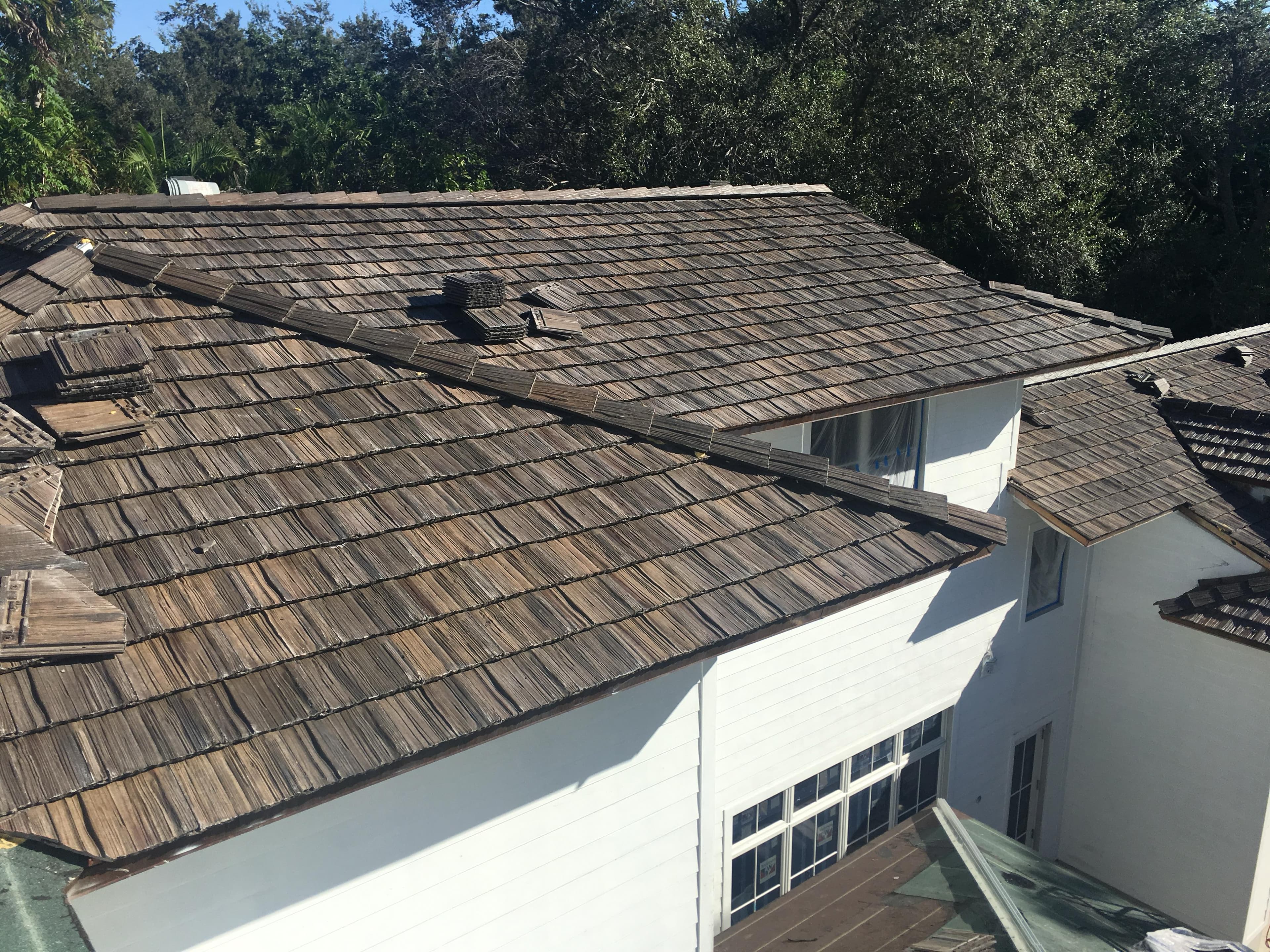
Compare metal, shingle, and tile roofs side by side for Miami homes. Costs, wind ratings, lifespans, and insurance savings explained.
Read More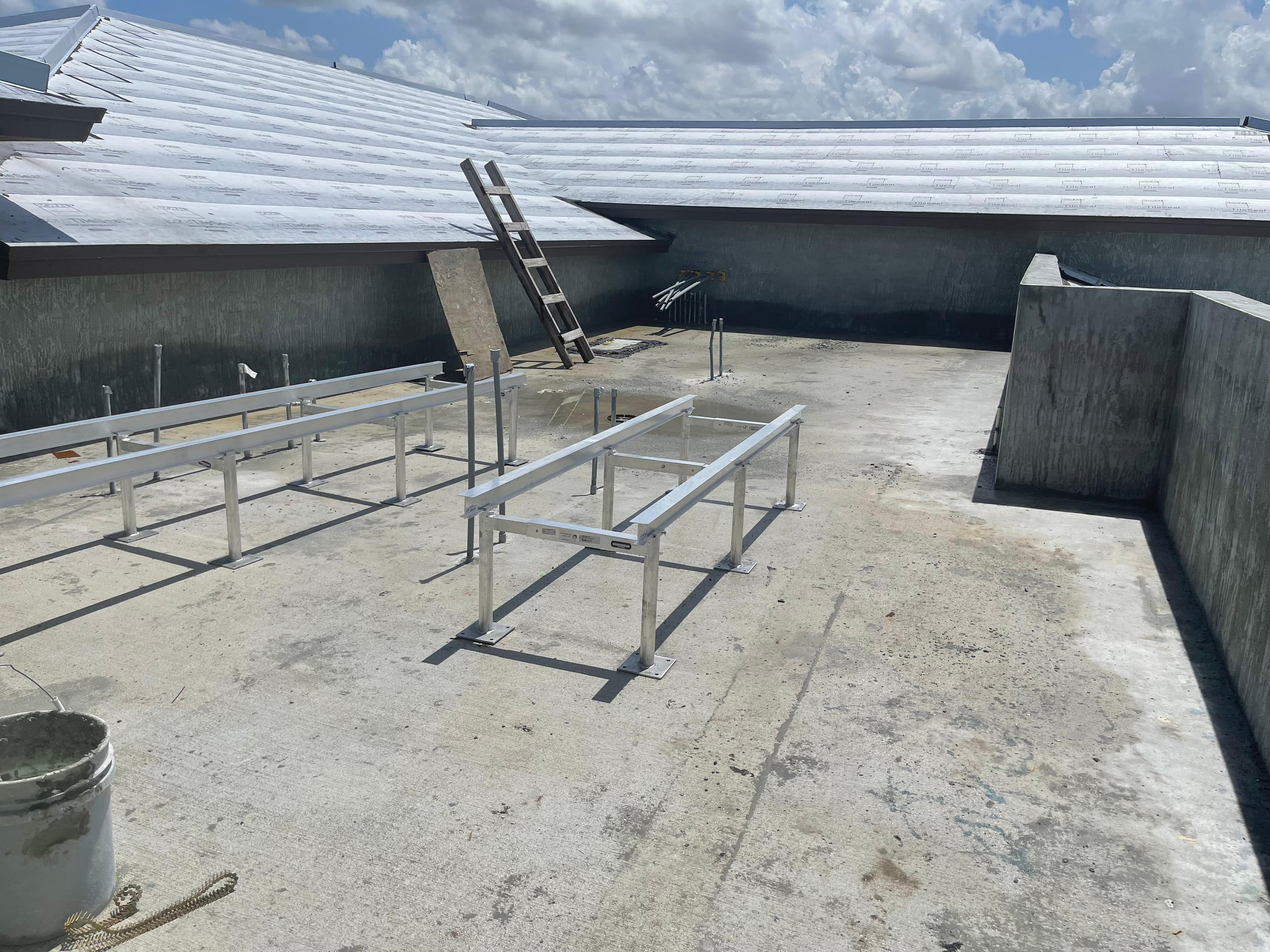
Standing seam metal roofs deliver 160+ mph wind ratings and 50-year lifespans in Miami. Learn about costs, materials, and energy savings.
Read More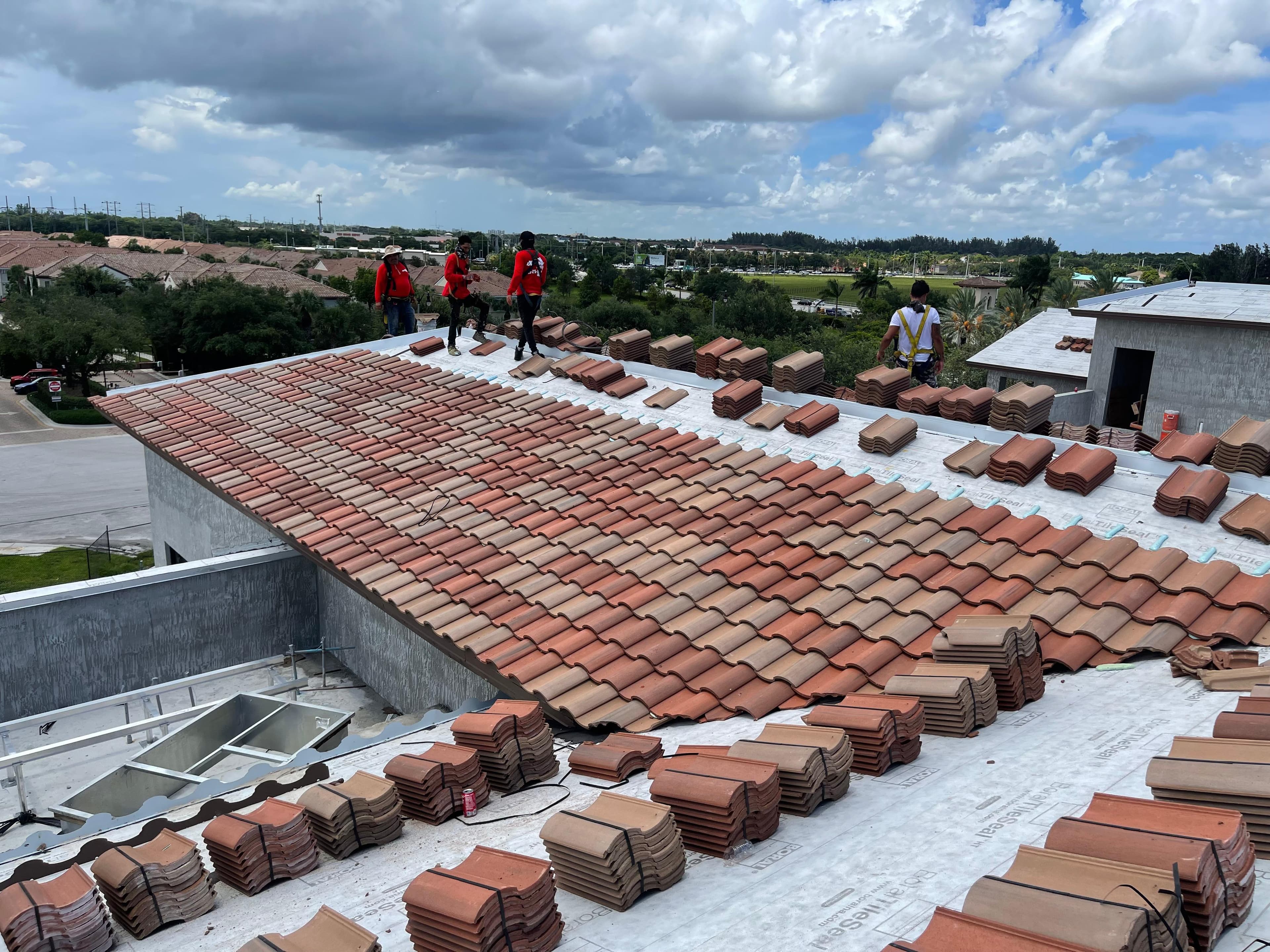
Clay and concrete tile roofs last 50-100 years in Miami. This complete guide covers costs, styles, wind ratings, maintenance, and building code requirements.
Read More