
Miami-Dade Roofing Permit Timeline 2026: Why It Takes 3-6 Weeks

The Honest 2026 Timeline
I pulled 214 roofing permits in Miami-Dade County last year. Of those, 7 were issued in under two weeks. 182 landed in the 3 to 6 week window. The rest ran longer, and I can tell you exactly why each one did.
If a contractor tells you the permit will be in hand in 5 business days, walk away. They are either going to skip the permit, pull a repair permit for a full re-roof, or quote a timeline they cannot deliver. The Miami-Dade Building and Neighborhood Compliance Department does not move on anyone's sales schedule.
Here is what the permit actually looks like from the day you sign the contract to the day we can legally start tear-off.
What the 3-6 Week Window Covers
| Phase | Typical Duration | What Happens |
|---|---|---|
| Contract signed to permit application | 2-5 business days | We assemble the NOA packet, wind-uplift calculations, and signed notice of commencement |
| Application submitted to plan review assigned | 3-7 business days | Your file enters the ePlan queue, a reviewer is assigned |
| First plan review | 7-14 business days | Reviewer checks NOAs, attachment schedule, fastening pattern, product approvals |
| Comments resolution (if any) | 2-10 business days | Most jobs get at least one round of comments. Fixing them takes 1-2 revisions |
| Permit issued | 1-3 business days | Payment of permit fees, permit card printed |
That is 15 to 39 business days in total, which works out to 3 to 8 calendar weeks depending on how clean the submission is and whether your municipality has its own overlay (Coral Gables, Miami Beach, and Pinecrest all add their own review layer on top of the county).
The Three Things That Make 90% of Permits Take Longer
1. Expired or Wrong NOA Numbers
Every roofing product installed in Miami-Dade needs a current Notice of Acceptance. NOAs expire. Shingle manufacturers update them, tile suppliers discontinue colors, fastening patterns get revised, and the reviewer checks every single one against the official Miami-Dade product control database.
Last month I had a competitor's client call me after their permit got rejected because the contractor submitted a 2022 NOA for a GAF Timberline HDZ shingle. The current NOA was issued in 2024 with a different attachment schedule. The contractor submitted the old paperwork, the review rejected it, and the client lost 11 business days waiting for a revision. We cleaned it up and got the permit issued 6 days later.
If you want to verify NOAs yourself, pull the current list from the Miami-Dade Product Control portal and check every material your contractor plans to use.
2. Missing Wind-Uplift Calculations
Every re-roof in Miami-Dade needs documented wind-uplift calculations showing the roof system will hold at the site's design wind speed (175 to 185 mph depending on your exposure category and distance from the coast). Most contractors use manufacturer-provided calculators or a licensed engineer's stamped letter.
The calculators assume standard conditions. If your roof has unusual geometry, exposed corners, or a steeper pitch than the calculator allows, the reviewer sends it back for an engineer's stamp. That adds 5 to 10 business days and $350 to $800 in engineering fees.
3. Municipal Overlays on Top of County Review
Coral Gables, Miami Beach, Pinecrest, Key Biscayne, Bal Harbour, and Surfside run their own review layer on top of the county. Coral Gables' Board of Architects meets twice a month, and if you miss the submission window by a day, you wait two weeks for the next meeting. In tile neighborhoods they review tile color, profile, and blend against the architectural character of the block.
I have had two Coral Gables jobs in the last year where the tile was technically code-compliant but the Board requested a different blend. Each one added 4 weeks to the timeline. Plan for it.
Permit Fees in 2026
Miami-Dade County charges permit fees as a percentage of the roof replacement value, with minimums:
| Project Value | Typical Permit Fee |
|---|---|
| Under $10,000 (small repair) | $150-$300 |
| $10,000-$25,000 (re-roof, shingles) | $300-$600 |
| $25,000-$50,000 (re-roof, tile or metal) | $600-$1,000 |
| Over $50,000 (luxury or commercial) | $1,000-$2,500+ |
Municipal overlays add another $50 to $400 depending on the city. Coral Gables adds roughly 15% on top of the county fee. Miami Beach adds a flat $100 plus a 5% surcharge.
How to Speed Up Your Permit
Three things actually move the needle. Everything else is marketing talk.
Submit a complete packet the first time. A clean first submission with every NOA number, wind calc, product spec, and neighborhood overlay form already completed gets through plan review 30 to 50% faster than a packet with missing items. My crew has a 38-point pre-submission checklist that we run before anything goes to the county.
Hire a licensed Miami-Dade certified roofer. The state license is the baseline. The Miami-Dade certification means you have passed the county's specific HVHZ testing and your firm is in good standing with local plan reviewers. Reviewers recognize the frequent filers and trust our submissions. A one-off contractor submitting their first HVHZ permit will get extra scrutiny.
Respond to comments within 48 hours. Every day you sit on review comments is a day your file drops to the bottom of the queue when the reviewer picks it back up. My team turns comments the same day or the next morning. That alone can save you a week.
What Happens if You Skip the Permit
I get this question from cost-conscious clients. The answer is always no. Unpermitted work shows up in three places: the title search when you sell, the insurance inspection when you refile, and the county's aerial imagery comparison. All three will eventually catch you.
The penalties in 2026:
- Double the permit fee as a fine (F.S. 553.79)
- Forced tear-off of the unpermitted work if it does not meet current code
- Insurance non-renewal if the home is reroofed without a pulled permit
- Title hold on sale until the work is permitted and inspected retroactively
I have seen three homeowners in the last two years go through the retroactive permit process after buying a home where the seller skipped the permit. Each one cost $8,000 to $14,000 in fines, engineering fees, and partial tear-off to expose the underlayment for inspection.
Do not skip the permit. The 3-6 week wait is not negotiable in Miami-Dade, but it is the thing that protects your insurance, your resale value, and your home.
What to Expect Working With Us
When you sign a contract with Extreme Roofing, here is the timeline we commit to:
<ol> <li>Contract signed Monday, notice of commencement filed Wednesday</li> <li>Permit application submitted within 5 business days</li> <li>Weekly status updates via email or text until permit is issued</li> <li>Same-day response on any plan review comments</li> <li>Material ordered the day permit is issued (not before, so you are not sitting on a yard full of tile if the permit hits a snag)</li> <li>Tear-off scheduled within 10 business days of permit issuance</li> </ol>
We pull 200+ Miami-Dade permits a year. We know the reviewers by name, we know which municipalities add overlays, and we know exactly which NOAs get rejected most often in 2026.
Ready to get your roof started? Call us at 305-225-1535 or request a free estimate. We will walk your roof, price your project, and give you a realistic permit timeline for your specific city and project scope. For the full code breakdown, see our Miami-Dade roofing code requirements guide and our approved roofing materials list.
Frequently Asked Questions
How long does a roofing permit take in Miami-Dade?
A Miami-Dade roofing permit typically takes 3 to 6 weeks from application to issuance in 2026. Clean submissions with current NOA numbers and complete wind-uplift calculations move through faster. Permits in Coral Gables, Miami Beach, and Pinecrest add 1 to 4 weeks for municipal overlay review.
How much does a Miami-Dade roofing permit cost in 2026?
Miami-Dade roofing permits cost $300 to $1,200 for most residential re-roof projects, based on project value. Small repairs run $150 to $300. Luxury projects over $50,000 can hit $1,000 to $2,500 or more. Municipal overlays in Coral Gables, Miami Beach, and Pinecrest add another $50 to $400.
Can I skip the permit for a small roof repair in Miami?
No. Florida Statute 553.79 requires a permit for any roofing work that affects more than 1 square of the existing roof (100 square feet) or replaces more than 25% of the roof covering. Unpermitted work triggers double fees, possible tear-off, insurance non-renewal, and title holds on resale.
What is the 25% rule for roofing in Florida?
Florida's 25% rule under the 2023 Florida Building Code requires a full roof replacement if you repair or replace more than 25% of an existing roof within a 12-month period. This applies only to roofs installed before March 1, 2009. Newer roofs can be partially repaired without triggering full replacement.
Do I need an architect for a Miami-Dade roof permit?
No. Most residential re-roof permits in Miami-Dade do not require an architect. You need a licensed roofing contractor with Miami-Dade certification, current NOAs for all materials, and wind-uplift calculations. Complex projects with structural changes, truss reinforcement, or unusual geometry may require a stamped engineering letter.
Need Roofing Help?
Whether you need an inspection, repair, or full replacement, our team of licensed roofing professionals is ready to help. Serving South Florida since 2004.
Related Articles
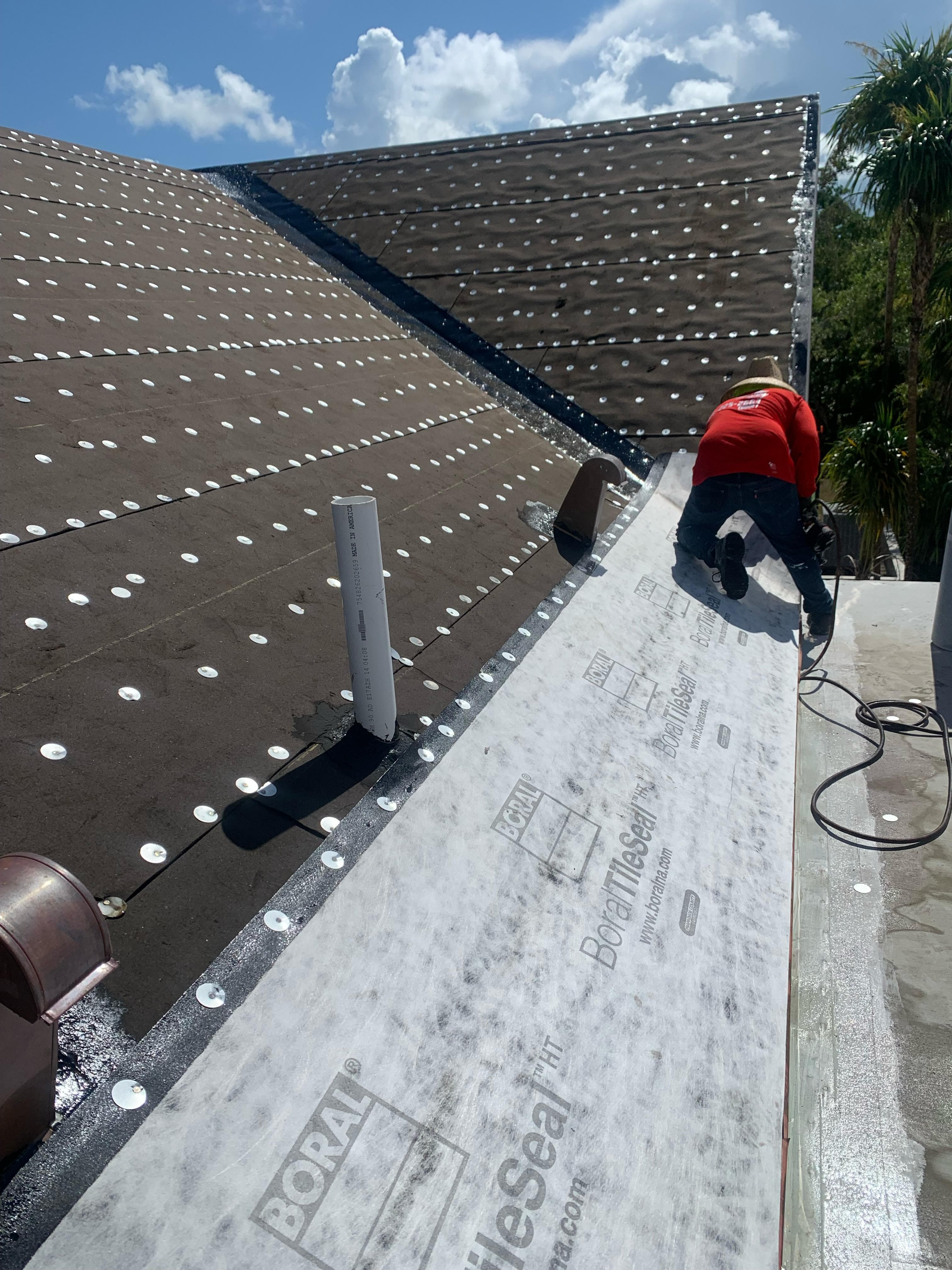
Understand Miami-Dade roofing codes, HVHZ requirements, NOA product approvals, and Florida Building Code 2023 standards that affect your roof in 2026.
Read More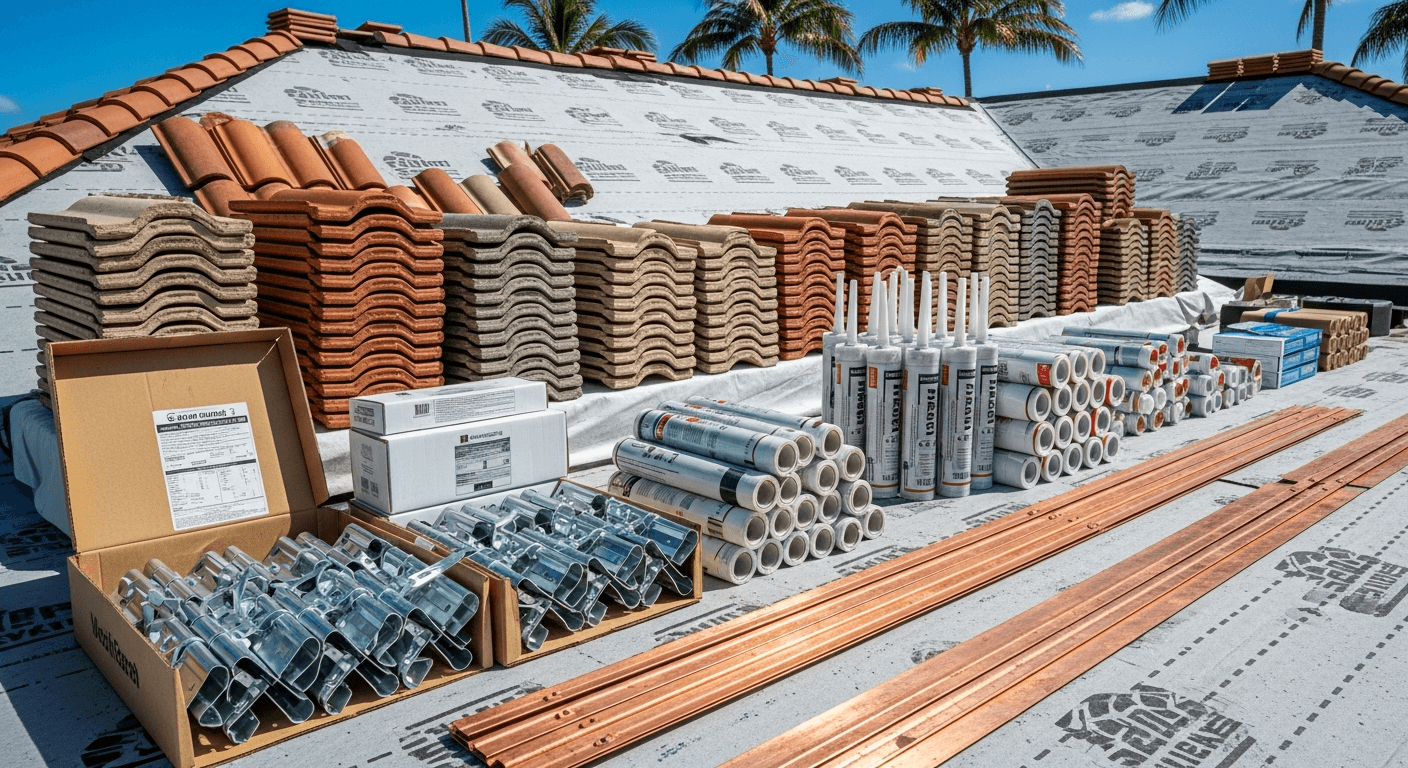
Understand which roofing materials are approved for Miami-Dade County HVHZ installation, how the NOA system works, and why using non-approved products puts your home at risk.
Read More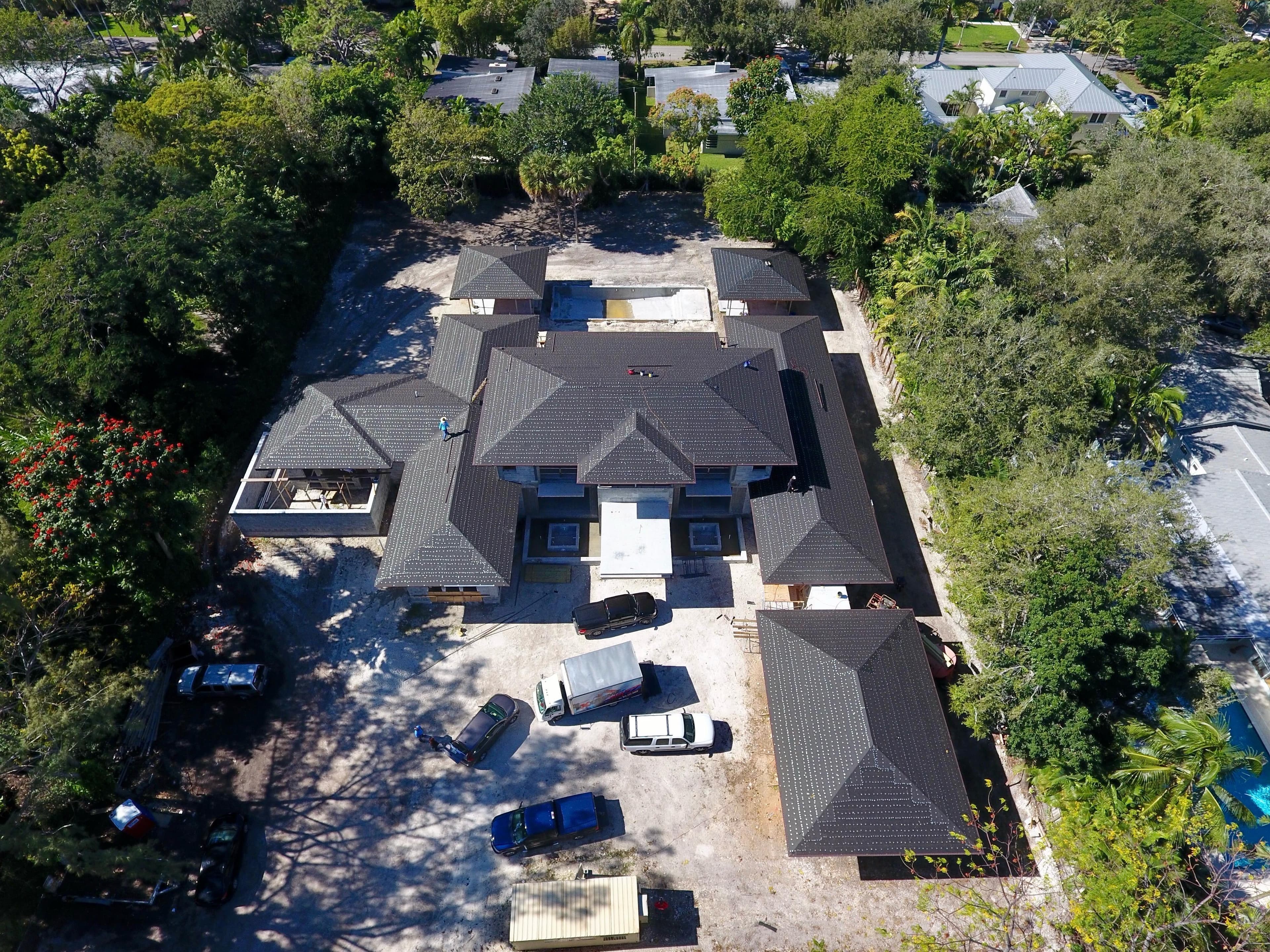
A new roof in Miami costs $8,000-$45,000+ in 2026. Get detailed pricing by material, size, and complexity, plus tips to save money on your roof replacement.
Read More