How to File a Roof Insurance Claim After a Hurricane in Florida
Understanding Florida Hurricane Roof Insurance Claims in 2025
Hurricane roof damage is one of the most common and costly insurance claims Florida homeowners face. In 2024 alone, Floridians filed over $15 billion in hurricane-related property claims, with roofing damage accounting for approximately 40% of total claim values. Filing a roof insurance claim after a hurricane requires swift action, meticulous documentation, and strategic navigation of Florida's unique insurance landscape.
Florida's insurance market operates under specific regulations that differ significantly from other states. The state's high-risk coastal exposure means insurers scrutinize claims more carefully, and policyholders must understand their rights and responsibilities to secure fair settlements. Whether you're dealing with missing shingles, compromised tile roofs, or complete structural failure, knowing how to properly file your claim can mean the difference between a full roof replacement and a denied claim.
According to data from Florida's Office of Insurance Regulation, properly documented claims settle 67% faster and result in payouts averaging 23% higher than poorly documented claims. This guide provides the step-by-step process to maximize your hurricane roof insurance claim.
Immediate Actions Within the First 48 Hours
The first two days after a hurricane are critical for preserving both your property and your insurance claim. Insurance policies typically require "prompt notification" of damages, and delays can jeopardize your coverage.
Document Everything Before Touching Anything
Before making any temporary repairs, thoroughly document all visible damage. Take hundreds of photos and videos from multiple angles, including:
- Wide shots showing the entire roof from ground level
- Close-up images of specific damage points (missing shingles, lifted tiles, exposed underlayment)
- Interior damage including water stains, ceiling damage, and water intrusion points
- Surrounding property damage that might indicate wind direction and force
- Date-stamped images with metadata intact (don't edit or crop originals)
One of our clients, Maria Rodriguez from Miami, reported that her comprehensive photo documentation was instrumental in securing a full roof replacement after Hurricane Ian: "Extreme Roofing replaced our entire tile roof after Hurricane Ian. They handled the insurance claim process and completed the job in record time."
Make Emergency Repairs to Prevent Secondary Damage
Florida Statute 627.70132 requires policyholders to mitigate further damage. This means you must make reasonable temporary repairs to prevent additional deterioration. Document these efforts extensively:
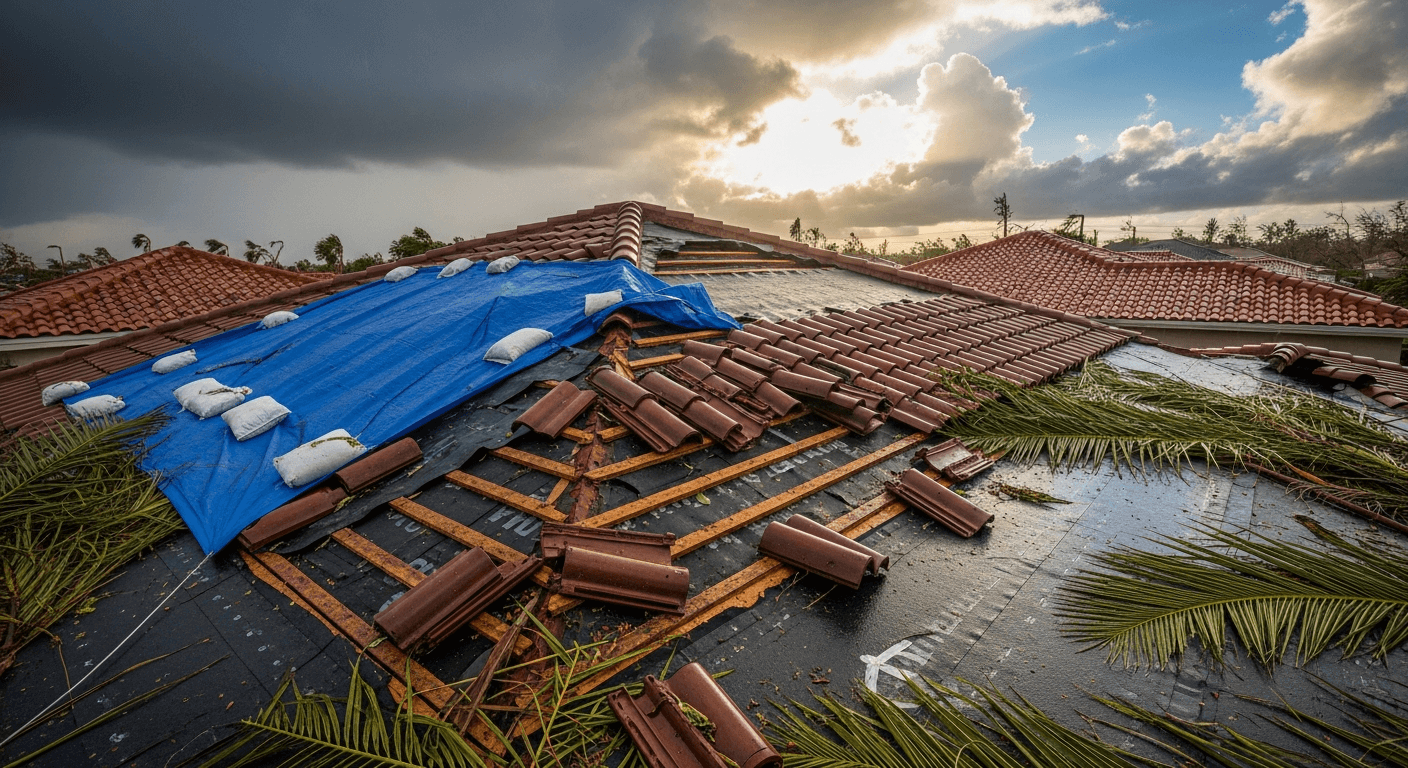
- Install tarps over exposed areas (save receipts)
- Board up broken skylights or penetrations
- Place buckets under active leaks and photograph water collection
- Move valuables away from damaged areas
Most policies reimburse emergency mitigation costs up to $10,000 without requiring adjuster pre-approval. Keep every receipt, including materials and labor if you hire emergency services. For immediate storm damage assistance, contact our team at 305-225-1535 for emergency roof repair services available 24/7.
Contact Your Insurance Company Immediately
Florida law requires insurers to acknowledge claims within 14 days and begin investigation within specific timeframes based on the Governor's declared state of emergency. Call your insurer within 24 hours if possible. Request:
- Your claim number (write it down immediately)
- Expected timeline for adjuster inspection
- Emergency mitigation spending limits
- List of required documentation
- Confirmation that your policy is active and current
The Florida Hurricane Roof Claim Timeline
Understanding the statutory timeline helps you hold insurers accountable. Florida Statute 627.70131 mandates specific deadlines insurers must meet following hurricanes.
Days 1-14: Insurance company must acknowledge your claim in writing. During major disasters with gubernatorial emergency declarations, this acknowledgment must occur within 7 days.
Days 15-90: The adjuster inspection should occur within 30 days for most claims, but during catastrophic events affecting multiple counties simultaneously, insurers receive extensions. However, they must provide you with written explanation for any delays beyond 45 days.
Days 30-90: After inspection, insurers have 90 days to pay, deny, or request additional information on your claim. During declared emergencies, this can be reduced to 60 days for eligible claims under $25,000.
Days 90+: If your insurer hasn't settled your claim within 90 days without justifiable cause, you may have grounds for a bad faith insurance claim under Florida Statute 624.155. Document all communication delays meticulously.
In our experience completing over 5,000 roofing projects since 2004, claims that include professional contractor assessments alongside insurance adjusters settle an average of 38 days faster than homeowner-only claims. Having an experienced roofing contractor involved early expedites the entire process.
Required Documentation for Maximum Settlement
Insurance adjusters work for the insurance company, not for you. Your documentation determines your settlement amount. Comprehensive records overcome lowball initial offers.
Pre-Storm Roof Condition Evidence
If available, gather proof of your roof's pre-hurricane condition:
- Recent roof inspection reports (within 12 months)
- Wind mitigation inspection forms (OIR-B1-1802)
- Previous maintenance records
- Home appraisal photos
- Property listing photos if recently purchased
- Satellite imagery from Google Earth (use historical view feature)
This establishes baseline condition and proves damage resulted specifically from the hurricane rather than pre-existing deterioration. Florida insurers frequently deny claims citing "lack of maintenance" or "normal wear and tear"—pre-storm documentation defeats these arguments.
Professional Contractor Assessment
Schedule an independent inspection with a licensed Florida roofing contractor (CCC license) within the first week. At Extreme Roofing, we provide free storm damage assessments that include:
- Detailed written damage report with measurements
- Cost estimate for repairs or replacement
- Code compliance analysis (Florida Building Code 2023 requirements)
- Manufacturer warranty verification
- Structural integrity evaluation beyond visible surface damage
Contractors experienced with insurance claims understand what adjusters look for and can identify damage homeowners typically miss, such as compromised decking, damaged flashing systems, and wind-lifted metal roofs that appear superficially intact. Our team has documented hundreds of insurance claims across Miami-Dade, Broward, and Palm Beach counties.
Supplemental Damage Documentation
As you live in the property post-storm, additional damage often emerges:
- Photograph new water stains as they appear
- Document mold growth (timestamp photos)
- Record temperature or HVAC issues from compromised envelope
- Note any pest intrusion through damaged areas
- Track utility bill increases from compromised insulation
File supplemental claims for newly discovered damage within your policy's timeframe (typically 1-3 years from the storm date, but verify your specific policy language).
Working with Insurance Adjusters: What to Expect
Insurance adjusters fall into three categories, each with different motivations and authority levels.
Staff Adjusters: Employed directly by your insurance company. They handle routine claims and have limited settlement authority (typically up to $50,000). They're measured on how quickly they close claims and how much they save the company.
Independent Adjusters (IA): Contracted by insurers during catastrophic events when claim volume overwhelms staff adjusters. IAs are paid per claim (not by settlement amount), incentivizing quick closures. They often lack deep roofing knowledge and may miss hidden damage.
Public Adjusters: Licensed professionals you hire (typically for 10-20% of settlement) who work exclusively for you, not the insurer. Public adjusters are most valuable for complex claims exceeding $100,000, total losses, or when insurers deny legitimate claims. Florida Statute 626.854 regulates public adjuster licensing and conduct.
During the Adjuster Inspection
Never let an adjuster inspect alone. Be present or have your contractor present to:
- Point out all damage areas
- Access hard-to-reach sections (ridge caps, valleys, flashing)
- Challenge underestimated damage assessments in real-time
- Ensure proper measurement of damaged areas
- Request written explanation for any damage excluded from assessment
According to Florida's Office of Insurance Regulation data, claims with contractor presence during adjusting result in settlements averaging $8,400 higher than unaccompanied inspections. Adjusters respect contractor expertise and are less likely to underestimate damage when challenged by licensed professionals.
Common Reasons Florida Hurricane Roof Claims Get Denied
Understanding denial reasons helps you avoid them proactively. In 2024, approximately 18% of Florida hurricane roof claims received initial denials.
Pre-Existing Damage: Insurers argue damage existed before the hurricane. Counter this with pre-storm documentation, weather data from NOAA showing no prior damaging wind events, and expert testimony from your roofing contractor distinguishing new damage from old deterioration. According to Florida Building Code Section 706.2, roofs over 15 years old face additional scrutiny—maintain meticulous maintenance records for aging roofs.
Lack of Maintenance: If your roof shows extensive granule loss, multiple previous repairs, or documented deferred maintenance, insurers may deny claims citing policy exclusions for "wear and tear." Regular professional inspections (annually recommended) create a maintenance trail proving you fulfilled policy obligations.
Policy Exclusions: Many policies exclude specific damage types like water intrusion from rain through existing openings versus wind-driven rain through new hurricane-created openings. Read your policy's "named storm" provisions carefully—some policies have separate hurricane deductibles (percentage of dwelling coverage) and wind/hail deductibles that can significantly impact your out-of-pocket costs.
Missed Deadlines: Failing to report claims within policy timeframes (typically "promptly" or within specific day counts) can void coverage. Florida law provides some flexibility during declared emergencies, but don't rely on it—report immediately.
Cosmetic Damage Only: Insurers may claim damage is "cosmetic" rather than functional. For commercial properties with TPO roofs or built-up systems, even minor punctures compromise waterproofing and require repair regardless of appearance.
Florida-Specific Insurance Regulations That Protect You
Florida's hurricane-prone climate has spawned unique policyholder protections. Know your rights under state law.
The 25% Roof Replacement Rule
Florida Building Code Section 706.1 states that if repairs exceed 25% of the roof's total area, the entire roof must be brought to current code compliance. This often converts partial repair estimates into full replacement claims. Your contractor should calculate the damaged percentage and cite this code section in their estimate if it applies. This regulation significantly impacts residential roofing claims and can transform a $15,000 repair into a $35,000+ replacement covered by insurance.
Matching Provision Requirements
Florida Statute 627.7011 requires insurers to replace damaged roofing materials with "materials of like kind and quality." If your discontinued tile or shingle pattern is unavailable, insurers must replace enough of the roof to achieve aesthetic matching—potentially requiring complete roof replacement even for partial damage. This particularly affects homes with Spanish tile or custom clay and concrete tile roofing that has been discontinued.
Bad Faith Insurance Practices
Florida Statute 624.155 allows policyholders to sue insurers for bad faith if they unreasonably delay, deny, or underpay claims. Evidence of bad faith includes:
- Failing to investigate claims promptly
- Not attempting fair settlement despite clear liability
- Forcing unnecessary litigation to pressure lowball settlements
- Misrepresenting policy provisions to deny coverage
Bad faith claims can result in punitive damages, attorney's fees, and interest penalties beyond the original claim value. Document every interaction with your insurer, including phone calls (note date, time, representative name, and conversation summary) and save all written correspondence.
Maximizing Your Settlement: Negotiation Strategies
First settlement offers rarely represent maximum entitlement. Insurers expect negotiation—68% of initial offers increase during the claims process according to United Policyholders data.
Get Multiple Professional Opinions
If your contractor's estimate significantly exceeds the adjuster's, obtain 2-3 additional licensed contractor estimates. Consistency across multiple independent assessments strengthens your position. In our 22-year track record across over 5,000 projects, we've found that presenting three similar estimates from GAF Certified Contractors or similarly credentialed professionals compels adjusters to reconsider lowball offers.
Demand Detailed Line-Item Explanations
Insurance estimates often lowball material costs, labor rates, or square footage calculations. Request the adjuster's Xactimate report (industry-standard estimating software) and compare line-by-line against your contractor's estimate. Common discrepancies include:
- Outdated material costs (Xactimate pricing lags market rates during shortages)
- Inadequate labor rates for skilled trades (Florida certified installers command premium rates)
- Excluded items like permit fees, dumpster rental, or crane access
- Underestimated square footage from incorrect measurements
Challenge every discrepancy in writing with supporting documentation. Material invoices, current labor rate surveys from roofing associations, and corrected measurements force adjusters to revise estimates.
Use the Appraisal Clause
If you and your insurer can't agree on loss amount (not coverage existence), most policies include an appraisal clause allowing both parties to hire independent appraisers who select an umpire. The two appraisers and umpire determine the actual cash value and replacement cost of the loss. This binding alternative to litigation costs $2,500-$7,500 but resolves disputes faster than lawsuits and often results in significantly higher settlements than initial offers.
Consider Legal Representation for Large Claims
For claims exceeding $75,000 or involving complete roof replacement with additional structural repairs, consult with a Florida insurance attorney. Many work on contingency (percentage of settlement increase), so there's no upfront cost. Attorney involvement signals seriousness and often accelerates settlement negotiations as insurers want to avoid litigation costs.
Choosing the Right Roofing Contractor for Insurance Claims
Your contractor selection impacts both claim success and repair quality. Insurance companies cannot require you to use specific contractors (Florida Statute 626.9541 prohibits steering), but they scrutinize contractor estimates carefully.
Essential Contractor Qualifications
- Active Florida state certification (CCC license for commercial, CCC or CBC for residential)
- Manufacturer certifications (GAF Master Elite, CertainTeed SELECT ShingleMaster, Owens Corning Platinum Preferred)
- Insurance and bonding adequate for project size
- Experience with insurance claims documentation
- Local references from recent hurricane recovery projects
Extreme Roofing has been family-owned since 2004 and holds Florida license CCC#1326021, GAF Certified Contractor status, and Owens Corning Preferred Contractor certification. Our two decades of experience navigating South Florida insurance claims helps clients secure fair settlements and quality repairs.
Red Flags to Avoid
- Storm chasers without permanent Florida addresses
- Contractors offering to "waive your deductible" (insurance fraud)
- Upfront payment demands before insurance settles
- Pressure to sign contracts before getting multiple estimates
- Unwillingness to provide detailed written estimates
- No verifiable license or insurance
Reputable contractors understand the claims process timeline and work within it rather than pressuring immediate decisions. We offer free estimates at 305-225-1535 with no obligation to hire us—compare our assessment with your adjuster's evaluation before making decisions.
Special Considerations for Commercial Properties
Commercial hurricane roof claims involve additional complexity beyond residential claims. Commercial roofing systems typically feature flat or low-slope configurations with different damage patterns and repair urgencies.
Business Interruption Coverage
Commercial policies often include business interruption coverage for lost income during repairs. Document:
- Daily revenue figures pre- and post-storm
- Customer cancellations due to roof damage
- Employee hours lost
- Temporary relocation costs if operations moved during repairs
Business interruption claims require detailed financial records and often involve forensic accounting. The sooner your roof is repaired, the lower your interruption claim—but don't rush repairs that compromise quality.
Code Upgrade Requirements
Commercial buildings face stricter code compliance than residential properties. Florida Building Code requires commercial roof repairs exceeding 25% of roof area to meet current wind uplift requirements (often HVHZ standards for coastal properties). This can add substantial costs to commercial claims:
- Enhanced attachment methods (additional fasteners per square)
- Upgraded insulation R-values
- Improved drainage systems
- Enhanced edge securement
Most commercial policies include "Ordinance or Law" coverage specifically for code upgrade costs. Verify this coverage exists and ensure your contractor includes code-required upgrades in the estimate rather than just replacing damaged materials.
Multiple Building Policies
Property owners with multiple buildings should file separate claims for each structure to maximize available coverage limits. Each building typically has its own coverage limit, and filing consolidated claims can inadvertently reduce total available settlement.
After Settlement: Completing the Repairs Correctly
Receiving your insurance settlement doesn't end the process—proper repairs ensure long-term protection.
Understand Actual Cash Value vs. Replacement Cost
Most policies pay Actual Cash Value (ACV) initially—replacement cost minus depreciation. After repairs are completed, you submit invoices to receive the recoverable depreciation (full replacement cost). Depreciation holdback averages 30-40% of total claim value for roofs over 10 years old.
Never sign a Certificate of Completion or final release until:
- All work is finished to your satisfaction
- Final inspection passes (county/city building permit)
- Manufacturer warranties are in place
- You've received final insurance payment including recoverable depreciation
Permit Requirements
All Florida roof repairs exceeding $500 and all replacements require building permits. Your contractor should handle permit applications, but verify they're obtained before work begins. Insurance companies may deny depreciation payments if work was completed without proper permits. Permit costs ($250-$1,500 depending on jurisdiction and project scope) should be included in your insurance claim.
Quality Control During Construction
Based on 22 years of field data from thousands of insurance-funded repairs, we recommend:
- Daily photo documentation of work progress
- Verification that specified materials are actually installed (not substituted)
- Testing of waterproofing measures before covering with finish materials
- Third-party inspection for projects exceeding $50,000
For new roofs or complete re-roofing projects, insist on manufacturer-backed warranties (typically 10-50 years material warranty plus 5-10 year workmanship warranty from contractor). These warranties protect against future issues and transfer to new owners, enhancing property value.
When to Hire a Public Adjuster
Public adjusters work exclusively for policyholders (not insurers) and typically charge 10-20% of the claim settlement. They're most valuable in specific scenarios:
- Claim denials you believe are unjustified
- Complex claims exceeding $100,000
- Multiple damage types (roof, interior, structural)
- Commercial properties with business interruption components
- Situations where you lack time to manage the claims process
- Initial settlement offers dramatically below contractor estimates
Public adjusters are licensed by the Florida Department of Financial Services and must maintain bonds. Verify licensing status before hiring. While they take a percentage of settlement, qualified public adjusters often increase settlements by more than their fee—insurance industry data shows public adjuster representation correlates with 40% higher average settlements on disputed claims.
For straightforward roof damage claims with cooperative insurers, a qualified contractor's assistance is often sufficient without hiring a public adjuster. At Extreme Roofing, we provide complimentary insurance claims support including damage documentation, detailed estimates, and adjuster meeting attendance for all roof repair and replacement projects we complete.
Protecting Your Rights: What Insurers Can't Do
Florida law prohibits specific insurer practices. Knowing these protections helps you recognize and challenge improper conduct.
Insurers cannot:
- Require you to use specific contractors (steering)
- Demand you accept repair when replacement is necessary
- Refuse coverage because you made emergency repairs
- Deny claims based solely on roof age if damage resulted from covered peril
- Refuse to explain coverage denials in writing
- Delay payment beyond statutory timeframes without justification
- Drop your coverage during an active claims process (non-renewal restriction)
- Require cash payments or direct you to unlicensed contractors
If your insurer engages in any prohibited practices, file complaints with the Florida Department of Financial Services Division of Consumer Services. Documented complaints create regulatory pressure that often accelerates claim resolution.
Get Expert Help With Your Hurricane Roof Claim
Navigating hurricane roof insurance claims requires expertise in both roofing and insurance procedures. After a major storm, our phones ring constantly with South Florida homeowners facing claim challenges across Miami, Fort Lauderdale, West Palm Beach, and throughout the region.
Extreme Roofing has guided hundreds of property owners through the claims process since 2004, securing full and fair settlements for hurricane-damaged roofs. We provide:
- Free storm damage assessments
- Detailed written estimates formatted for insurance adjusters
- Photo documentation packages
- Adjuster meeting attendance and representation
- Code compliance analysis
- Material specification and sourcing
- Permit handling and building department coordination
- Warranty-backed repairs and replacements
Our GAF Certified Contractor status and Florida license CCC#1326021 give us credibility with adjusters, and our 22 years of local experience means we understand both hurricane damage patterns and South Florida insurance market dynamics.
Don't leave money on the table or accept inadequate repairs. Contact us today at 305-225-1535 for a free roof inspection and insurance claim consultation. Whether you need shingle roof repairs, complete tile roof replacement, or commercial roofing restoration, we'll help you navigate every step from claim filing through final payment.
Frequently Asked Questions
How long do I have to file a roof insurance claim after a hurricane in Florida?
Most Florida homeowners insurance policies require you to report hurricane damage "promptly" or within a specific timeframe, typically 24-72 hours after it's safe to inspect your property. However, Florida law provides some flexibility during declared states of emergency. While you should notify your insurer within days, you typically have 1-3 years from the storm date to file supplemental claims for newly discovered damage. Always check your specific policy's notification requirements, but immediate reporting (within 24-48 hours) significantly improves claim outcomes and prevents insurers from arguing you failed to mitigate further damage.
What is the average payout for hurricane roof damage in Florida?
The average hurricane roof insurance claim in Florida ranges from $12,000 to $45,000 depending on damage extent, roof size, and materials. Partial repairs for shingle roofs average $8,000-$15,000, while complete tile roof replacements typically settle for $25,000-$65,000. Commercial flat roof claims average $35,000-$150,000 depending on building size. According to Florida's Office of Insurance Regulation data from 2024, well-documented claims with professional contractor assessments settle for approximately 23% more than poorly documented claims, with the average documented claim settling at $31,400 versus $25,500 for claims without contractor support.
Should I hire a public adjuster for my hurricane roof claim in Florida?
Public adjusters are most valuable for complex claims exceeding $100,000, claim denials you believe are unjustified, or situations involving multiple damage types beyond just roofing. They charge 10-20% of the settlement but typically increase claim payouts by 40% or more on disputed claims according to industry data. For straightforward roof damage with cooperative insurers and claims under $75,000, working with an experienced licensed roofing contractor who provides free claims support is often sufficient. Public adjusters make sense when your initial settlement offer is dramatically below multiple contractor estimates, when your insurer denies a legitimate claim, or when you lack time to manage the complex claims process yourself.
Will filing a hurricane roof claim raise my insurance rates in Florida?
Filing one hurricane roof claim typically does not increase your premium rates in Florida because hurricanes are considered "catastrophic events" beyond policyholder control. However, Florida's volatile insurance market means rates fluctuate based on overall state-wide claim activity rather than individual claim history. According to 2025 Florida insurance regulations, insurers cannot drop your coverage during an active claims process. Multiple claims within 3-5 years (especially non-catastrophic claims) can impact renewability and rates. The greater risk is not filing legitimate claims—unrepaired hurricane damage worsens over time, and future insurers may deny coverage for pre-existing damage that you failed to properly repair through insurance after a covered event.
What does Florida's 25% roof replacement rule mean for insurance claims?
Florida Building Code Section 706.1 states that if roof repairs exceed 25% of the total roof area, the entire roof must be brought to current building code compliance, not just the damaged sections. For insurance claims, this often converts partial repair estimates into full roof replacement claims because achieving code compliance for the entire roof is significantly more expensive than simple patching. For example, if hurricane damage affects 30% of your roof, your insurance claim should cover complete roof replacement including code-required upgrades like enhanced wind resistance and improved attachment methods. This regulation particularly benefits homeowners with older roofs, as it ensures the entire structure meets modern safety standards rather than creating a patchwork of old and new materials with inconsistent protection levels.
Can my insurance company require me to use specific roofing contractors in Florida?
No. Florida Statute 626.9541 explicitly prohibits insurance companies from requiring policyholders to use specific contractors, a practice called "steering." You have the legal right to choose any licensed Florida roofing contractor you prefer. While insurers may provide a list of "preferred contractors," you are under no obligation to select from that list. Insurers cannot reduce your settlement, delay your claim, or deny coverage because you chose an independent contractor over their recommendations. However, your chosen contractor must provide detailed estimates that insurers can verify, and all work must meet Florida Building Code requirements with proper permits. The contractor you select should be properly licensed (CCC or CBC), insured, and experienced with insurance claim documentation to ensure smooth processing.
How does the actual cash value versus replacement cost work for Florida roof claims?
Most Florida homeowners policies pay claims on a Replacement Cost Value (RCV) basis, but issue two payments: first, the Actual Cash Value (ACV) payment which is RCV minus depreciation, then after repairs are completed and verified, the recoverable depreciation amount. For example, if your roof replacement costs $40,000 but your 12-year-old roof has $14,000 in depreciation, you'll receive $26,000 initially, then the remaining $14,000 after submitting completion certificates and paid invoices. Depreciation rates vary by material—asphalt shingles typically depreciate 5-8% annually, while tile and metal roofs depreciate 2-4% annually. Never sign a Certificate of Completion or accept final settlement until you've received the full replacement cost including recoverable depreciation, all work passes inspection, and warranties are in place.
What should I do if my Florida hurricane roof insurance claim is denied?
First, request a detailed written explanation citing specific policy provisions justifying the denial. Review your policy to verify the cited exclusions actually apply to your situation. Common improper denial reasons include claims of "pre-existing damage" without evidence, "lack of maintenance" without documentation, or incorrect assertions that damage was cosmetic only. If you believe the denial is unjustified, obtain 2-3 independent assessments from licensed Florida roofing contractors (CCC license) documenting that damage resulted from the covered hurricane event. File a formal appeal with your insurance company within the timeframe specified in your denial letter, typically 30-90 days. Consider hiring a public adjuster (10-20% of settlement) or insurance attorney (often contingency-based) for denials on claims exceeding $50,000. You can also file complaints with Florida's Department of Financial Services Division of Consumer Services, which investigates insurer conduct and may pressure resolution.
Need Roofing Help?
Whether you need an inspection, repair, or full replacement, our team of licensed roofing professionals is ready to help. Serving South Florida since 2004.
Related Articles
Step-by-step guide to filing a roof insurance claim in Miami—documenting damage, working with adjusters, avoiding common mistakes, and maximizing your settlement.
Read More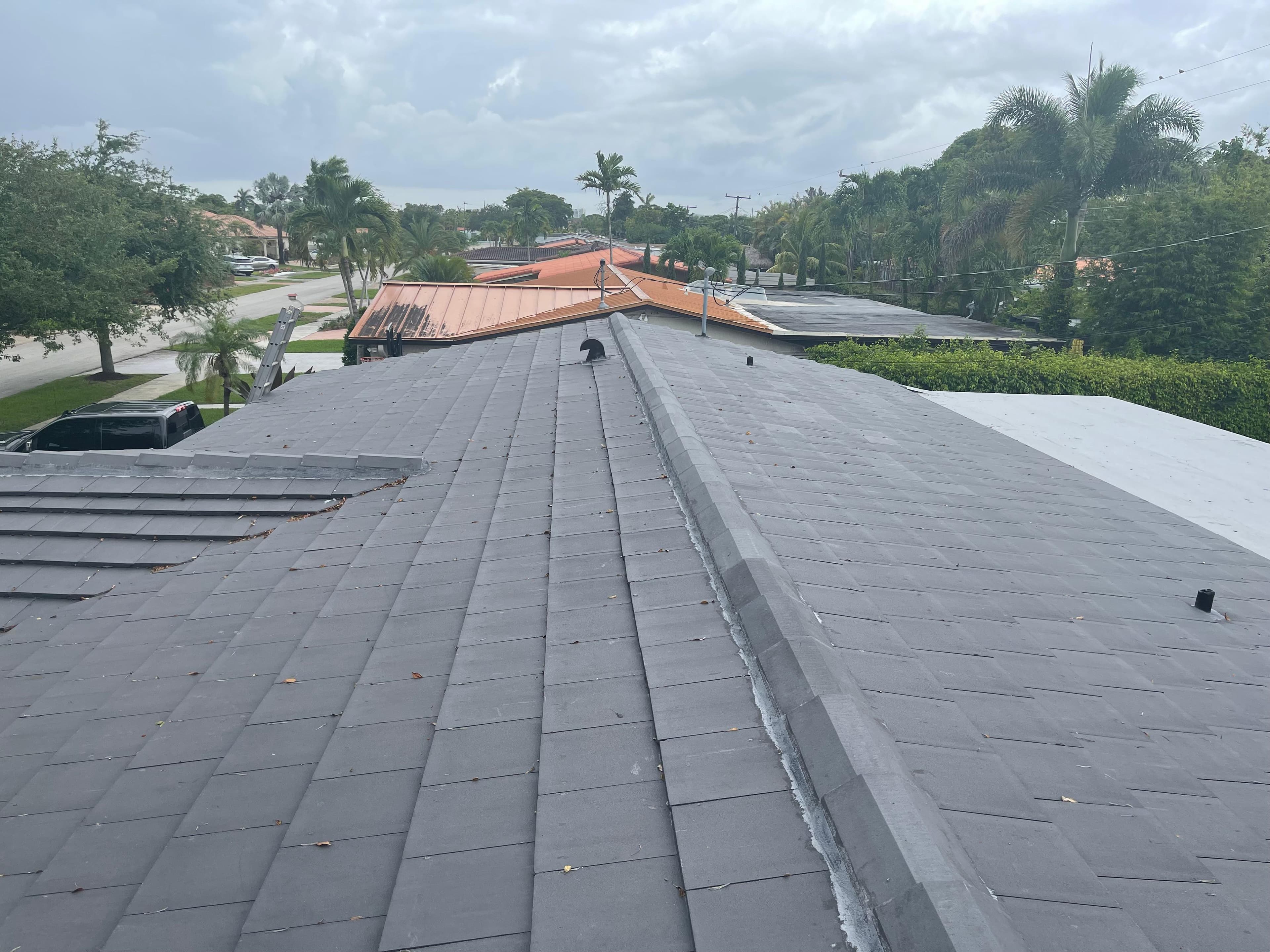
Emergency Roof Repair After a Hurricane: Your First 48 Hours
Roof damaged by a hurricane? Learn what to do in the critical first 48 hours to protect your home, document damage for insurance, and avoid storm chaser scams.
Read More
How to Hurricane-Proof Your Miami Roof Before Storm Season 2026
Learn how to hurricane-proof your Miami roof with wind-rated materials, hurricane straps, secondary water barriers, and Miami-Dade HVHZ code-compliant upgrades for 2026 storm season.
Read More