
Spanish Tile Roofing in Miami: Style, Durability, and Cost
Why Spanish Tile Still Rules Miami's Premium Neighborhoods
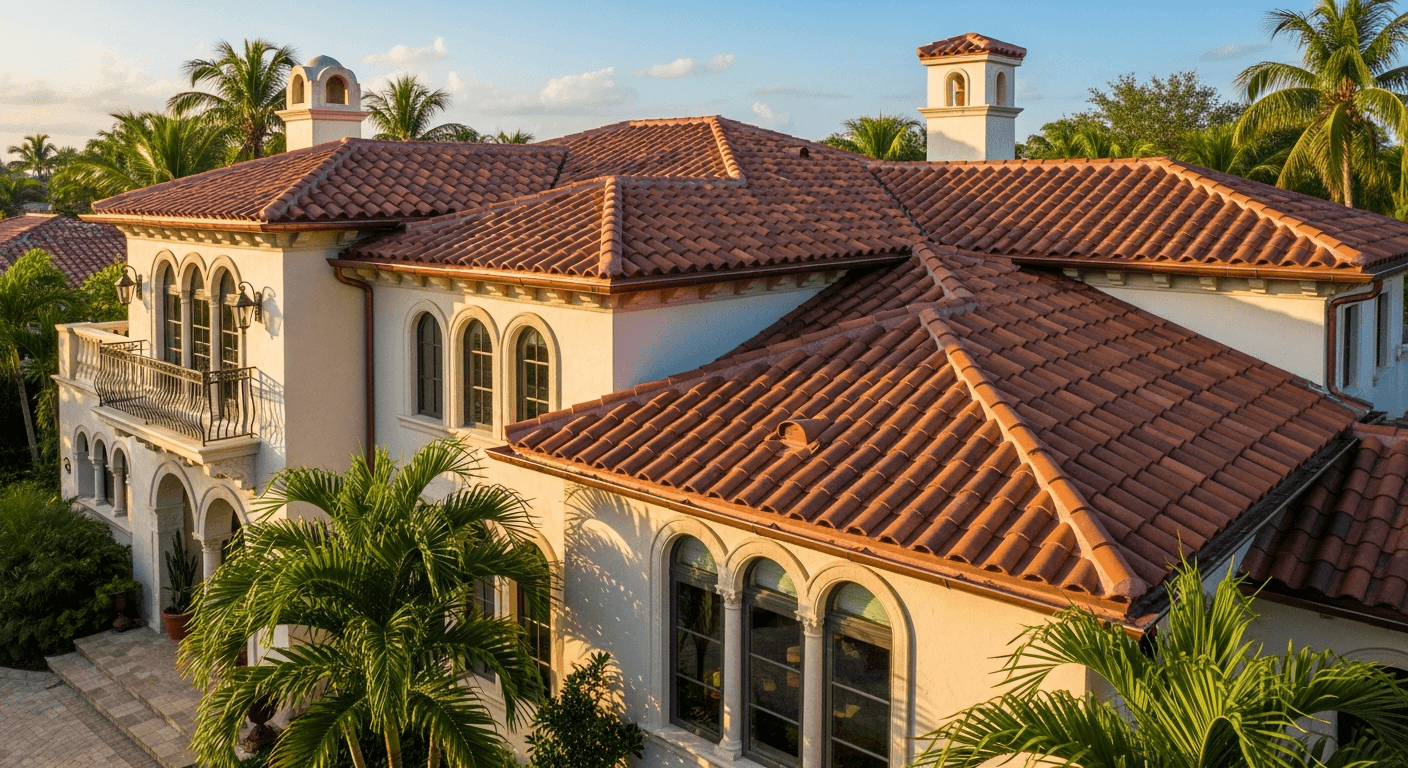
Spanish tile is the default roofing choice for Miami's most expensive neighborhoods, and it has been for 100 years. Coral Gables, Coconut Grove, Pinecrest, Gables Estates, Cocoplum, Star Island, the historic parts of Miami Beach. Walk any block in those zip codes and you'll see the same rolling terracotta roofline. That consistency isn't a coincidence. It's what architects, HOAs, and buyers expect, and it's what drives property values in luxury Miami.
If you're considering Spanish tile for a home in one of these neighborhoods, or anywhere else in Miami-Dade, here's what I want you to know before you spend $30,000 to $70,000 on a new roof. I've been installing Spanish tile across South Florida since 2004 and I've seen every variation, every failure mode, and every HOA fight.
S-Tile, Barrel, and Mission: What Makes Them Different
Most people use "Spanish tile" as a catchall, but there are three distinct profiles, and they don't cost or look the same.
S-tile is the most common profile in Miami-Dade today. One-piece tile with a gentle S-curve that creates alternating ridges and valleys. Easier to install than traditional barrel, lighter weight, and gives a clean Mediterranean look. You'll see S-tile on production homes in Kendall, Palmetto Bay, Doral, Miami Lakes, and most post-1990 Mediterranean-style builds. Installed cost runs $14 to $18 per square foot in Miami right now.
Barrel tile (one-piece) is a half-cylinder profile that creates a more pronounced rolling look than S-tile. Standard for custom homes in Coral Gables, Gables Estates, Pinecrest, and Coconut Grove. Heavier than S-tile, more dramatic shadow lines. Runs $16 to $22 per square foot installed.
Mission tile (two-piece) is the traditional method: separate flat pan tiles and curved cap tiles laid over the pan joints. This creates the deepest shadow lines and the most authentic Spanish Colonial look. It's what you'll find on original 1920s Coral Gables homes and high-end historic restoration projects. Heaviest profile (up to 1,300 pounds per square), highest labor cost, and runs $20 to $28 per square foot installed.
Your choice depends on three things: your home's architectural style, your HOA's requirements, and your budget. If you're restoring a historic home in Coral Gables and the Board of Architects is involved, you're almost certainly going with two-piece Mission. If you're building new in Pinecrest or Cocoplum and want the classic look without the historic premium, one-piece barrel is the sweet spot. If you're in a newer Mediterranean-style home in Kendall or Miami Lakes, S-tile gets you 95 percent of the look for 75 percent of the cost.
Clay or Concrete: The Decision That Affects Everything
Every Spanish tile project in Miami starts with this question. Clay and concrete look similar from the ground, but they're fundamentally different products.
Clay tile is natural clay fired at 2,000+ degrees Fahrenheit. The firing chemically fuses the clay into ceramic. Color comes from mineral content in the clay, not from a coating, so it never fades. Weighs 600 to 900 pounds per square. Lasts 75 to 100+ years. Installed cost $16 to $25 per square foot in Miami.
Concrete tile is Portland cement, sand, water, and iron oxide pigment molded under pressure and cured. Color sits on the surface as a slurry coat or mixes into the top layer. Weighs 900 to 1,300 pounds per square. Lasts 40 to 60 years. Color fades starting around year 15. Installed cost $13 to $18 per square foot.
My honest recommendation by neighborhood:
| Neighborhood | Recommended Tile | Why |
|---|---|---|
| Coral Gables (historic district) | Clay, two-piece Mission | Board of Architects usually requires it |
| Coral Gables (newer subdivisions) | Clay S-tile or barrel | HOA prefers clay, S-tile or barrel acceptable |
| Gables Estates, Cocoplum | Clay barrel (two-piece if possible) | HOA architectural review, luxury expectations |
| Pinecrest | Clay S-tile or barrel | HOA requires tile, clay preferred |
| Coconut Grove | Clay S-tile or barrel | Historic preservation on older homes |
| Key Biscayne | Clay (salt air immunity) | Clay handles salt spray better than concrete |
| Kendall, Doral, Miami Lakes | Concrete S-tile | Budget-friendly, HOA rarely strict |
| Palmetto Bay, Cutler Bay | Concrete S-tile or flat | Mixed HOA rules, value-focused |
| Homestead, Redland | Concrete S-tile or flat | No HOA constraints, budget priority |
| Miami Shores, Biscayne Park | Clay (historic context) | Older home stock, period appropriate |
If you're in one of the historic or HOA-required neighborhoods, clay isn't optional. If you're anywhere else, it's a cost-vs-longevity tradeoff.
2026 Pricing by Home Size and Tile Type
These are the numbers I'm actually quoting on Spanish tile projects in Miami-Dade right now. Includes tear-off, deck re-nail, self-adhered underlayment, HVHZ-compliant foam or mechanical fastening, tile installation, ridge and hip cementing, all flashing, permit, and inspection.
| Home Size | Concrete S-Tile | Clay S-Tile | Clay Two-Piece Mission |
|---|---|---|---|
| 1,500 sq ft | $20,000 - $27,000 | $24,000 - $30,000 | $30,000 - $42,000 |
| 2,000 sq ft | $26,000 - $36,000 | $32,000 - $40,000 | $40,000 - $56,000 |
| 2,500 sq ft | $32,500 - $45,000 | $40,000 - $50,000 | $50,000 - $70,000 |
| 3,000 sq ft | $39,000 - $54,000 | $48,000 - $60,000 | $60,000 - $84,000 |
| 4,000 sq ft | $52,000 - $72,000 | $64,000 - $80,000 | $80,000 - $112,000 |
Add 15 to 30 percent for Coral Gables historic district, Gables Estates, and Cocoplum due to HOA requirements, historic matching, and complex roof geometry. Add 20 to 35 percent for steep pitches, three-story homes, or cut-up roofs with lots of valleys and dormers.
These don't include structural reinforcement if you're converting from shingles. That's a separate $3,000 to $10,000 line item depending on what the engineer finds.
Wind Performance and HVHZ Fastening Reality
Spanish tile installed to Miami-Dade HVHZ standards is rated to 150+ mph wind uplift. That's a real number backed by TAS 125 testing. But the tile itself isn't the wind story. The attachment system is.
Old-school Spanish tile jobs from the 1980s used mortar bedding to hold tiles in place. That method failed catastrophically in Hurricane Andrew (1992) and was eliminated from the code after. Today, every Spanish tile installation in Miami-Dade has to use one of three modern methods:
- Mechanical fasteners plus foam adhesive. Each tile gets nailed or screwed through the underlayment into the deck, plus a polyurethane foam bed underneath for additional bonding. Most common modern method. Achieves 150+ mph ratings when installed correctly.
- Closed-cell polyurethane foam adhesive only. No mechanical fasteners, just approved foam. Products like Polyset AH-160 and PolyFoam IRC carry Miami-Dade NOAs. Faster installation, higher material cost, same wind rating as mechanical-plus-foam when done right.
- Mechanical fasteners plus traditional mortar at ridge and hip only. Used on historic restoration work in Coral Gables where the original aesthetic matters and the mortar is structural.
If a contractor bids a Spanish tile job and mentions mortar bedding across the field tiles, they're not current on code and their work won't pass Miami-Dade inspection. Walk away.
Insurance Wind Mitigation Credits for Tile
Every Miami homeowner installing a Spanish tile roof should get a Wind Mitigation Inspection (Form OIR-B1-1802) immediately after the final inspection passes. That form documents the roof covering, deck attachment, roof-to-wall connection, roof geometry, and secondary water barrier. Your insurance carrier uses it to calculate credits on your next renewal.
Typical Spanish tile wind mitigation credits:
- Clay or concrete tile with Miami-Dade NOA, hurricane clips, and foam adhesive: 18 to 24 percent off wind premium
- Tile with secondary water resistance (self-adhered underlayment covering the full deck): additional 3 to 5 percent
- Hip roof geometry (instead of gable): additional 5 to 10 percent
- Roof-to-wall with double wraps or clips: additional 3 to 7 percent
For a typical Miami home with a $5,500 annual insurance premium (wind portion around $3,200), a fully-credited Spanish tile installation can save $700 to $1,100 per year. Over a 50-year tile lifespan, that's $35,000 to $55,000 in cumulative insurance savings. The credits alone justify a significant portion of the tile's upfront cost premium over shingles.
Structural Reality Check
Spanish tile is heavy. On a 2,200 square foot home, a clay S-tile roof adds about 18,000 to 22,000 pounds of dead load. A concrete barrel roof adds 22,000 to 28,000 pounds. Mission two-piece adds up to 30,000 pounds.
If your home was originally built for tile (every home in Coral Gables, Gables Estates, Pinecrest, historic Coconut Grove, and most custom homes in Miami Beach), the trusses were engineered for the load. You're fine. If you're converting from asphalt shingles to tile, your home was probably built for 4,000 to 7,000 pounds of roofing load, not 18,000 to 28,000 pounds. The delta has to go somewhere.
Before any tile conversion, I require a structural engineer assessment. Cost runs $400 to $800. The engineer either clears your existing trusses or specifies reinforcement. Common reinforcement costs on Miami conversions:
- Truss sistering (8 to 20 trusses): $1,200 to $6,000
- Collar ties and ridge bracing: $1,500 to $4,000
- Load-bearing wall support under long spans: $2,000 to $6,000
- Complete truss replacement: $8,000 to $18,000 (rare)
Skip the engineer and you're gambling with your home's structure. I've inspected too many Miami Lakes and Homestead conversions where a previous contractor installed tile on an undersized truss system and the roof started sagging within 5 years. The fix is always more expensive than doing the engineering correctly on day one.
How to Vet a Spanish Tile Contractor in Miami
Spanish tile is a specialty trade. Many Miami roofers install shingles or metal regularly and treat tile as an occasional job. You want someone who does tile every week. Ask every contractor you interview:
- How many Spanish tile projects have you completed in Miami-Dade in the last 2 years? Look for 15+. Under 10 means they're still learning.
- What specific tile product are you quoting, and what's its Miami-Dade NOA number? Every bid should list the manufacturer, product code, and NOA number. Generic "Spanish tile" is not an answer.
- Are you certified by the tile manufacturer? Eagle, Boral, Entegra, Ludowici, and MCA all have certification programs. Certification matters for warranty validity.
- Do you use mechanical fasteners, foam adhesive, or both? The right answer depends on the product, but they should be able to explain their method in detail.
- What's your structural engineering process for tile conversions? If they skip the engineer, walk away.
- Can I see three completed Spanish tile projects in my specific neighborhood in the last year? Local references matter because every HOA and inspector has their own quirks.
Also verify the Florida Certified Roofing Contractor license (CCC prefix), check workers comp and general liability insurance certificates, and look up complaint history at the DBPR and BBB. Spanish tile jobs cost enough that you can't afford to use the wrong person.
Ready for a Real Quote?
Call us at 305-225-1535 or request a free estimate. We'll walk the roof, pull structural engineering if you're converting from shingles, confirm your HOA requirements, and give you an itemized quote with the specific tile product, NOA number, fastening method, and line-item pricing. No ambiguity on what you're buying, no surprise change orders, and no mortar beds masquerading as modern installation.
Frequently Asked Questions
What is the difference between clay and concrete Spanish tiles?
Clay tiles are made from natural clay fired at high temperatures, offering richer color tones, lighter weight, and longer lifespan (75-100 years), but at a higher cost. Concrete tiles are made from cement, sand, and water, providing consistent colors, excellent durability (40-60 years), and lower cost. Both perform well in Miami's climate and resist hurricanes, fire, and rot.
How much does a Spanish tile roof cost in Miami?
Spanish tile roof costs range from $7 to $18 per square foot installed, depending on tile type (clay vs. concrete), roof complexity, and structural requirements. A typical 2,000-square-foot roof costs $14,000 to $36,000. While more expensive than asphalt shingles upfront, Spanish tile roofs last 3 to 6 times longer, making them cost-effective over time.
Can Spanish tile roofs withstand Miami hurricanes?
Yes. When installed to current Miami-Dade County standards with foam adhesive or hurricane clips, Spanish tile roofs can withstand sustained winds of 150-170 mph (Category 4-5 hurricanes). They also carry Class 4 impact ratings and Miami-Dade Notices of Acceptance (NOA), making them one of the most hurricane-resistant roofing options available.
How long does a Spanish tile roof last in South Florida?
Clay Spanish tile roofs last 75 to 100+ years in South Florida, while concrete Spanish tile roofs last 40 to 60+ years. The longevity depends on proper installation, underlayment quality, and periodic maintenance. In contrast, asphalt shingle roofs typically last only 15 to 20 years in Miami's harsh climate.
Do Spanish tile roofs reduce energy costs?
Yes. Spanish tile roofs reflect solar heat and create natural ventilation channels, reducing attic temperatures by 10-20 degrees compared to asphalt roofs. This lowers cooling costs by 15-25%, extends HVAC lifespan, and improves indoor comfort. The U.S. Department of Energy recognizes tile roofing as one of the most energy-efficient systems for hot climates.
Need Roofing Help?
Whether you need an inspection, repair, or full replacement, our team of licensed roofing professionals is ready to help. Serving South Florida since 2004.
Related Articles
Everything you need to know about barrel tile roof installation in Miami, including styles, costs, installation process, hurricane ratings, maintenance, and how barrel tiles compare to other roofing materials.
Read More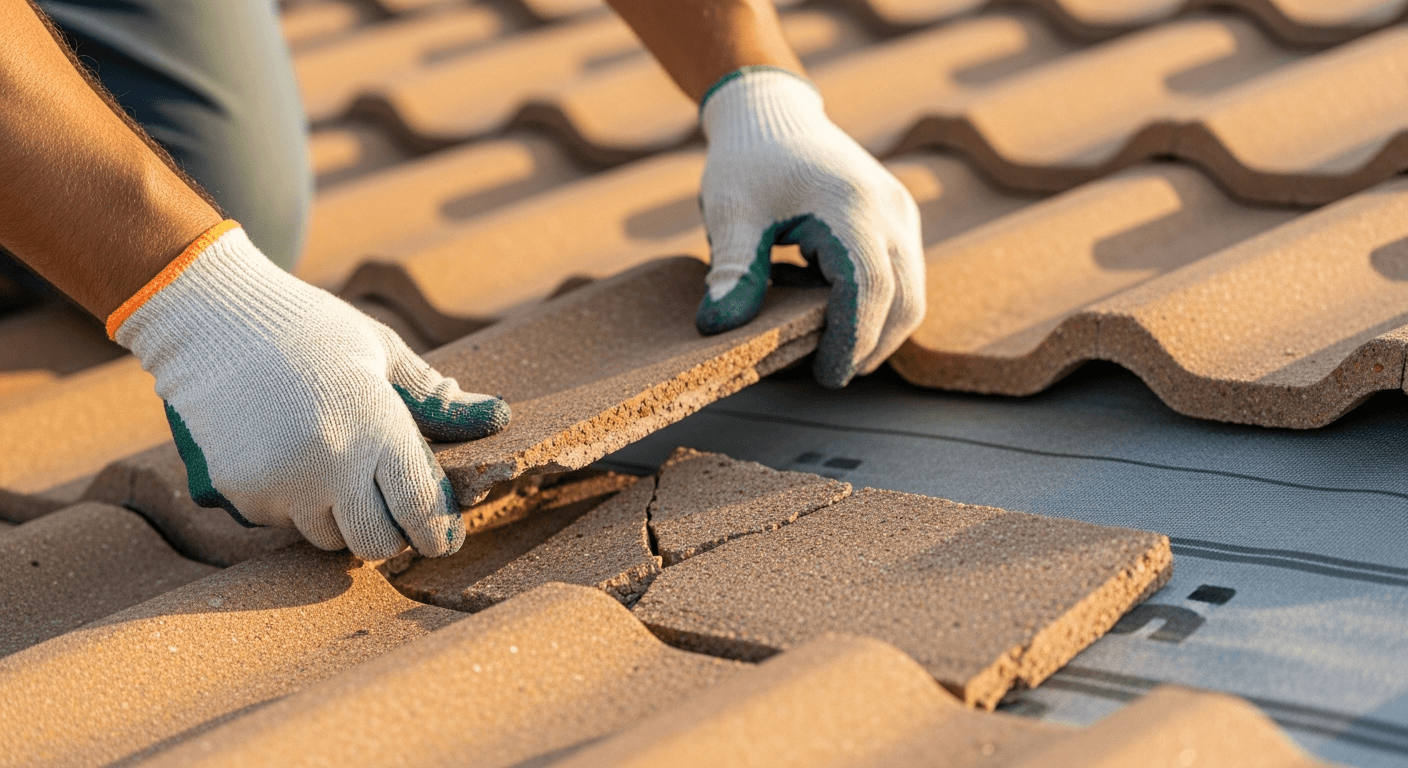
Complete guide to tile roof repair in Miami covering common damage types, repair costs, when to repair vs. replace, and how to find qualified contractors for Spanish, barrel, and flat concrete tile roofs.
Read More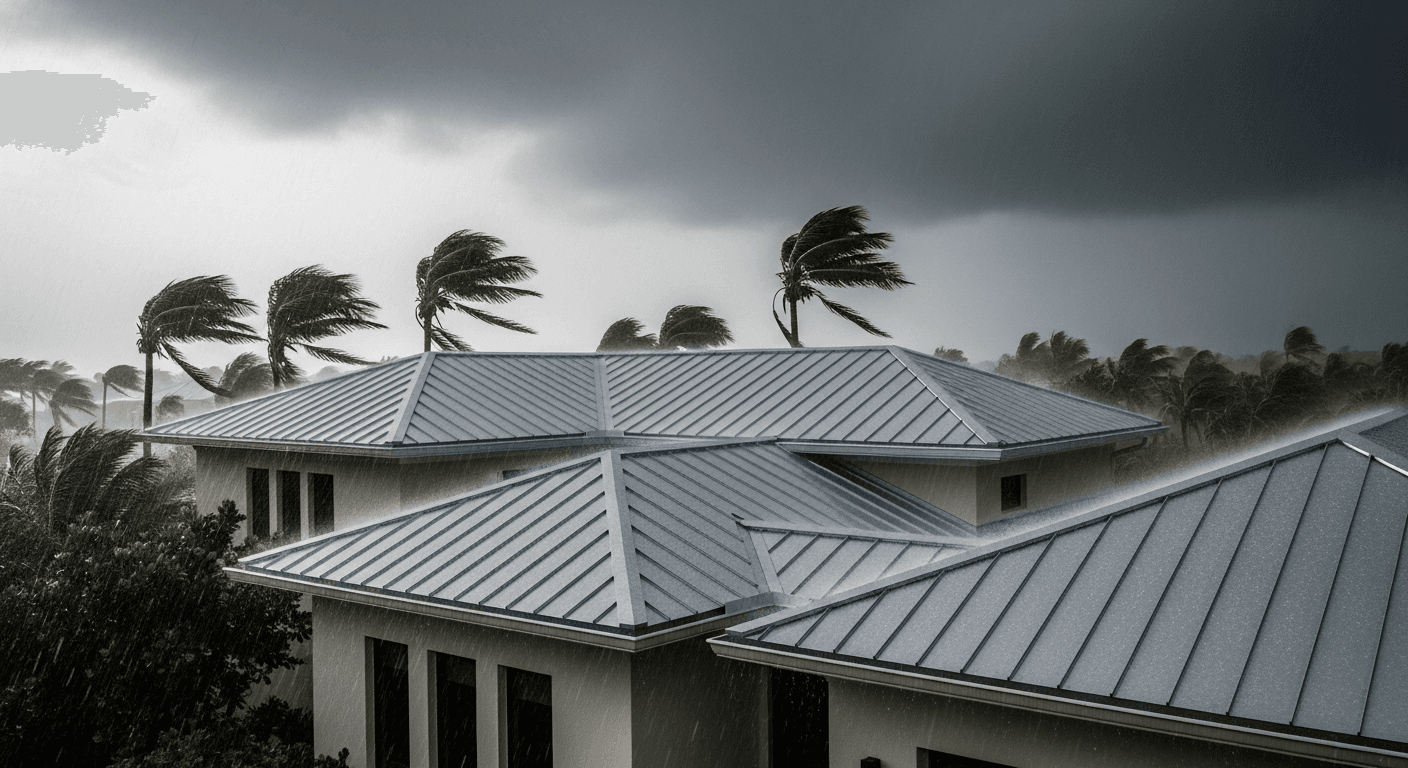
Compare hurricane resistant roofing options for Miami homes including standing seam metal, concrete tile, and impact shingles. Real wind ratings, costs, and installation requirements for the HVHZ.
Read More