HOA and Condo Roofing in Miami: What Boards Need to Know
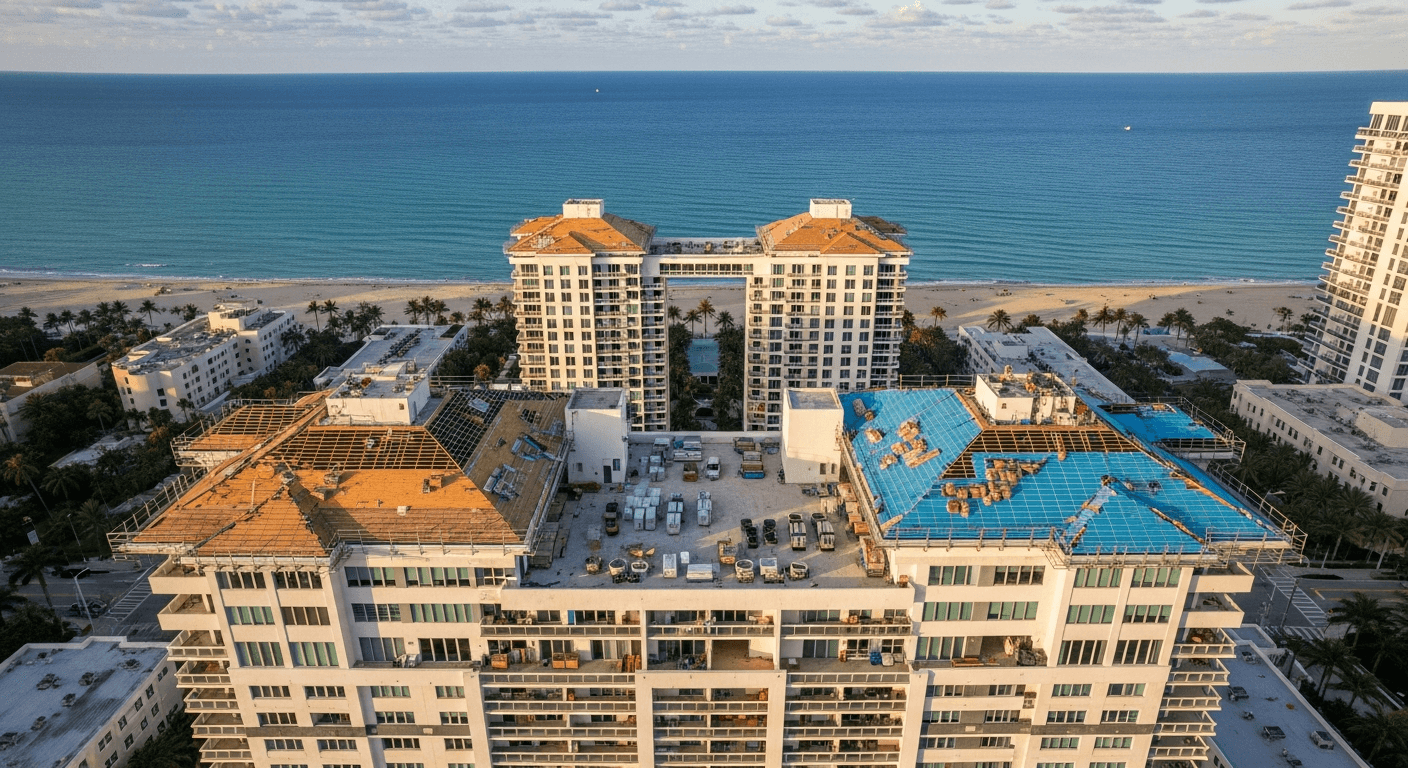
What Miami Condo and HOA Boards Need to Know About Roofing
I've worked with dozens of Miami condo associations and HOA boards on roofing projects over the years, from small 20-unit buildings in Coral Gables to 300+ unit high-rises in Brickell and Sunny Isles. Every HOA roofing project has the same challenges: special assessment hurdles, owner communication headaches, building code compliance, hurricane preparedness requirements, and the political reality that no matter what the board decides, some owners will be unhappy.
The good news: a well-planned HOA roofing project saves owners money, protects building value, and gets finished without drama. The bad news: most HOA boards don't know what questions to ask, which contractors to hire, or how to budget for the work. Many end up paying 30 to 50 percent more than necessary because of poor planning.
This post is the playbook I give every HOA board that asks me about their roof replacement project, including special assessment strategies, contractor selection, the Florida condo safety laws that affect roofing decisions, and how to run owner communication without getting derailed by loud voices.
Extreme Roofing Inc. has partnered with dozens of Miami condo associations and HOAs since 2004, completing everything from minor repairs to complete re-roofing projects on multi-building communities. This comprehensive guide provides board members with the knowledge needed to successfully manage roofing projects.
Understanding HOA and Condo Roofing Responsibilities
Clear understanding of maintenance responsibilities prevents disputes and ensures proper planning.
Condo Association Responsibilities
Under Florida Statute 718 (Condominium Act), associations typically maintain:
Building Roofs : Complete responsibility for structural roofing systems on shared buildings, including:
- Roof decking and structural components
- Waterproofing membranes or shingle systems
- Flashing, gutters, and drainage systems
- Penetrations for common area equipment
- All repairs and replacement costs
Villa/Townhome Roofs : Responsibility varies by declaration:
- Some associations maintain all roofs
- Some require owners to maintain roofs but association approves work
- Some designate roofs as limited common elements (owner responsibility)
- Review your specific declaration for clarity
Leak Investigation : Association must investigate reported leaks to determine source, even if damage occurred in individual units.
HOA Responsibilities
Single-family home HOAs typically have more limited roofing responsibilities:
Common Buildings : Complete responsibility for:
- Clubhouse roofs
- Amenity building roofs
- Guard gate structures
- Pool pavilions
Individual Homes : Usually owner responsibility with HOA oversight for:
- Architectural approval of roofing materials
- Color and style compliance
- Contractor insurance verification
- Timeline enforcement for repairs
- Aesthetic standards maintenance
Review your governing documents for specific maintenance responsibilities, approval requirements, and owner obligations.
Florida Building Code Requirements for Condo Roofing
Miami-Dade County enforces some of the nation's strictest building codes due to hurricane exposure.
High-Velocity Hurricane Zone (HVHZ) Requirements
Miami falls within the HVHZ, requiring:
Wind Resistance Standards :
- Roof systems must withstand 175+ mph wind speeds
- Special fastening and attachment requirements
- Miami-Dade Product Control NOA (Notice of Acceptance) required
- Enhanced edge securement and flashings
Impact Resistance :
- Some associations require impact-resistant shingles or systems
- Insurance discounts often available for impact-rated products
- Important for buildings with proximity exposure
Drainage Requirements :
- Positive drainage within 48 hours of rainfall
- Secondary overflow drains required on flat roofs
- Specific scupper sizing and placement standards
Permit and Inspection Requirements
Building Permits Required For :
- Complete roof replacements (always)
- Repairs exceeding 25% of roof area
- Structural modifications
- Any work affecting building envelope
Permit Process Timeline :
- Application submission: Include engineering if required
- Plan review: 2-4 weeks for standard projects, longer for complex
- Approval and permit issuance
- Installation with required inspections
- Final inspection and certificate of completion
Special Considerations for Associations :
- Some municipalities require association board resolutions for permits
- Condo documents must authorize work before permit application
- Multiple buildings may require separate permits
- Permit fees based on project value (typically $5-$15 per $1,000)
Milestone Inspection Requirements (SB 4-D)
Following the Surfside tragedy, Florida enacted mandatory structural inspections:
Milestone Inspection Timeline :
- Buildings 30+ years old near saltwater (within 3 miles of coast)
- Buildings 40+ years old inland
- Initial inspection required by December 31, 2024 (varies by building age)
- Subsequent inspections every 10 years
Roofing Components in Milestone Inspections :
- Structural roof deck condition
- Water intrusion and deterioration
- Load-bearing capacity assessment
- Immediate safety concerns identification
Planning Implications :
- Schedule roofing projects to address milestone inspection findings
- Budget for potential structural repairs identified during inspections
- Consider roof replacement timing to coordinate with required inspections
Learn more about roof inspections and what they involve.
Planning and Budgeting for Condo Roofing Projects
Proper financial planning prevents special assessment surprises and ensures adequate reserves.
Reserve Study Requirements
Florida law requires reserve funding for roof replacement:
Reserve Study Components :
- Professional assessment of roof condition
- Estimated remaining useful life
- Projected replacement cost
- Annual funding recommendations
Reserve Study Timeline :
- Initial study when building reaches 10 years old
- Updates every 10 years minimum (or 5 years for older buildings)
- Update when significant conditions change
Reserve Funding Approaches :
- Straight-line: Equal annual contributions
- Pooled: Single reserve fund for all components
- Component: Separate funding for each major element
- Hybrid: Combination approach
Cost Estimation for Miami Condo Roofing
Shingle Roof Replacement (Most common for low-rise condos):
- $450-$850 per square (100 SF)
- Architectural shingles: $500-$650/square installed
- Impact-resistant: Add $100-$150/square
- Includes tear-off, deck inspection/repair, underlayment, shingles, flashings
Tile Roof Replacement (Mediterranean and Spanish-style buildings):
- $900-$1,500 per square
- Concrete tile: $900-$1,200/square
- Clay tile: $1,200-$1,500/square
- Includes tile removal, deck work, underlayment, battens, new tile
Flat Roof Systems (Low-rise condos and commercial-style buildings):
- TPO/PVC membrane: $8-$15 per SF
- Modified bitumen: $6-$10 per SF
- Built-up roofing: $7-$12 per SF
Additional Costs :
- Engineering (if required): $2,000-$10,000
- Permit fees: 1-2% of project cost
- Reserve study: $3,000-$8,000
- Unexpected deck repairs: $15-$30 per SF of damaged areas
- Contingency: Budget 10-15% for unforeseen issues
Example Budget : 100-unit condo with 50,000 SF shingle roof
- Roof replacement: $275,000-$425,000
- Engineering/permits: $10,000-$20,000
- Contingency: $30,000-$45,000
- Total project budget: $315,000-$490,000
- Per-unit cost: $3,150-$4,900
Request a detailed estimate for your association's specific buildings.
Special Assessment Considerations
When reserve funds fall short, boards must levy special assessments:
Legal Requirements :
- Review condo documents for assessment procedures
- Some declarations require owner vote for assessments exceeding thresholds
- Provide required advance notice (typically 30-90 days)
- Document necessity and cost basis
Owner Communication Strategy :
- Explain necessity with clear documentation
- Present alternative analysis (repair vs. replace)
- Show competitive bid results
- Offer payment plan options
- Address common concerns proactively
Payment Plans :
- Monthly installments over 12-24 months
- Interest charges (check declaration for authority)
- Acceleration clauses for unit sales
- Lien rights for non-payment
Alternative Financing :
- Association loans from specialized lenders
- Lower per-unit immediate impact
- Interest costs reduce overall financial benefit
- Requires board vote and possibly owner approval
Vendor Selection Process for Association Roofing
Proper contractor selection protects associations from costly mistakes.
Creating a Qualified Vendor List
Pre-Qualification Criteria :
- Florida state contractor license (General or Roofing Contractor)
- Minimum 5 years commercial/multi-family experience
- Insurance: $2M+ general liability, workers' compensation
- Manufacturer certifications (GAF, CertainTeed, etc.)
- Miami-specific experience and references
- Financial stability verification
Request for Qualifications (RFQ) :
- Distribute to 5-8 potential contractors
- Require licensing, insurance, and experience documentation
- Check references from other condo associations
- Verify manufacturer certifications
- Review complaint history with Better Business Bureau
Shortlist Development :
- Select 3-4 most qualified contractors for detailed proposals
- Avoid obvious low-bidders without proven track record
- Consider contractors with association-specific experience
- Verify all maintain Florida offices (avoid "storm chasers")
Request for Proposal (RFP) Development
Essential RFP Components :
1. Project Overview:
- - Number of buildings and total square footage
- - Current roof system type and age
- - Known issues or problem areas
- - Project timeline preferences
2. Scope of Work:
- - Complete tear-off or recover
- - Specific product requirements (if any)
- - Deck repair expectations
- - Flashing and penetration treatment
- - Cleanup and debris removal
- - Unit protection measures
3. Material Specifications:
- - Specific products or "approved equal"
- - Color selections
- - Warranty requirements
- - Miami-Dade NOA compliance
4. Project Requirements:
- - Permit handling (contractor responsibility)
- - Insurance requirements
- - Work hour restrictions
- - Parking and access limitations
- - Owner communication protocols
- - Project timeline expectations
5. Proposal Format:
- - Detailed cost breakdown
- - Material specifications
- - Warranty terms (materials and labor)
- - Project schedule with milestones
- - Payment schedule
- - References from similar projects
Site Visit :
- Schedule contractor walkthroughs
- Answer questions consistently for all bidders
- Allow access to all roof areas
- Provide existing documentation (reserve study, prior repair records)
- Clarify owner notification and access requirements
Evaluating Proposals
Beyond Price Comparison :
While price matters, don't select based on lowest bid alone. Evaluate:
Material Quality :
- Specific product models and manufacturers
- Warranty coverage and transferability
- Miami-Dade NOA approval verification
- Material grade (architectural vs. 3-tab, membrane thickness, etc.)
Scope Completeness :
- Tear-off included or extra?
- Deck repairs: Specified budget or "time and materials"?
- Waste disposal included?
- Unit protection measures detailed?
- Contingency items clearly identified?
Warranty Terms :
- Manufacturer warranty period and type
- Contractor workmanship warranty
- Warranty transferability to unit owners
- Warranty maintenance requirements
Project Management :
- Dedicated project manager assigned?
- Owner communication plan
- Daily cleanup procedures
- Work hour compliance
- Completion timeline with liquidated damages clause
References and Track Record :
- Similar size/complexity projects completed
- Association references (check all provided)
- Problem resolution approach
- Post-project service responsiveness
Red Flags :
- Significantly lower bid than competitors (often indicates missing scope)
- Pressure for immediate decision
- Reluctance to provide detailed references
- Vague "time and materials" pricing for major components
- No local office or references
Board Decision Process
Recommendation Development :
- Management or board committee reviews proposals
- Develops comparison matrix with key factors
- Interviews top 2-3 contractors
- Checks references thoroughly
- Prepares recommendation for full board
Board Vote :
- Present recommendation with supporting documentation
- Allow board questions and discussion
- Document decision rationale in meeting minutes
- Authorize president/manager to execute contract
Owner Notification :
- Announce selected contractor and timeline
- Explain decision factors (not required to disclose pricing details)
- Provide contractor contact information
- Outline project phases and expectations
Project Management and Owner Communication
Successful association roofing projects require careful management and clear communication.
Pre-Project Communication
Initial Announcement (60-90 days before start):
- Project necessity explanation with photos/documentation
- Selected contractor introduction
- Estimated timeline and phases
- Parking and access impact
- Contact information for questions
Detailed Notice (30 days before start):
- Specific start date
- Phase schedule for multi-building projects
- Parking restrictions and alternative arrangements
- Noise and debris expectations
- Balcony/patio preparation requirements
- Move vehicle instructions for specific phases
Owner Preparation Instructions (14 days before start):
- Balcony clearing (potted plants, furniture)
- Interior preparation (expect vibration and noise)
- Pet considerations during work hours
- Vehicle relocation specifics
- Expected disruptions (temporary water shutoff, etc.)
- Emergency contact numbers
During Construction
Regular Updates :
- Weekly email or newsletter updates
- Progress photos
- Completed sections notification
- Schedule adjustments
- Address recurring questions
On-Site Management :
- Daily site visits by board member or manager
- Contractor daily meeting for issues
- Owner complaint log and response tracking
- Photo documentation of progress
- Cleanliness monitoring
Handling Owner Complaints :
- Establish single point of contact (property manager or board member)
- Log all complaints with date, unit, and issue
- Investigate promptly with contractor
- Respond to owner within 24-48 hours
- Escalate unresolved issues to board
Common Issues to Address :
- Noise starting earlier than announced
- Parking space violations
- Debris or nails in common areas
- Workers smoking or inappropriate behavior
- Damage to unit property (satellite dishes, lanai screens)
- Extended timeline due to weather or unforeseen issues
Post-Project Completion
Final Walkthrough :
- Board representative and contractor inspection
- Punch-list development for incomplete items
- Photo documentation of completion
- Review warranty documentation
Owner Notification :
- Project completion announcement
- Warranty information and unit owner rights
- Maintenance expectations going forward
- Final cleanup confirmation
- Thank owners for patience during project
Closeout Documentation :
- Obtain final permit clearance and certificate of completion
- Manufacturer warranty certificates
- As-built drawings showing modifications
- Maintenance recommendations
- Contractor final invoice and lien waivers
- Update association maintenance records
Common Condo Roofing Issues in Miami
Understanding typical problems helps boards plan and budget appropriately.
Hurricane Damage
Post-Storm Assessment :
- Professional inspection within 72 hours of storm
- Photo documentation before temporary repairs
- Insurance notification (association policy and unit owners)
- Emergency repairs to prevent further damage
Insurance Claims :
- Association master policy covers building structure
- Unit owner HO-6 policies cover interior damage
- Determine primary coverage responsibility
- Document all damage thoroughly
- Consider public adjuster for major claims
Temporary Protection :
- Emergency tarping services
- Interior water extraction if needed
- Temporary unit access for emergency repairs
- Cost tracking for insurance reimbursement
Read our hurricane preparation guide for detailed protocols.
Leak Issues and Unit Damage
Determining Responsibility :
- Association investigates all reported leaks
- Source determination (roof failure vs. unit plumbing vs. exterior wall)
- Association repairs roof-related issues
- Association typically covers structural repairs
- Unit owners may be responsible for interior finishes (check documents)
Liability Management :
- Prompt investigation and repair minimizes association liability
- Document response timeline and actions taken
- Association insurance covers liability for negligent maintenance
- Deferred maintenance can create liability exposure
Deck Deterioration
Common in older Miami condos due to:
- Hurricane damage over multiple storms
- Water intrusion from previous roof failures
- Termite damage (especially wood decks)
- Concrete spalling in poured deck systems
Discovery During Tear-Off :
- Not always visible in pre-project inspections
- Creates unexpected costs and timeline extensions
- Requires change order with board approval
- Must be repaired for code compliance and warranty
Mitigation Strategies :
- Include contingency budget (10-15% of project cost)
- Pre-authorize manager for emergency deck repairs up to specified amount
- Consider core sampling in suspect areas before project
- Ensure contract clearly addresses deck repair pricing
Drainage Problems
Ponding Water :
- Extremely common in older flat-roof condos
- Accelerates roof deterioration
- Creates interior leak risks
- May require additional drains or slope modification
Gutter and Downspout Issues :
- Inadequate sizing for Miami rainfall intensity
- Improper slope or clogged sections
- Discharge into landscaping causing erosion
- May require replacement or enhancement during roof project
Scupper Maintenance :
- Regular cleaning required to prevent clogging
- Undersized scuppers common in older buildings
- Code may require upgrades during major roof work
Financial Management and Owner Relations
Transparent financial management builds trust and compliance.
Special Assessment Best Practices
Advance Communication :
- Present reserve study findings before crisis develops
- Educate board and owners on roof lifespan expectations
- Show deterioration with photos over time
- Explain consequences of deferral
Hardship Accommodations :
- Payment plans for owners facing financial difficulty
- Consistent policy application (avoid favoritism appearance)
- Interest charges to offset association borrowing costs
- Lien rights clearly communicated
Documentation :
- Board resolution approving assessment
- Cost documentation (proposals, engineering reports)
- Owner notice meeting legal requirements
- Payment tracking and follow-up procedures
Insurance Considerations
Association Master Policy :
- Verify roof coverage limits adequate for replacement
- Understand deductible structure (per occurrence or percentage)
- Named storm deductibles often higher (2-5% of building value)
- Coverage for code upgrades if current roof doesn't meet updated codes
Claims Process :
- Report significant damage within required timeframe
- Document damage thoroughly before repairs
- Obtain multiple contractor estimates
- Consider public adjuster for complex or disputed claims
- Emergency repairs permitted but document for reimbursement
Premium Management :
- Impact-resistant roofing may reduce premiums
- Wind mitigation inspections document protective features
- Regular maintenance demonstrates risk management
- Shop multiple carriers periodically
Tile Roofing for Miami Condos
Mediterranean and Spanish-style condos often feature tile roofs requiring special consideration.
Tile Roof Advantages
- Longevity: 40-50+ years with proper maintenance
- Hurricane resistance: Excellent wind performance when properly secured
- Aesthetic appeal: Maintains architectural style and property values
- Energy efficiency: Naturally creates air space reducing heat transfer
- Low maintenance: Tile itself highly durable
Tile Roof Challenges
- Weight: Requires adequate structural support
- Cost: 2-3x higher than shingle roofing
- Individual tile breakage: From foot traffic, falling branches, or storm debris
- Underlayment failure: Tile may outlast underlayment requiring costly tear-off
- Specialized repair: Requires experienced tile contractors
Tile Roof Maintenance
- Annual inspections for cracked or broken tiles
- Underlayment inspection where accessible
- Valley and flashing maintenance
- Individual tile replacement as needed
- Avoid foot traffic when possible
Learn more about tile roof repair and maintenance.
Selecting Roofing Materials for Your Association
Material selection impacts cost, longevity, and aesthetics.
Architectural Shingles (Most Popular)
Advantages :
- Cost-effective ($500-$650/square installed)
- Wide color selection
- 25-30 year lifespan
- Good hurricane performance
- Familiar to contractors
Best For :
- Low-rise condos and townhome communities
- Budget-conscious associations
- Traditional architectural styles
- Buildings with adequate slope for shingles
Impact-Resistant Shingles
Advantages :
- Class 4 hail and impact rating
- Insurance premium discounts (10-20% typical)
- Longer lifespan than standard shingles
- Better storm damage resistance
- Similar installation to standard shingles
Cost : Add $100-$150 per square to standard shingle pricing
Best For :
- Areas with significant tree coverage
- Buildings with history of storm damage
- Associations prioritizing insurance savings
- High-wind exposure locations
Metal Roofing
Advantages :
- 40-50+ year lifespan
- Excellent hurricane resistance
- Lightweight (important for older structures)
- Modern aesthetic
- Low maintenance
Disadvantages :
- Higher initial cost ($1,000-$2,000/square)
- Noise during rain (less concern for condos than homes)
- Specialized installation required
- Potential for panel fastener backup
Best For :
- Long-term value priority
- Modern architectural styles
- Buildings requiring lightweight system
- High wind exposure areas
Explore metal roofing benefits for your association.
TPO/PVC Membrane (Flat Roofs)
Advantages :
- Heat-reflective white surface
- Energy efficiency
- 20-25 year lifespan
- Relatively lightweight
- Good hurricane performance
Disadvantages :
- Visible from upper-floor units
- Requires proper drainage design
- Specialized contractors required
Best For :
- Flat or low-slope commercial-style condos
- Energy efficiency priority
- Modern construction
Learn about TPO installation for commercial-style condos.
Working with Extreme Roofing on Association Projects
Extreme Roofing Inc. specializes in multi-family residential and condominium roofing throughout Miami.
Our Association-Specific Services
Project Planning Support :
- Reserve study consultation
- Preliminary assessments
- Budget development
- Board presentation materials
Transparent Bidding :
- Detailed proposals with clear scope
- Alternative options and pricing
- Warranty comparison
- No hidden costs or surprise charges
Association Communication :
- Owner notification template assistance
- On-site project manager for daily communication
- Regular progress reporting
- Direct owner question handling
Project Management :
- Dedicated project supervisor for all phases
- Daily site cleanup
- Minimal disruption focus
- Respect for occupied properties
- Schedule adherence with weather contingencies
Post-Project Support :
- Comprehensive warranty coverage
- Responsive service for callbacks
- Maintenance program options
- Long-term relationship focus
Our Qualifications
- 20+ years serving Miami-Dade and Broward associations
- GAF Master Elite certification (top 3% of contractors nationwide)
- $5M general liability insurance coverage
- Manufacturer certifications from major brands
- Local presence with Miami office and crews
- 5,000+ projects completed since 2004
Conclusion: Successful Association Roofing Projects
Condo and HOA roofing projects in Miami require careful planning, qualified contractors, transparent communication, and proper financial management. Boards that approach roofing proactively. with adequate reserves, early planning, and realistic owner expectations. complete projects successfully with minimal disruption and owner satisfaction.
Key Takeaways for Miami Association Boards :
- Start planning early with regular reserve studies and inspections
- Budget realistically with 10-15% contingency for unforeseen issues
- Select contractors based on qualifications, not just low price
- Communicate proactively and frequently with owners
- Document everything for transparency and liability protection
- Understand your specific governing documents and legal requirements
- Consider long-term value alongside upfront costs
- Maintain the roof after installation to maximize lifespan
Ready to discuss your association's roofing needs? Extreme Roofing provides free assessments for condo associations and HOAs throughout Miami. We'll inspect your roofs, provide detailed condition reports, discuss options and pricing, and answer your board's questions without pressure.
Contact us at 305-225-1535 or request your free association assessment. We understand the unique challenges of association projects and work collaboratively with boards to achieve successful outcomes.
Frequently Asked Questions
How should condo associations budget for roof replacement in Miami?
Florida law requires condo associations to conduct reserve studies and fund roof replacement reserves. For a typical 50,000 SF shingle roof costing $300,000-$400,000 to replace, associations should contribute $15,000-$20,000 annually to reserves. Include 10-15% contingency for unexpected deck repairs. Many associations fund through monthly assessments over the roof's lifespan (20-30 years) to avoid large special assessments. Work with reserve study professionals to develop appropriate funding schedules based on your specific buildings.
What's the best roofing material for Miami condo buildings?
Best material depends on building style, budget, and priorities. Architectural shingles ($500-$650/square) work well for most low-rise condos, offering good value and 25-30 year lifespan. Impact-resistant shingles add $100-$150/square but provide insurance discounts. Tile roofing ($900-$1,500/square) suits Mediterranean styles with 40-50+ year lifespan. Flat-roof condos typically use TPO membrane ($8-$15/SF) for energy efficiency. Consider long-term value, not just upfront cost. premium materials often provide better lifecycle economics.
How do HOA and condo boards select qualified roofing contractors in Miami?
Pre-qualify 5-8 contractors based on Florida licensing, $2M+ insurance, manufacturer certifications, and Miami condo experience. Request detailed proposals from 3-4 finalists including scope, materials, warranties, and timeline. Check references from other associations thoroughly. Evaluate beyond price. review material quality, warranty terms, and project management approach. Verify Miami-Dade NOA compliance for all materials. Avoid 'storm chaser' contractors without local offices. Extreme Roofing's GAF Master Elite certification and 20+ years serving Miami associations demonstrates the qualifications boards should seek.
Do condo roofing projects in Miami require owner approval or just board vote?
Most condo associations can approve roofing projects by board vote alone since roof maintenance is a board responsibility under Florida Statute 718. However, review your specific declaration. some require owner votes for special assessments exceeding certain thresholds or for projects costing more than specified amounts. Boards should communicate plans to owners even when votes aren't required. Special assessments always require proper notice per your documents (typically 30-90 days). Consult your association attorney if documentation is unclear about approval requirements.
How long does a typical condo roofing project take in Miami?
Timeline depends on size and complexity. Small condos (8-12 units) typically complete in 1-2 weeks, medium buildings (20-40 units) take 2-4 weeks, and large communities (100+ units) may require 6-12 weeks for phased completion. Add 2-4 weeks for permitting before work begins. Miami's rainy season (June-October) often extends timelines due to weather delays. Plan major projects during dry season (November-April) when possible. Multi-building communities are completed in phases to minimize disruption, with each building taking 1-2 weeks depending on size.
Need Roofing Help?
Whether you need an inspection, repair, or full replacement, our team of licensed roofing professionals is ready to help. Serving South Florida since 2004.
Related Articles
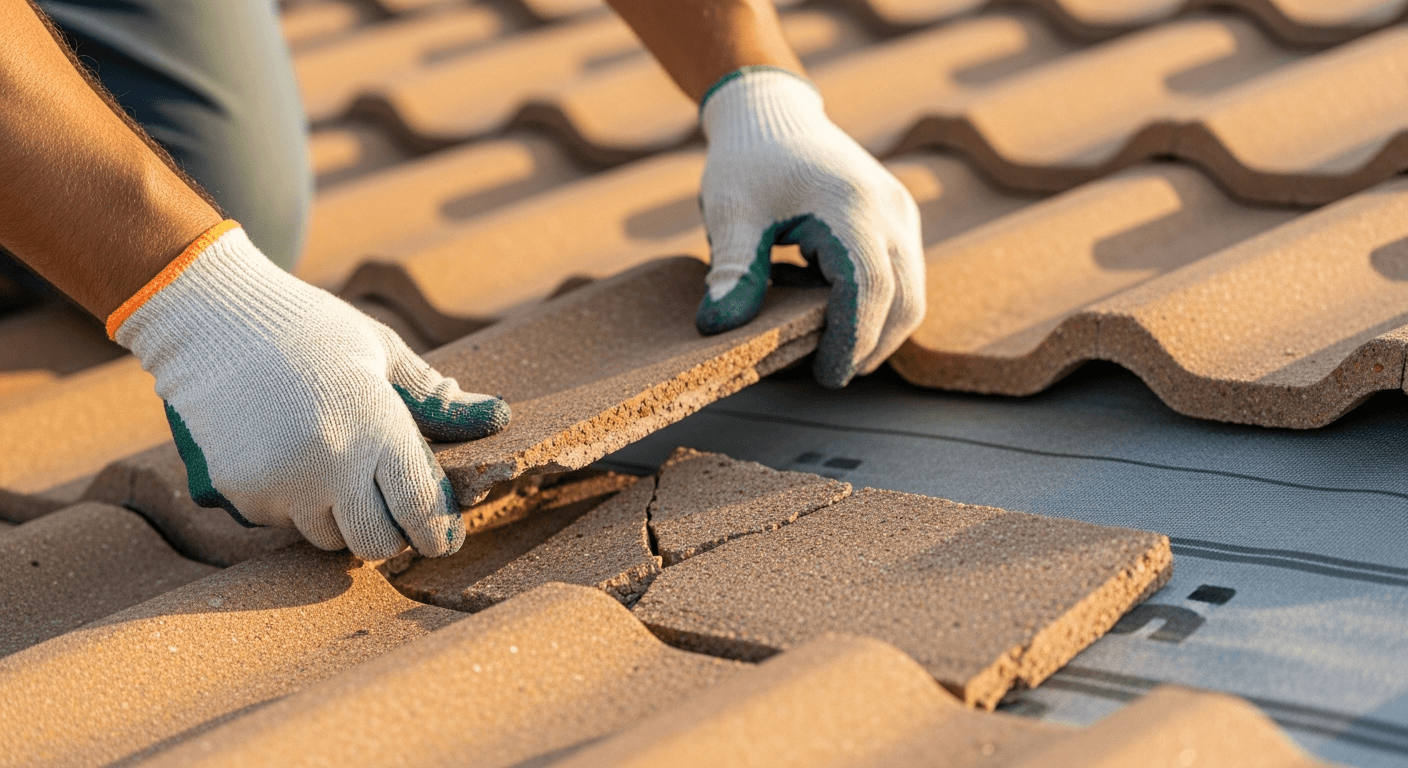
Complete guide to tile roof repair in Miami covering common damage types, repair costs, when to repair vs. replace, and how to find qualified contractors for Spanish, barrel, and flat concrete tile roofs.
Read More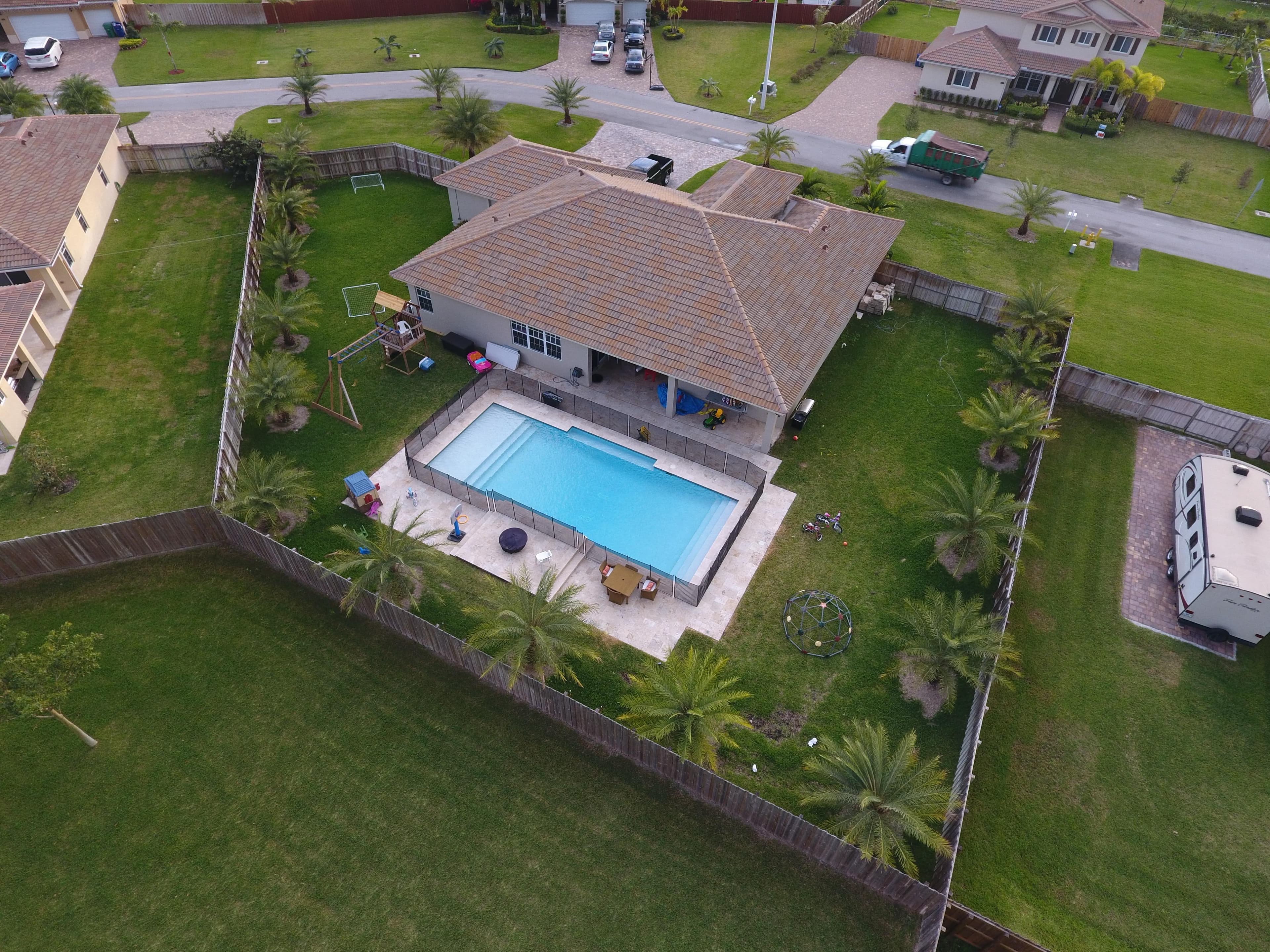
Florida insurance rates are dropping for the first time since 2015. Learn how combining market rate decreases with strategic roof upgrades can save Miami homeowners $1,400-$2,600 per year on premiums.
Read More