
Tile vs. Metal Roof in Miami: Cost, Durability & Style Compared
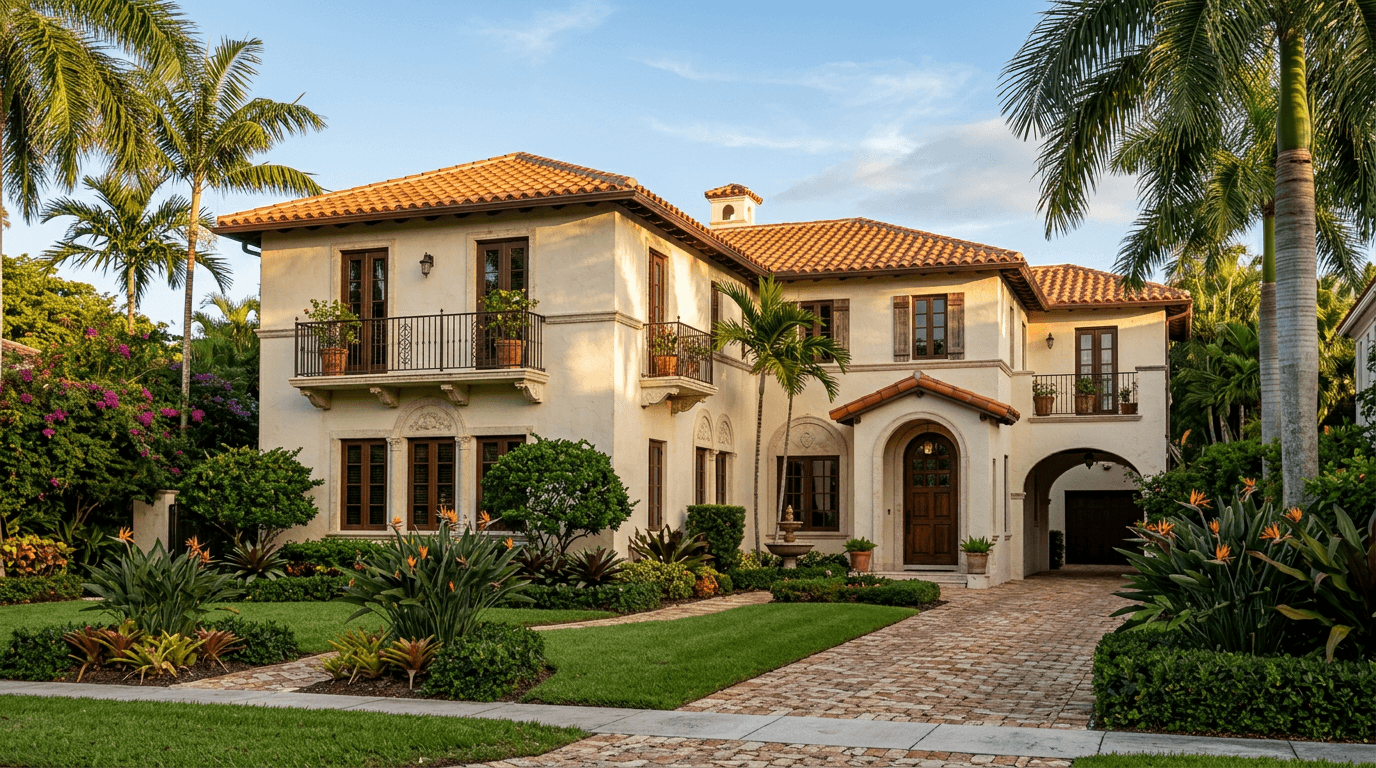
Choosing Between Tile and Metal Roofing in Miami's Unique Climate
Miami homeowners face a critical roofing decision that directly impacts their property value, insurance premiums, and hurricane protection. Tile vs metal roof Miami comparisons must account for factors that don't apply in most of the country: sustained 150+ mph wind exposure, salt air corrosion, extreme UV intensity, and Miami-Dade County's stringent building codes.
Both concrete tile and standing seam metal roofing systems meet Florida Building Code 2023 requirements when properly installed, but they deliver vastly different performance profiles, aesthetic outcomes, and total cost of ownership over their lifespans. According to Extreme Roofing's 22-year track record across 5,000+ projects in South Florida, the right choice depends on your home's architectural style, structural capacity, budget timeline, and long-term ownership plans.
This guide provides objective data on installation costs, wind uplift ratings, energy efficiency metrics, and insurance considerations to help you make an informed decision. For a free roof evaluation and material recommendation specific to your property, call our licensed team at 305-225-1535.
Material Cost Comparison: Initial Investment Analysis
The upfront cost difference between tile roofs and metal roofs in Miami ranges from 15-40% depending on specific material selections and installation complexity.
Concrete Tile Roofing Costs in 2025
Concrete tile installations in Miami-Dade County typically cost $9-$14 per square foot installed, with premium profiles reaching $16-$18 per square foot. For a standard 2,000 square foot residential roof:
- Standard flat profile concrete tile: $18,000-$28,000
- High-profile barrel tile: $22,000-$32,000
- Premium textured or colored tile: $26,000-$36,000
These figures include Miami-Dade County NOA-approved underlayment (peel-and-stick required in High Velocity Hurricane Zone), code-compliant fastening per TAS 100 testing protocols, and hip/ridge accessories. Clay tile alternatives cost 30-50% more than concrete equivalents.
Metal Roofing Costs in 2025
Standing seam metal roofing in Miami ranges from $12-$18 per square foot installed for Galvalume or aluminum, with premium coatings adding $2-$4 per square foot. For the same 2,000 square foot roof:
- 26-gauge Galvalume standing seam: $24,000-$32,000
- 24-gauge with Kynar 500 coating: $28,000-$36,000
- Aluminum standing seam (coastal): $30,000-$38,000
Metal installations include concealed fastener clip systems, thermal expansion accommodations, and HVHZ-approved panel profiles. Exposed fastener metal (R-panel or corrugated) costs 40% less but lacks the wind resistance required for optimal hurricane performance in Miami and surrounding areas.
One of our clients, Ana Gutierrez from Homestead, reported that her standing seam metal roof installation came in at $31,500 for a 2,100 square foot home and withstood the last tropical storm without a single issue—demonstrating the long-term value of premium materials.
Hurricane Performance: Wind Uplift and Impact Resistance
Miami's location in the High Velocity Hurricane Zone (HVHZ) mandates roofing systems tested to TAS 100 (A-C) protocols, with minimum design pressures of -45 psf for roof field zones and -90 psf for perimeter/corner zones.
Tile Roof Hurricane Ratings
Concrete and clay tile achieve their wind resistance through mass and properly engineered attachment. Miami-Dade County Product Control approved tile systems typically provide:
- Wind uplift resistance: 150-180 mph when installed with foam adhesive and mechanical fasteners per manufacturer specifications
- Impact resistance: Class 4 (highest rating) for most concrete tiles—withstands 2-inch hailstone impacts
- Weight advantage: 8-12 pounds per square foot creates inherent resistance to uplift forces
- Fastening requirement: Two fasteners per tile minimum, with foam adhesive at perimeter zones
The Florida Building Code 2023 Section 1504.3.2 requires tile roofs to use a combination of mechanical fasteners and adhesive in HVHZ counties. Properly installed tile roofing has demonstrated survival in Category 5 hurricanes when adjacent structures experienced total roof failure.
Metal Roof Hurricane Ratings
Standing seam metal roofing achieves superior wind performance through structural geometry and concealed clip systems that eliminate exposed fastener failure points:
- Wind uplift resistance: 170-200+ mph with 24" panel spacing and HVHZ-approved clips
- Impact resistance: Class 3-4 depending on gauge and metal type
- Weight advantage: 1-2 pounds per square foot reduces structural load but requires enhanced attachment
- Fastening system: Concealed clips on every rib with thermal expansion allowances
According to the Metal Construction Association's 2024 hurricane performance data, standing seam metal roofs with concealed fastener systems show 93% survival rates in 140+ mph sustained wind events, compared to 67% for exposed fastener metal and 78% for standard tile installations without foam adhesive.
In our experience replacing hurricane-damaged roofs across Coral Gables and Miami Beach, metal roofs with properly engineered clip spacing consistently outperform tile installations that used outdated fastening methods (single fastener per tile, inadequate adhesive coverage).
Lifespan and Long-Term Durability Comparison
The total cost of ownership calculation must factor in expected service life, maintenance requirements, and replacement timelines.
Tile Roof Longevity in South Florida
Concrete tile roofs in Miami's climate typically deliver:
- Expected lifespan: 40-50 years for concrete, 75-100+ years for clay tile
- Underlayment replacement: Required every 20-25 years (critical maintenance factor)
- Individual tile replacement: 1-3% annual breakage from maintenance traffic, falling branches
- Color retention: Premium through-body colored tiles maintain appearance; surface-coated tiles fade 20-30% over 15-20 years in Florida's UV intensity
The National Tile Roofing Manufacturers Association reports that concrete tile color degradation accelerates in coastal environments, with salt air causing efflorescence (white mineral deposits) on uncoated tiles within 5-7 years of installation.
Metal Roof Longevity in South Florida
Standing seam metal roofing in coastal Miami environments delivers:
- Expected lifespan: 40-60 years for Galvalume, 50-70+ years for aluminum in salt air
- Coating durability: Kynar 500/PVDF coatings maintain 90%+ color retention over 30 years
- Corrosion resistance: Aluminum outperforms steel in salt air; Galvalume requires coastal-grade coating
- Panel replacement: Individual panels replaceable without full roof removal
Based on 22 years of field data from our installations in Aventura and coastal Hollywood, aluminum standing seam roofs show minimal degradation after 15+ years of salt air exposure, while standard Galvalume in direct ocean spray zones (within 1 mile of coastline) begins showing minor edge corrosion after 12-15 years without premium coatings.
Energy Efficiency and Cool Roof Performance
Miami's cooling-dominated climate makes roof solar reflectance a significant factor in total cost of ownership through energy savings.
Tile Roof Energy Performance
Concrete and clay tile provide inherent thermal performance advantages:
- Solar Reflectance Index (SRI): 25-40 for standard colors, 70-95 for white/light colors
- Thermal mass benefit: 8-12 lb/sq ft mass creates 2-4 hour thermal lag, reducing peak cooling loads
- Ventilation: Tile profile creates 1-2 inch air gap above underlayment, reducing conductive heat transfer 15-25%
- Cool roof ratings: Light-colored tile qualifies for ENERGY STAR cool roof requirements (SRI ≥29)
University of Florida's Building Research Center measured attic temperature reductions of 15-20°F in tile roofs versus dark shingle roofs on identical test structures in Gainesville's climate.
Metal Roof Energy Performance
Metal roofing with reflective coatings delivers superior solar reflectance:
- Solar Reflectance Index (SRI): 55-82 for Kynar 500 white/light coatings
- Thermal emittance: 0.85-0.90 for premium coatings (re-radiates absorbed heat)
- Cooling cost reduction: 15-25% measured reduction in Miami climate zone
- Cool roof certification: Most factory-finished metal qualifies for cool roof tax credits and insurance discounts
DOE's Cool Roof Calculator estimates that a white metal roof on a 2,000 sq ft Miami home reduces annual cooling costs by $320-$480 compared to medium-colored tile, and $580-$740 compared to dark asphalt shingle.
For commercial applications, TPO and other single-ply systems offer additional energy benefits—learn more about TPO roofing for commercial properties.
Installation Timeline and Process Differences
Project duration impacts both direct costs (contractor scheduling, temporary housing if needed) and indirect costs (business interruption for commercial properties).
Tile Roof Installation Timeline
A typical 2,000-2,500 square foot residential roofing tile installation in Miami requires:
- Tearoff and deck preparation: 1-2 days
- Underlayment and battens: 1-2 days
- Tile installation: 3-5 days
- Flashing and accessory work: 1 day
- Total project duration: 6-10 working days
Concrete tile installation is labor-intensive, requiring skilled crews familiar with Miami-Dade County foam adhesive application requirements and proper fastener spacing per TAS 100-95 protocols. Weather delays extend timelines significantly—tile cannot be installed during rain, and adhesive requires temperatures above 40°F.
Metal Roof Installation Timeline
Comparable standing seam metal installations typically require:
- Tearoff and deck preparation: 1-2 days
- Underlayment and ice/water shield: 1 day
- Panel installation: 2-4 days
- Trim and flashing: 1 day
- Total project duration: 5-8 working days
Metal roofing panels arrive pre-finished and cut to length, reducing on-site labor. The concealed fastener system allows faster installation than mechanical fastening every tile. Rain delays are minimal—metal can be installed in light rain conditions, though safety protocols prevent work during thunderstorms.
Maintenance Requirements and Repair Costs
Ongoing maintenance costs significantly impact 30-year total cost of ownership calculations.
Tile Roof Maintenance Costs
Miami concrete tile roofs require:
- Annual inspection: $150-$300 professionally, focusing on underlayment exposure, broken tiles, valley integrity
- Pressure washing: $0.30-$0.60/sq ft every 3-5 years to remove algae, mold, efflorescence
- Individual tile replacement: $8-$15 per tile installed for breakage from foot traffic, falling debris
- Underlayment replacement: $6,000-$12,000 at 20-25 year mark (requires complete tile removal/reinstallation)
The underlayment replacement requirement is critical—many tile roof failures occur when 30-40 year old underlayment deteriorates while tiles remain intact. This necessitates a major expense midway through the roof's service life.
Metal Roof Maintenance Costs
Standing seam metal requires significantly less maintenance:
- Annual inspection: $150-$250 focusing on fastener integrity, sealant condition, panel alignment
- Gutter cleaning: Same as any roof; metal sheds debris more effectively than tile
- Coating touch-up: $500-$1,500 every 15-20 years for scratches/abrasions in coastal zones
- Panel replacement: $12-$18 per linear foot for damaged individual panels (rare)
Metal roofing eliminates the underlayment replacement cycle because the panels themselves are the weatherproofing layer. This represents a $6,000-$12,000 avoided cost over a 50-year ownership period.
Our roof maintenance programs in Miami-Dade County show that metal roof customers average $120-$180 annually in maintenance costs versus $280-$420 for tile roof customers when normalizing for roof size.
Insurance Premium Impact and Wind Mitigation Credits
Florida's insurance crisis makes roof material selection a financial decision beyond construction costs.
Tile Roof Insurance Considerations
Concrete tile roofing qualifies for substantial wind mitigation credits:
- FBC compliance credit: 5-8% premium reduction for code-compliant installation
- Impact resistance credit: Additional 10-19% for Class 4 rated tile
- Shape credit: Hip roof with tile receives higher credits than gable
- Total potential savings: 25-45% on wind portion of premium
A Citizens Property Insurance policy in Miami-Dade County with $350,000 dwelling coverage might see annual premiums of $4,200-$5,800 for tile roofs versus $6,500-$8,200 for standard shingle—an annual savings of $2,300-$2,400.
Metal Roof Insurance Considerations
Standing seam metal roofing qualifies for identical or superior credits:
- FBC compliance credit: 5-8% for Miami-Dade NOA approval
- Impact resistance credit: 10-19% for Class 3-4 rated metal (depends on gauge)
- Non-combustible credit: Additional 5-10% in wildfire interface zones (less relevant in Miami)
- Total potential savings: 25-45% similar to tile
Metal and tile receive comparable insurance treatment in South Florida when both meet impact resistance and wind uplift requirements. The differentiation occurs in claims history—according to industry data, metal roofs show 40% fewer leak-related claims over 20-year periods, which may influence underwriting decisions as actuarial models evolve.
For details on maximizing insurance savings, see our guide on wind mitigation and re-roofing.
Architectural Style and Aesthetic Considerations
Miami's diverse architectural landscape—from Mediterranean Revival to Contemporary—influences material appropriateness.
Tile Roof Aesthetic Applications
Concrete and clay tile excel in:
- Mediterranean/Spanish Colonial: Barrel tile (S-tile) profiles authentic to historical styles
- Mission/Monterey: Two-piece mission tile creates shadow lines
- Tuscan/Italian: Flat profile tile in terra cotta tones
- Coastal Traditional: Slate-look concrete tile profiles
Historic districts in Coral Gables and Boca Raton often require tile roofing to maintain neighborhood character, with architectural review boards mandating specific profiles and colors. Homeowner association covenants frequently specify tile for Mediterranean-style developments.
Metal Roof Aesthetic Applications
Standing seam metal suits:
- Modern/Contemporary: Clean vertical lines complement minimalist architecture
- Coastal Modern: Aluminum standing seam in neutral tones
- Tropical Modern: Dark metal contrasts white stucco, glass
- Industrial Loft conversions: Exposed fastener for authentic warehouse aesthetic
Metal roofing has gained acceptance in upscale Miami neighborhoods as architectural styles evolve beyond traditional Mediterranean. Developments in Doral and Aventura increasingly feature contemporary designs where metal roofing enhances rather than detracts from curb appeal.
For luxury applications combining style and performance, see our luxury roofing guide specific to high-end South Florida properties.
Structural Loading and Building Code Requirements
Miami-Dade County's stringent codes and older home retrofitting create important considerations.
Tile Roof Structural Requirements
Concrete tile's 8-12 lb/sq ft dead load requires:
- Rafter spacing: 16" on center minimum, 2x6 rafters minimum for 12 lb/sq ft loads
- Truss engineering: Existing trusses designed for 5 lb/sq ft shingle may require reinforcement
- Structural analysis: Required when converting from shingle to tile per FBC Section 1511.3.1
- Permit costs: Structural engineer review adds $800-$1,500 to permit fees
Many 1960s-1980s Miami homes built with asphalt shingle roof designs require $3,000-$8,000 in rafter/truss reinforcement before tile installation—a hidden cost that surprises homeowners. Our pre-installation structural assessments identify these requirements before contract signing.
Metal Roof Structural Requirements
Metal roofing's minimal weight (1-2 lb/sq ft) creates advantages:
- Rafter spacing: No modifications required when converting from any roof type
- Truss capacity: Existing residential trusses always sufficient
- Seismic benefit: Reduced mass improves performance in earthquake zones (less relevant Florida)
- Structural review: Typically waived for metal-over-shingle conversions
The weight advantage makes metal roofing ideal for older Miami homes, mobile/manufactured structures, and buildings where structural capacity is uncertain. Metal allows re-roofing without the engineering analysis and reinforcement costs that tile often requires.
Environmental Impact and Sustainability Factors
Sustainability-conscious Miami homeowners increasingly evaluate roofing materials through an environmental lens.
Tile Roof Environmental Profile
- Recyclability: 100% recyclable—crushed concrete tile becomes aggregate for road base, new concrete
- Embodied carbon: 0.22-0.28 kg CO2/sq ft for concrete production, higher than metal
- Longevity benefit: 50-100 year lifespan reduces replacement cycles
- Disposal: 8-12 tons of material for typical residential roof, requires commercial hauling
Metal Roof Environmental Profile
- Recyclability: 95-100% recycled at end of life—aluminum and steel have established recycling streams
- Recycled content: Typical metal roofing contains 25-95% post-consumer recycled metal
- Embodied carbon: 0.15-0.20 kg CO2/sq ft, lower than concrete tile
- Disposal: 1-2 tons total material, easier removal/transport
LEED and Florida Green Building Coalition standards award points for both materials when meeting cool roof requirements and containing recycled content. Metal edges ahead on embodied energy and end-of-life disposal logistics.
Making the Right Choice for Your Miami Property
The tile vs metal roof decision matrix weighs multiple factors:
Choose concrete tile roofing if:
- Your home features Mediterranean, Spanish, or traditional architectural style where tile is authentic
- HOA covenants or historic district requirements mandate tile
- Your existing structure can support 8-12 lb/sq ft dead load without reinforcement
- You prioritize Class 4 impact resistance and thermal mass benefits
- You plan 30+ year ownership to amortize higher installation costs
Choose standing seam metal roofing if:
- Your home has contemporary, modern, or coastal architecture where clean lines suit the style
- You want maximum wind uplift resistance (170-200+ mph ratings)
- Older structure has questionable capacity for heavy tile loads
- You value lowest maintenance requirements and no mid-life underlayment replacement
- Energy efficiency and cool roof performance are priorities
- You prefer lighter environmental footprint and recyclability
Both materials deliver 40-70 year service lives, meet Florida's demanding hurricane codes, and qualify for comparable insurance discounts when properly installed. The "better" choice is the one that aligns with your specific home characteristics, aesthetic preferences, budget, and long-term plans.
Extreme Roofing Inc. has installed both material types across 5,000+ projects since 2004, earning our GAF Certified Contractor status and CCC#1326021 license through consistent quality execution. We provide objective material recommendations based on your home's needs—not sales commissions.
Schedule Your Free Roof Evaluation and Material Comparison
Deciding between tile and metal roofing shouldn't feel overwhelming. Our licensed estimators conduct on-site structural assessments, provide detailed proposals for both materials, and explain the specific costs and benefits for your Miami property.
Contact our family-owned team for a free consultation: 305-225-1535. We'll evaluate your current roof condition, measure precise dimensions, assess structural capacity, review HOA requirements if applicable, and provide written estimates for both tile and metal options.
As a GAF Certified Contractor serving Miami-Dade, Broward, and Palm Beach counties since 2004, Extreme Roofing delivers manufacturer-backed warranties, code-compliant installations, and the expertise to navigate Miami-Dade County's rigorous permitting process. Licensed and insured (CCC#1326021), we stand behind every installation with comprehensive workmanship guarantees.
Explore our tile roof services and metal roof services to see completed projects, or learn about our re-roofing process for material conversion projects. Miami homeowners trust our 22-year track record for honest recommendations and exceptional execution—discover why our customers rate us as the top choice for quality roofing solutions.
Frequently Asked Questions
How much does a tile roof cost compared to metal in Miami in 2025?
Concrete tile roofing in Miami costs $9-$14 per square foot installed ($18,000-$28,000 for a 2,000 sq ft roof), while standing seam metal roofing costs $12-$18 per square foot ($24,000-$36,000 for the same roof). Premium tile profiles and metal coatings can increase costs by $4,000-$8,000. The total installed cost depends on roof complexity, material grade, and whether structural reinforcement is required for tile's heavier weight (8-12 lb/sq ft vs 1-2 lb/sq ft for metal).
Which roof performs better in Miami hurricanes: tile or metal?
Standing seam metal roofs with concealed fastener systems achieve 170-200+ mph wind ratings and show 93% survival rates in 140+ mph sustained winds, compared to 67% for exposed fastener systems and 78% for standard tile installations. However, properly installed concrete tile with foam adhesive and dual fasteners achieves 150-180 mph ratings and Class 4 impact resistance (highest rating). Both materials meet Miami-Dade County's High Velocity Hurricane Zone requirements when installed per TAS 100 protocols, but metal's lighter weight (1-2 lb/sq ft) and structural geometry provide an edge in extreme wind events.
Do tile and metal roofs qualify for the same insurance discounts in Florida?
Yes, both tile and metal roofs qualify for comparable wind mitigation credits when they meet Florida Building Code requirements and impact resistance standards. Homeowners can receive 25-45% reductions on the wind portion of their insurance premium through FBC compliance credits (5-8%), impact resistance credits (10-19% for Class 3-4 ratings), and roof shape credits. On a typical Miami-Dade County policy with $350,000 dwelling coverage, this translates to annual savings of $2,300-$2,400 compared to standard shingle roofing. Metal roofs may provide additional long-term value through 40% fewer leak-related claims over 20-year periods.
How long do tile and metal roofs last in South Florida's climate?
Concrete tile roofs last 40-50 years in Miami's climate, while clay tile can last 75-100+ years. However, the underlayment beneath tile requires replacement every 20-25 years at a cost of $6,000-$12,000. Standing seam metal roofing lasts 40-60 years for Galvalume and 50-70+ years for aluminum in coastal salt air environments, with Kynar 500/PVDF coatings maintaining 90%+ color retention over 30 years. Metal roofing eliminates the mid-life underlayment replacement expense because the panels themselves are the weatherproofing layer, representing significant long-term cost savings.
Can my older Miami home support the weight of a tile roof?
Many Miami homes built in the 1960s-1980s with original asphalt shingle roof designs require structural reinforcement before tile installation, costing $3,000-$8,000. Concrete tile weighs 8-12 pounds per square foot compared to 2-3 lb/sq ft for shingle, requiring 2x6 rafters at 16" on center spacing minimum. Florida Building Code Section 1511.3.1 requires structural analysis when converting from lighter to heavier roofing materials. A pre-installation engineering assessment ($800-$1,500) determines if your existing trusses/rafters can support tile loads. Metal roofing at 1-2 lb/sq ft never requires structural modifications and is ideal for older homes with uncertain structural capacity.
Which roof is more energy efficient in Miami: tile or metal?
Metal roofing with reflective Kynar 500 coatings achieves Solar Reflectance Index (SRI) values of 55-82 and reduces cooling costs by 15-25% in Miami's climate. White metal roofing saves an estimated $320-$480 annually compared to medium-colored tile and $580-$740 compared to dark shingle on a 2,000 sq ft home according to DOE calculations. Light-colored concrete tile achieves SRI values of 70-95 and provides thermal mass benefits (2-4 hour thermal lag) that reduce peak cooling loads by 15-25%. Both materials qualify for ENERGY STAR cool roof requirements and potential tax credits, but metal's superior solar reflectance (0.65-0.70) and thermal emittance (0.85-0.90) deliver measurably lower attic temperatures.
What maintenance does tile vs metal roofing require in Miami?
Tile roofs in Miami require annual inspections ($150-$300), pressure washing every 3-5 years ($0.30-$0.60/sq ft) to remove algae and mold, individual tile replacement for breakage ($8-$15 per tile), and complete underlayment replacement at 20-25 years ($6,000-$12,000). This averages $280-$420 annually in maintenance costs. Metal roofs require only annual inspections ($150-$250), standard gutter cleaning, and occasional coating touch-up in coastal zones ($500-$1,500 every 15-20 years), averaging $120-$180 annually. Metal's concealed fastener system and integrated weatherproofing eliminate the tile roof's most expensive maintenance requirement: mid-life underlayment replacement.
Are there HOA or architectural restrictions on roof materials in Miami?
Many Miami-area HOAs and historic districts mandate specific roofing materials to maintain neighborhood aesthetics. Mediterranean, Spanish Colonial, and traditional developments in Coral Gables, Boca Raton, and planned communities frequently require concrete or clay tile in specific profiles (barrel tile, mission tile) and color palettes (terra cotta, earth tones). Contemporary developments in Doral, Aventura, and Miami Beach increasingly allow standing seam metal roofing as modern architectural styles gain acceptance. Before selecting materials, review your HOA covenants (typically Article VI or VII) and submit architectural review applications showing proposed materials, colors, and manufacturer specifications. Extreme Roofing assists with HOA approval processes and can recommend compliant alternatives if your first choice faces restrictions.
Need Roofing Help?
Whether you need an inspection, repair, or full replacement, our team of licensed roofing professionals is ready to help. Serving South Florida since 2004.
Related Articles
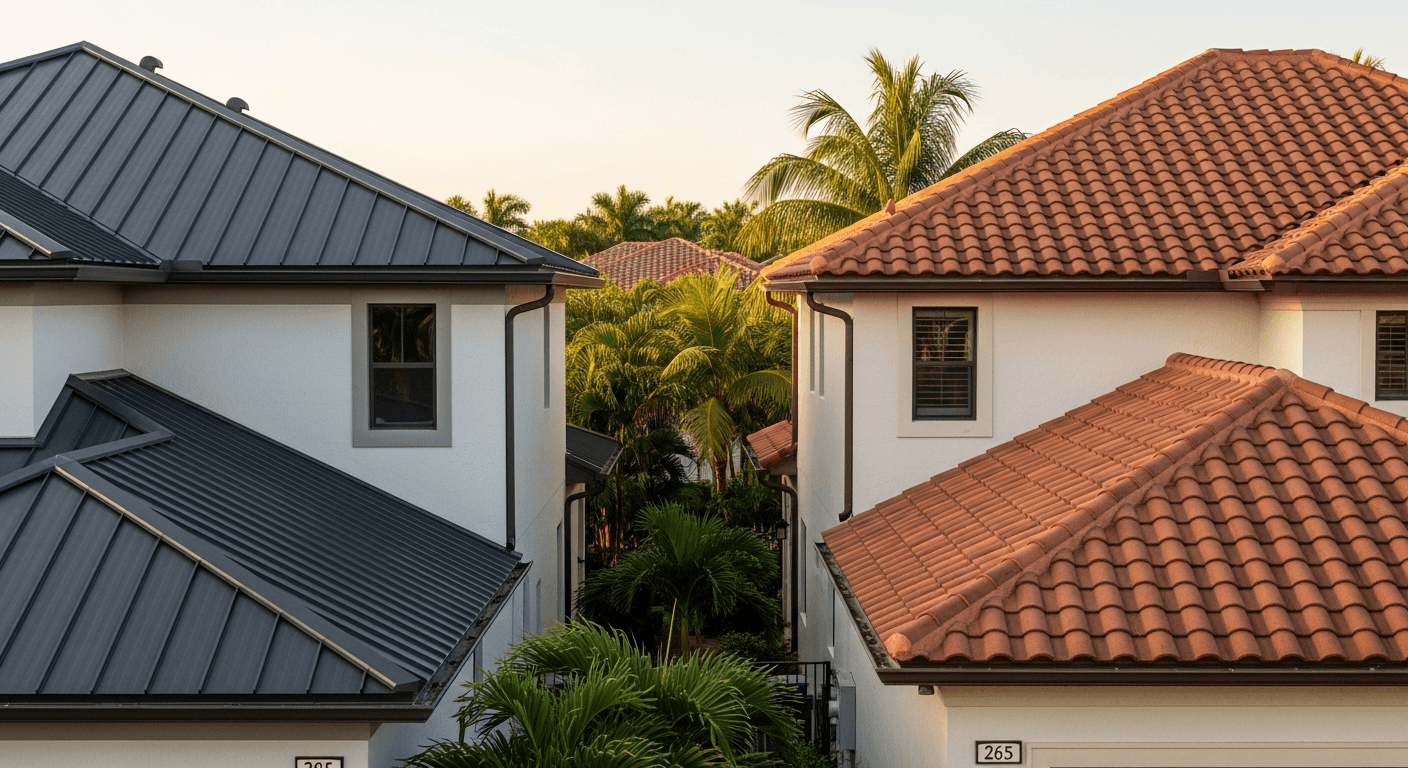
Head-to-head comparison of metal roofing vs tile roofing in South Florida for 2026. Costs, lifespan, hurricane resistance, energy efficiency, insurance discounts, and real cost examples by home size.
Read More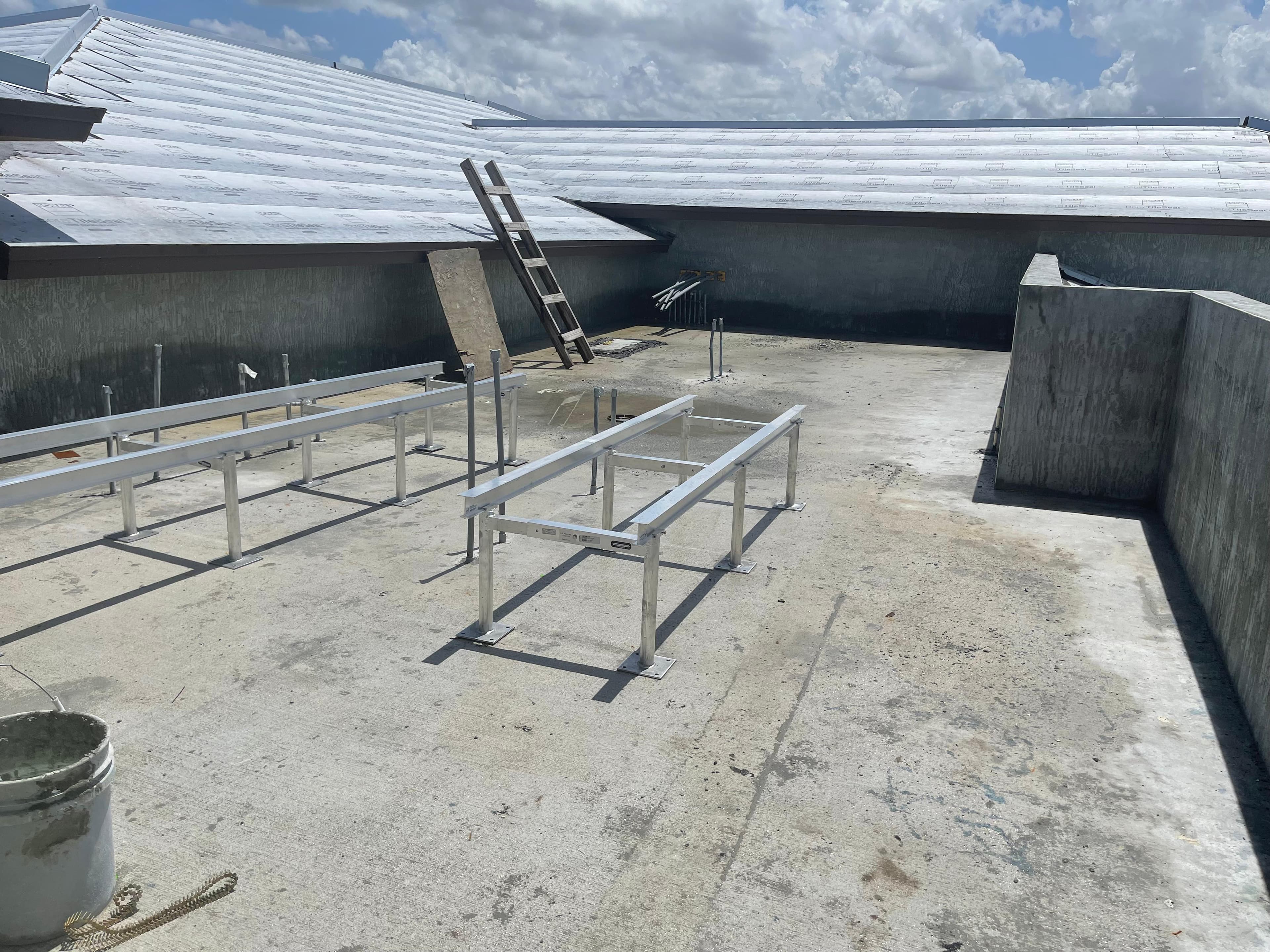
Standing seam metal roofs deliver 160+ mph wind ratings and 50-year lifespans in Miami. Learn about costs, materials, and energy savings.
Read More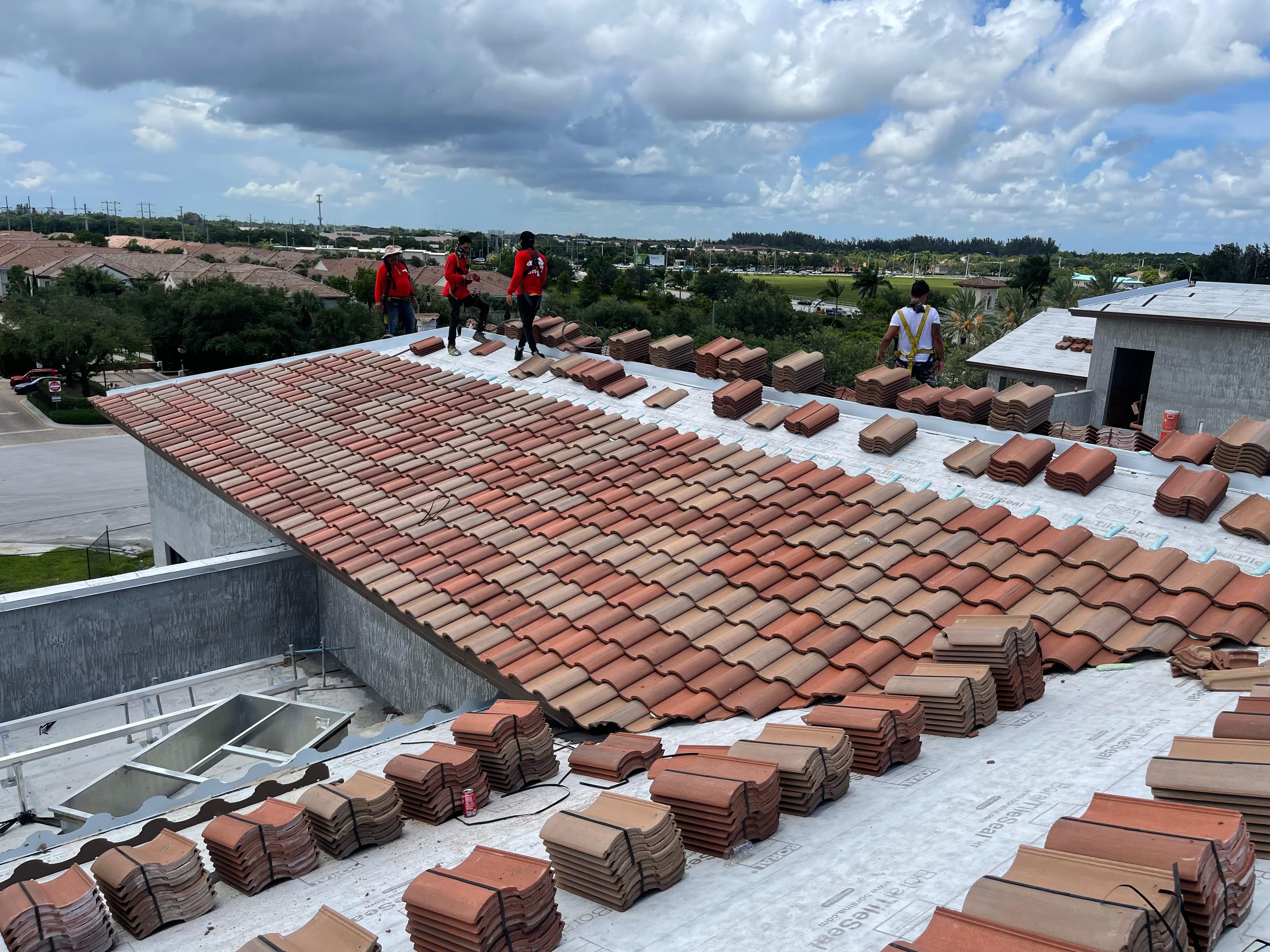
Clay and concrete tile roofs last 50-100 years in Miami. This complete guide covers costs, styles, wind ratings, maintenance, and building code requirements.
Read More